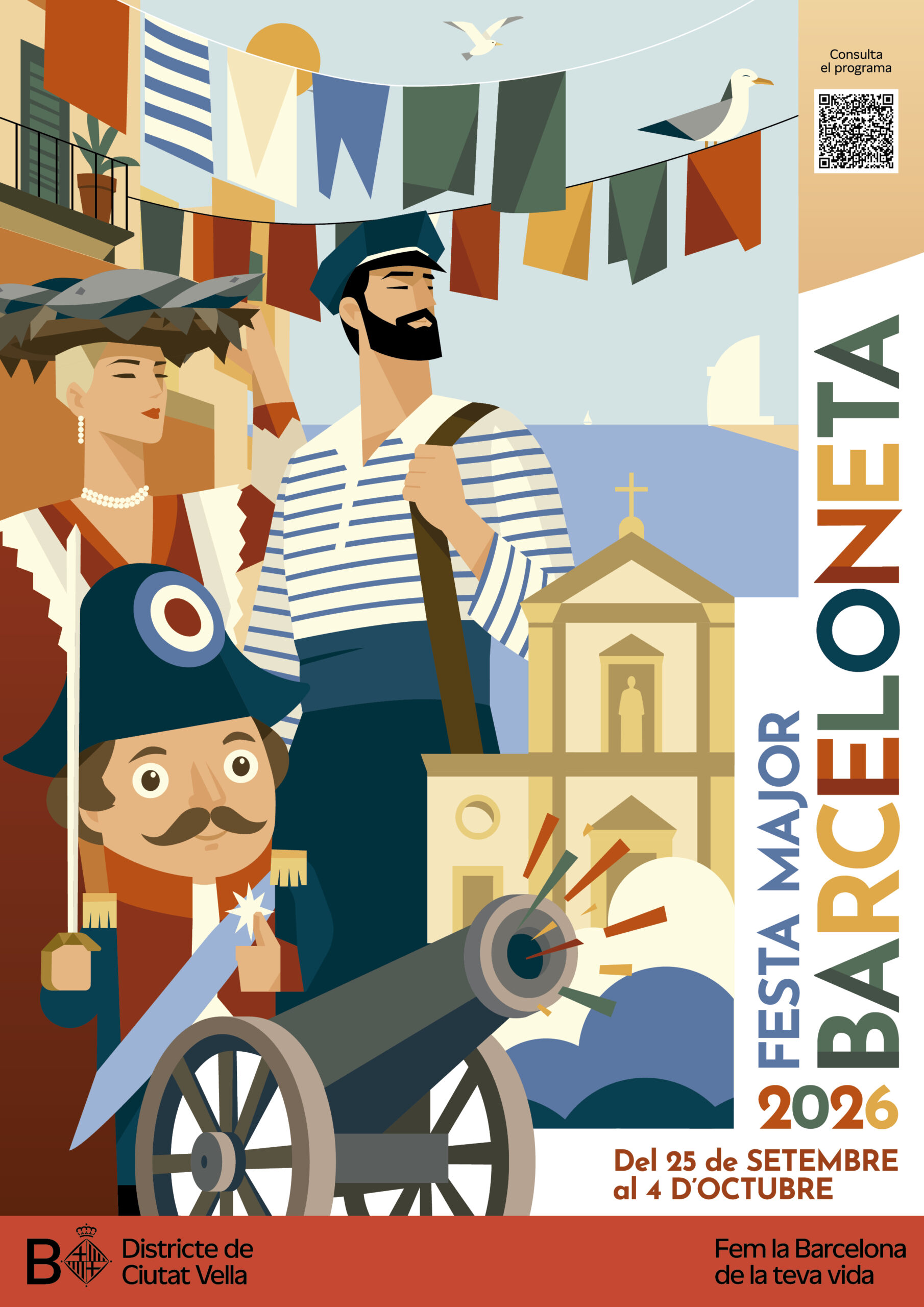
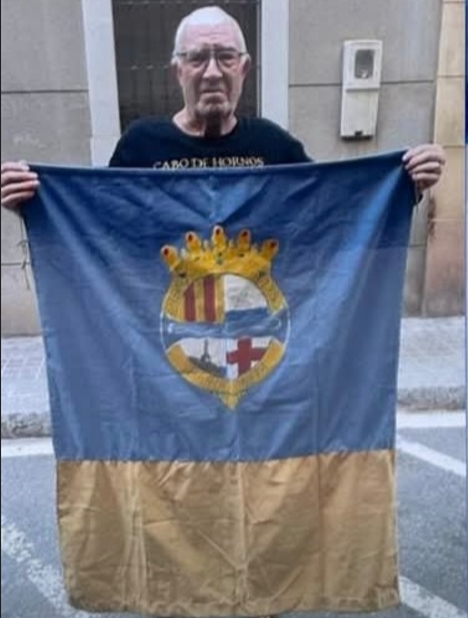
With the arrival of the Fiesta Mayor, the streets of Barceloneta are once again filled with colour, music and, above all, a sense of community. It is at this time of year that it makes more sense than ever to remember where our symbols come from. We must shed light on the true story behind the neighbourhood’s current flag: a project born of research, community collaboration and, most notably, the imagination of our children. The children’s wish: “We want to decorate the whole neighbourhood for the Fiesta Mayor.”
The origins of the current flag date back to 2014. At that time, the History Workshop and CB 1761 launched a historical memory project with the neighbourhood’s schools, specifically with 10-year-old children. The aim was to compare three generations: how their grandparents experienced the Fiesta Mayor, how their parents remembered it, and how they themselves experienced it. The children’s conclusion was striking: they felt their Fiesta Mayor lacked a festive atmosphere. They missed the festively decorated streets (now it’s even worse – there are only two left), the decorations and that festive atmosphere conveyed by their elders’ memories. Taking this concern on board, we at the Barceloneta History Workshop raised the issue with the Neighbourhood Association (AAVV) and the Festival Committee. After much discussion, we found the ideal solution: to create a new flag featuring the neighbourhood’s coat of arms, so that everyone could hang it from their balcony for the Feast of Saint Michael. To design the new coat of arms, we first studied the different versions of the coats of arms that La Barceloneta had used throughout its history. This research enabled us to understand how its representation had evolved and which elements had remained constant over time. Some of the oldest coats of arms were in poor condition and so faint that it was difficult to make out the details.
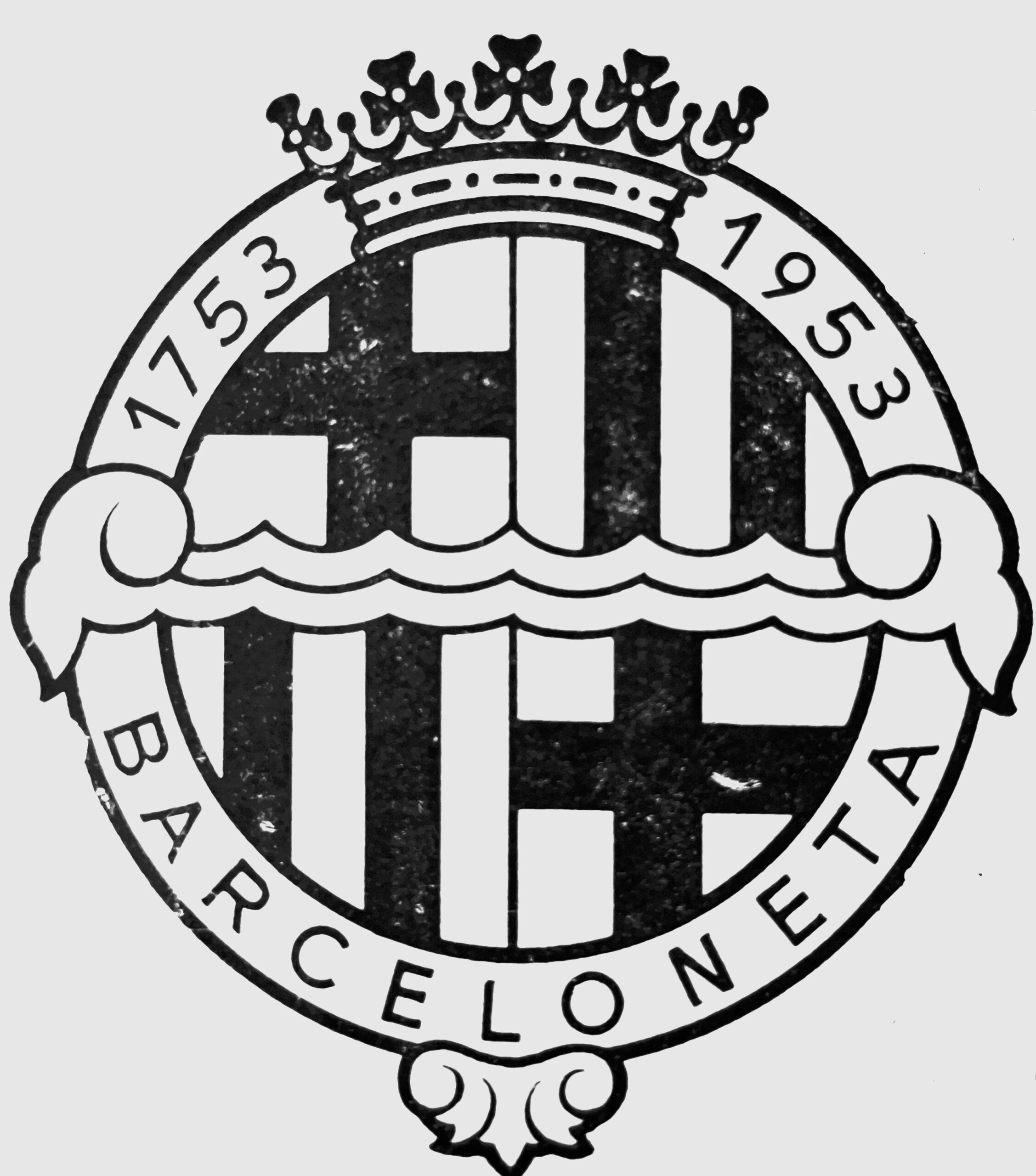
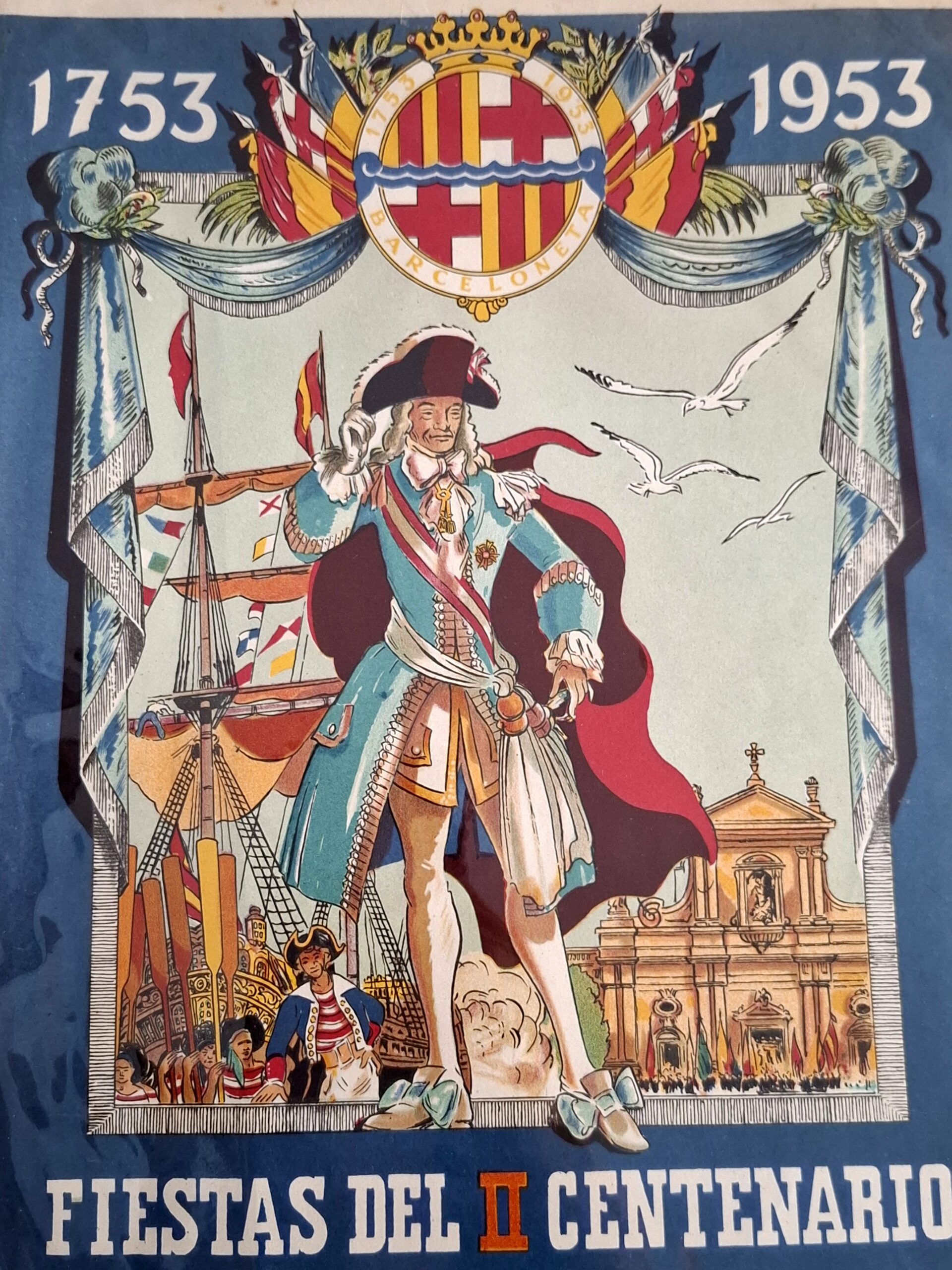
Others, however, had been drawn by various illustrators, who incorporated characteristic elements such as the coat of arms of the city of Barcelona, waves, or motifs related to the neighbourhood’s seafaring heritage. Among the earliest proposals, those from the 1950s stand out, coinciding with the commemoration of the anniversary of Barceloneta’s founding. A highlight from this period is the magnificent coat of arms featured on the poster by Emili Ferrer, one of the neighbourhood’s great illustrators. Later, in the 1990s, Paco López Tey also created a version of the flag, adapted to the graphic sensibilities of the time.
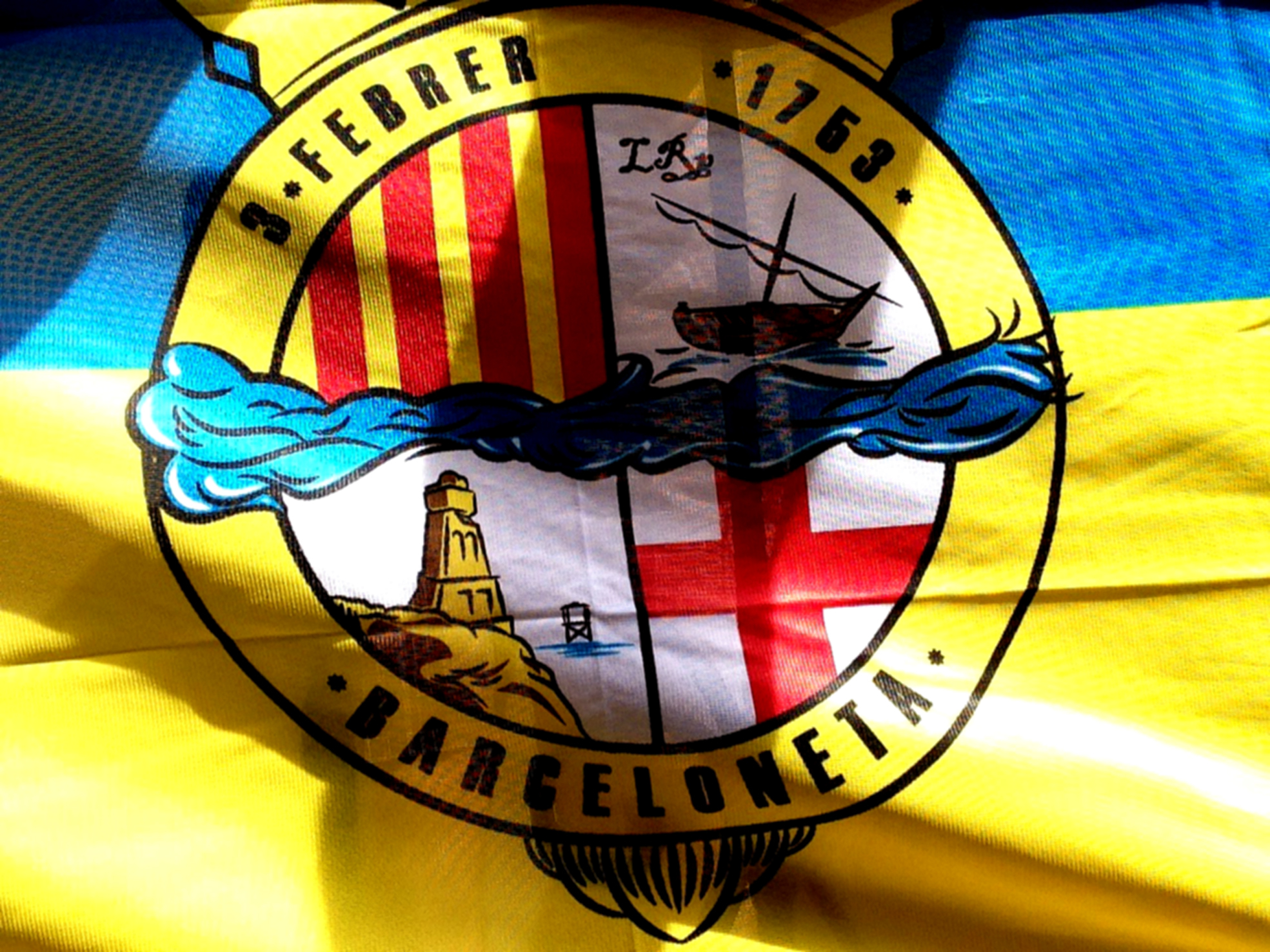
Finally, in 2014, a proposal was adopted to modernise the design of the coat of arms, which had been preserved by the Barceloneta Neighbourhood Association. The new design featured a clearer composition, made it easier to identify its elements and incorporated a refresh of the colours that reinforced the identity of the Barceloneta. However, changing a coat of arms is not a task to be undertaken lightly. One must respect the rules of heraldry – the set of heraldic regulations that establish the shapes, colours and symbols that may form part of a coat of arms, as well as their meaning. The final design was conceived whilst retaining the symbolism of the version preserved by the Barceloneta Neighbourhood Association, with numerous references to the neighbourhood’s history and identity:
lThe round shape. Traditionally reserved for female coats of arms, this was deliberately retained as a tribute to the role of women in the history of Barceloneta.
lThe crest. The coat of arms is crowned by a town crown — a golden metal circle with eight acanthus-leaf points, five of which are visible. Although it was initially proposed to remove it to modernise the design, following intense debate it was decided to retain it, as is customary for municipalities and historic centres.
lThe colours. The deep blue symbolises the sea that has given life to the neighbourhood, whilst the brighter yellow now represents the Mediterranean sun.
lThe inner coat of arms. Divided into four quarters, with the sea forming the dividing line, it brings together the main symbols of national and local identity: the four bars of Catalonia and the cross of Barcelona feature alongside two emblematic elements of Barceloneta; we might add that the lighthouse was already modelled on the Clock Tower, a witness to the port’s origins, and the traditional fishing boat, a classic motif on the flags commemorating the neighbourhood’s seafaring past.
l The origin and a nod to the past. Around the circumference, one can read the founding inscription: ‘3 * February 1753* Barceloneta’, commemorating the neighbourhood’s founding date. Furthermore, if you look closely at the area around the boat, a small detail is hidden: the initials L.R.P. (Liberae Nada Publicae), a discreet nod to this sense of a free territory held by those of us who still say ‘let’s go to Barcelona’, incorporated into this 2014 version. Once the design had been finalised, a local graphic design specialist rendered the image, creating the appropriate shades of dark blue and yellow to match contemporary Pantone colours until the final result was achieved. An overwhelming collective success The Festival Committee took a leap of faith by financing a very large print run so that the flags could be offered at a symbolic price. At first, there was a real fear of failure and of being left with unsold stock. The neighbourhood’s response, however, was immediate and overwhelming. As soon as the residents saw the flag, the balconies began to turn purple. They sold out straight away and new batches had to be produced as a matter of urgency. It was a craze that went far beyond the festive season: today, the flag flies in the streets all year round. Behind this symbol lies rigorous research into the symbols of the past, hours of voluntary work and community funding. But, above all, the original idea came from the children of Barceloneta. No one can claim credit for it, because we were merely the hands that brought our children’s dream to life: to see the balconies decorated with Barceloneta flags once more and to breathe life and pride into our neighbourhood. And we succeeded. Happy Fiesta Mayor to everyone!