Barcelona is special.
It’s just another spring day; my friend Agustí and I have left the neighbourhood, as we do every Saturday morning, to go for a coffee.
La Barceloneta can sometimes be exhausting; both body and mind are crying out for a change of scenery and atmosphere. So, with our Leica M6s slung over our shoulders, we decided to have a wander through the Gothic Quarter, meandering through squares and alleyways in search of a café where we could sit down and let the conversation flow whilst sipping a cappuccino.
We’re quite sure that the neighbourhood is the perfect place to sit down and have lunch.
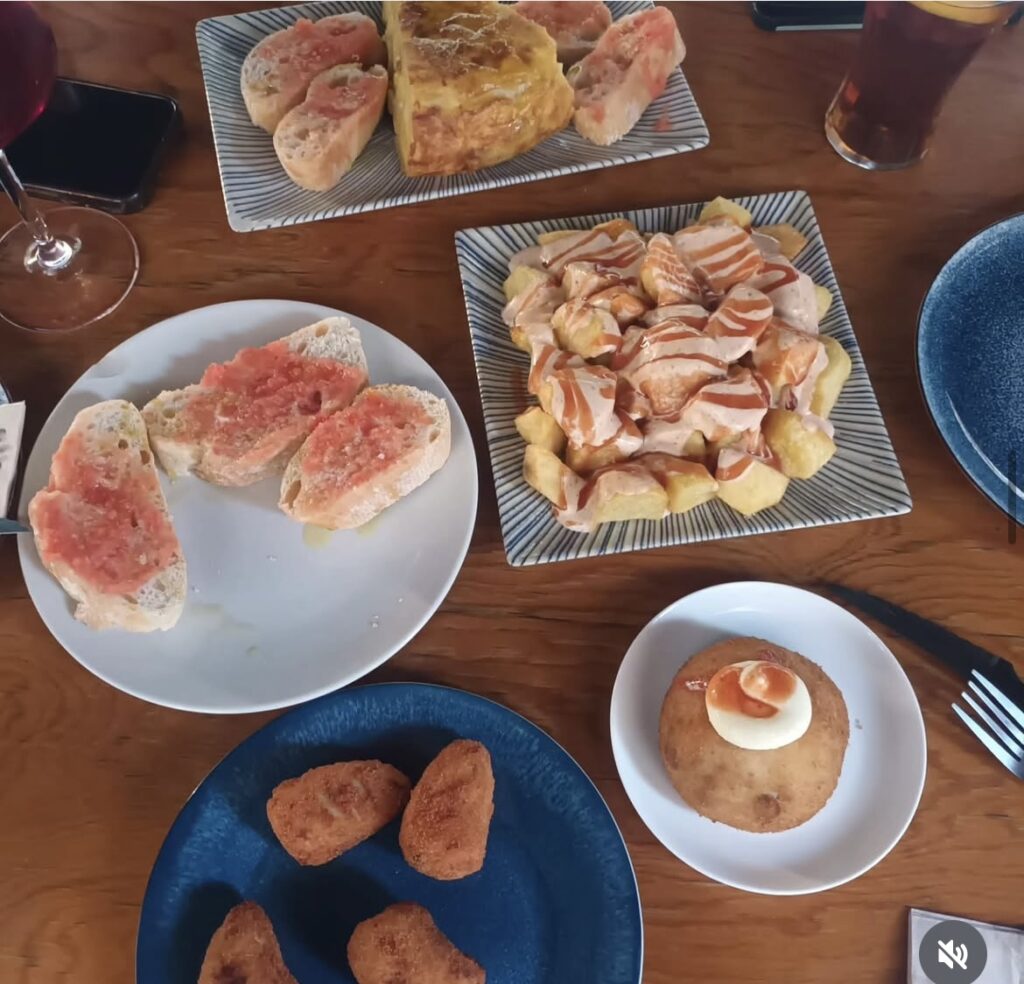
As well as the hundred or so tapas bars that fill our streets, we’ve got loads of top-quality bakeries and patisseries – meeting places not just for locals, but for people from all over. Especially young tourists who, from the early hours of the morning, take over the terrace tables with their laptops whilst sipping a black coffee and, if we’re lucky, a croissant – particularly at the weekend.
After trying unsuccessfully to have a cortado at the ‘Mesón del Café’ on Carrer Llibreteria – we found it closed – we popped into ‘Café Cappuccino’ on the corner of Carrer Jaime I and Via Laietana. Plaza de Àngels is quite crowded with people, mostly tourists, but luckily there aren’t too many customers inside the café.
We sat at the bar; my friend A.C. took out his newspaper – *El País* – and began reading it, shutting out a monotonous environment that offered him nothing new.
I, on the other hand, don’t miss a thing; I reckon any spot is good for taking a decent photo, but I get it – the A.C. has already photographed everything in this city; no image or situation surprises him. We order two cortados and, whilst he devours *El País*, I find myself watching a young couple who’ve just come in. They could be 16 or 17 at most, with blonde hair and blue eyes; they must be Dutch, as they have that country’s flag sewn onto their jackets. They sit at the far end of the bar, about 10 metres from where we’re sitting. Out of the corner of my eye, I think I see them discussing in hushed tones what they fancy tucking into whilst eyeing up all the pastries on the bar. The waiter approaches them with a notepad and a pen and asks what they’d like. The boy, speaking Spanish with the help of a dictionary he’s still holding open in his hand, asks:
“How much are two coffees with milk and two croissants?”
“Eight euros,” replies the waiter.
The young men, feeling a little embarrassed by a situation that’s getting the better of them, start emptying their pockets and laying out all their coins on the tiled counter; they shift them about and mix them up, grouping them by value and size in the hope that their purchasing power might increase. After a minute that feels like an eternity, and after consulting the dictionary once more, they ask the waiter:
“Two coffees, please.”
The waiter doesn’t even bother to take our order; he walks off towards the steaming coffee machine at the other end of the bar, as if it were demanding the attention it deserves after being left unused for so long.
When the waiter walks past where A.C. and I are sitting, I stop him.
‘Excuse me, could you serve the two lattes and two croissants to the lads sitting at the end of the bar? Tell them it’s on the house and charge it to me.’
The man, with the impassive expression of someone who’s seen it all from behind the bar, doesn’t reply; he gives a nod of affirmation, and the order is carried out. Throughout all this, A.C. doesn’t even look up from his newspaper. I know full well he’s aware of everything, but the news of the Barça–Real Madrid match result demands his full attention; he realises I’m in some kind of a mess, but he understands that, as always, I can sort it out on my own.
The waiter sets the lattes and the two pastries on the tiled counter in front of the lads, who, frightened and embarrassed, try to tell the man he’s made a mistake, but the waiter, in a patronising tone, reassures them by saying it’s on the house.
The couple can’t quite believe it; in all the time they’ve been travelling with their rucksacks on their backs, they’ve never been treated so warmly and generously by people in any of the cities they’ve visited so far.
Barcelona is special; the reputation for being stingy that Catalans are often labelled with is completely unfounded. When they return home, they’ll speak highly of our city and its people, post their comments on social media, and recommend our city, emphasising the friendly and generous nature of its residents. All this for just 8 euros.
Tourism agencies, businesses and institutions spend millions promoting the city with hackneyed slogans and boring, false advertising that nobody believes. We don’t need events like the America’s Cup to put our city on the global map. Word of mouth, anecdotes and the experiences of visitors – whether tourists or not – are what spread the true image of what Barcelona is really like.
The way we behave towards those who visit us and the way we treat our guests is what will determine the sort of people we are.
Tourism isn’t just a business. There’s a ‘quid pro quo’ that makes us want to be treated the same way when we travel abroad. We all know that we’re more vulnerable when we’re away from home.
We left ‘Café Cappuccino’ feeling satisfied. I was thinking about travelling to Amsterdam with my Mercè to get my money’s worth from my 8 euros, whilst the air-conditioning blew and I held a folded copy of *El País* under my arm, smiling at the 5–0 win for Barça over Real Madrid.
Barcelona is great… always.
Barcelona is special; the reputation for being stingy that Catalans are often labelled with is completely unfounded. When they return home, they’ll speak highly of our city and its people, post their comments on social media, and recommend our city, emphasising the friendly and generous nature of its residents. All this for just 8 euros.
Tourism agencies, businesses and institutions spend millions promoting the city with hackneyed slogans and boring, false advertising that nobody believes. We don’t need events like the America’s Cup to put our city on the global map. Word of mouth, anecdotes and the experiences of visitors – whether tourists or not – are what spread the true image of what Barcelona is really like.
The way we behave towards those who visit us and the way we treat our guests is what will determine the sort of people we are.
Tourism isn’t just a business. There’s a ‘quid pro quo’ that makes us want to be treated the same way when we travel abroad. We all know that we’re more vulnerable when we’re away from home.
We left ‘Café Cappuccino’ feeling satisfied. I was thinking about travelling to Amsterdam with my Mercè to get my money’s worth from my 8 euros, whilst the air-conditioning blew and I held a folded copy of “El País” under my arm, smiling at the 5–0 win for Barça over Real Madrid.
Barcelona is great… always.