From Literacy to Advanced Education
18th century : Extremely high illiteracy rates
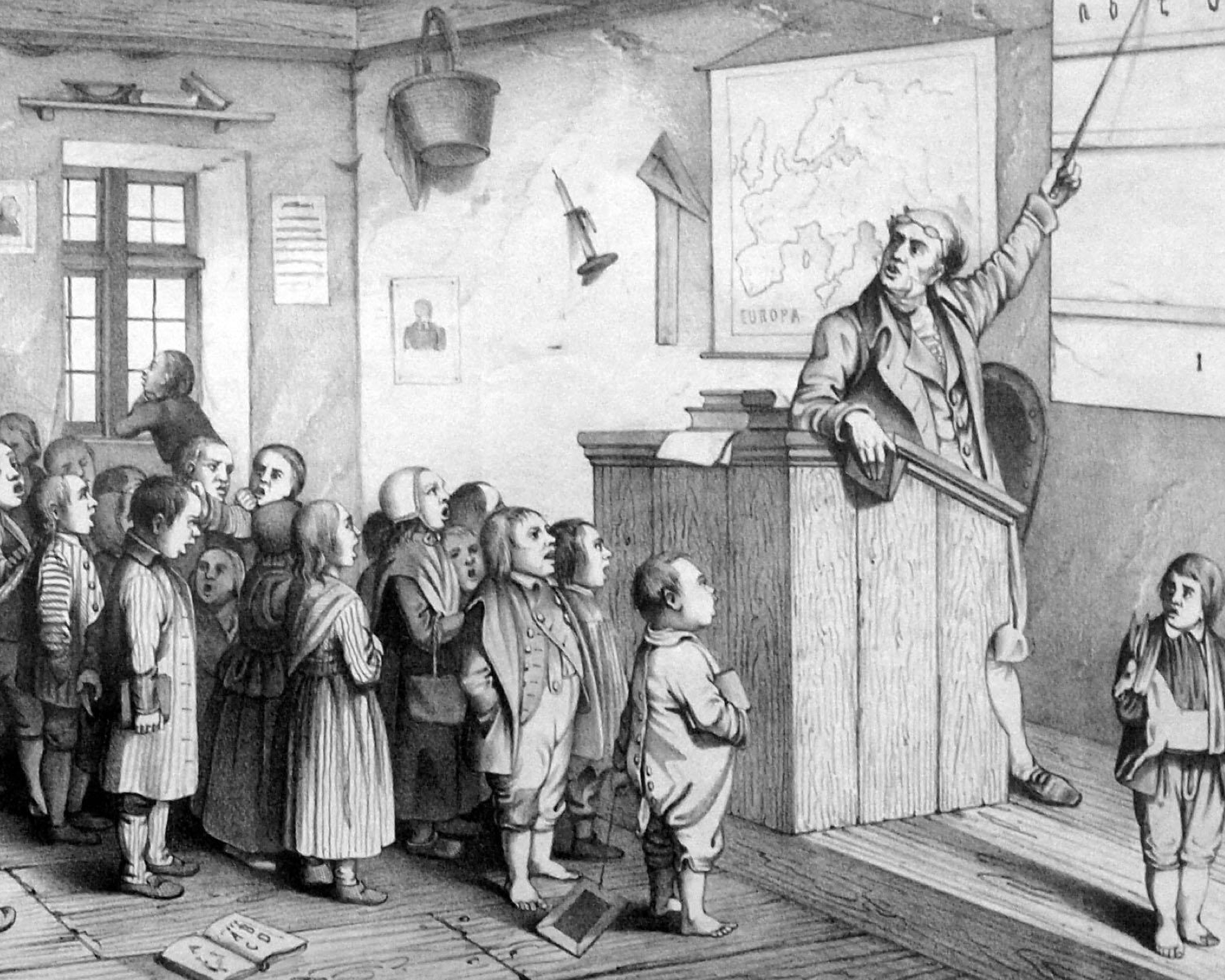
At that time, La Barceloneta was a newly established neighborhood (founded in 1753), home to a working-class population—mostly laborers—who led a very “street-oriented” lifestyle, especially among the youngest children, who spent most of their time playing until they began working. All of this resulted in a very low level of school enrollment and, consequently, high illiteracy rates.
Furthermore, at that time, educational opportunities were mostly private—either secular or church-run—until the Constitution of 1812 established the concept of public education overseen by the government. In other words, to study, you had to come from a family with enough resources to pay for your education or, if you couldn’t afford it, enter a seminary. Otherwise, you were doomed to illiteracy. And that’s not even mentioning women, for whom even coming from a wealthy family didn’t guarantee an education.
Educational initiatives of the time often had a dual objective. The apparent one: to teach people to read and write and, through this, to ensure greater future well-being. And another, less obvious but equally—if not more—important priority for the promoters of these projects, whether Catholic or secular: social control, moralization, and the dissemination of behavioral patterns reflecting bourgeois or religious interests, as the case may be. In other words, learning to “be a law-abiding citizen” and to “become a good citizen and parent.”
19th Century: The Beginnings of a Precarious School System
The high illiteracy rate did not improve significantly with the start of the new century. The most notable development was the emergence of the first municipal public schools, spurred by the Someruelos Act of 1838. Under this law, local governments co-financed this schooling, which, however, was still not mandatory. During those years, two public schools opened in Barceloneta—one for boys and one for girls—attended by 200 boys and 150 girls, respectively. They were inaugurated “to get the children of poor families off the streets,” as stated verbatim. There was also a third private preschool funded by some wealthy residents and the Ladies’ Association. As early as 1851, another school for adults—for those over 14 years of age—was opened, designed so that workers and artisans could attend after their workday. Shortly thereafter, another kindergarten was inaugurated, this time a public one. All of these schools, especially the public ones, were marked by their precarious conditions. This precariousness extended to the facilities and resources, and even to the level of their scarce teaching staff. The teachers’ lack of dedication was often compounded by the indiscipline of a large portion of the student body.As if that weren’t enough, after these four schools were consolidated into a single building, the land was acquired by the Maquinista Terrestre y Marítima to expand its workshops, forcing the demolition of the facilities and, as a result, leaving 240 students without a school—until a local property owner, Francesc Grau i Torras, offered three houses he owned to the City Council to build the new school. The dilapidated state of these facilities and bureaucratic conflicts forced the closure of these schools, and by 1867 these children were once again “wandering the streets without receiving any education.” At the same time, alongside the public schools, there were private initiatives: schools or teachers who gave private lessons to children from the neighborhood’s wealthier—or less impoverished—families. There were seven private schools, attended by 379 boys and only 48 girls. This disparity between the precarious conditions of public schools and those of private schools further segregated children from poor families, who made up the majority in the neighborhood.
Trends in the Number of Students Enrolled in Public Schools in Barceloneta
Year No. Of students
1845 350
1861 457
1862 425
1870. 464
1872 402
1896 482
After the yellow fever epidemic of 1870, all kinds of educational initiatives emerged. For example, the Protestant school run by missionary George Lawrence; the school for the poor promoted by the parish; a center sponsored by industrialist Miquel Escuder; and the “Salas de Asilo” (Asylum Halls) of the Ladies’ Association, which were nursery schools for “the orphaned children left behind by the yellow fever epidemic.” During the last third of the century, public schools coexisted with Catholic and secular private schools, which addressed “the low enrollment of children from Barceloneta in schools.” Illiteracy rates, compared to Barcelona as a whole, remained alarmingly high: 77.6% of the population in 1899 still could not read or write.
Re-Christianize through education
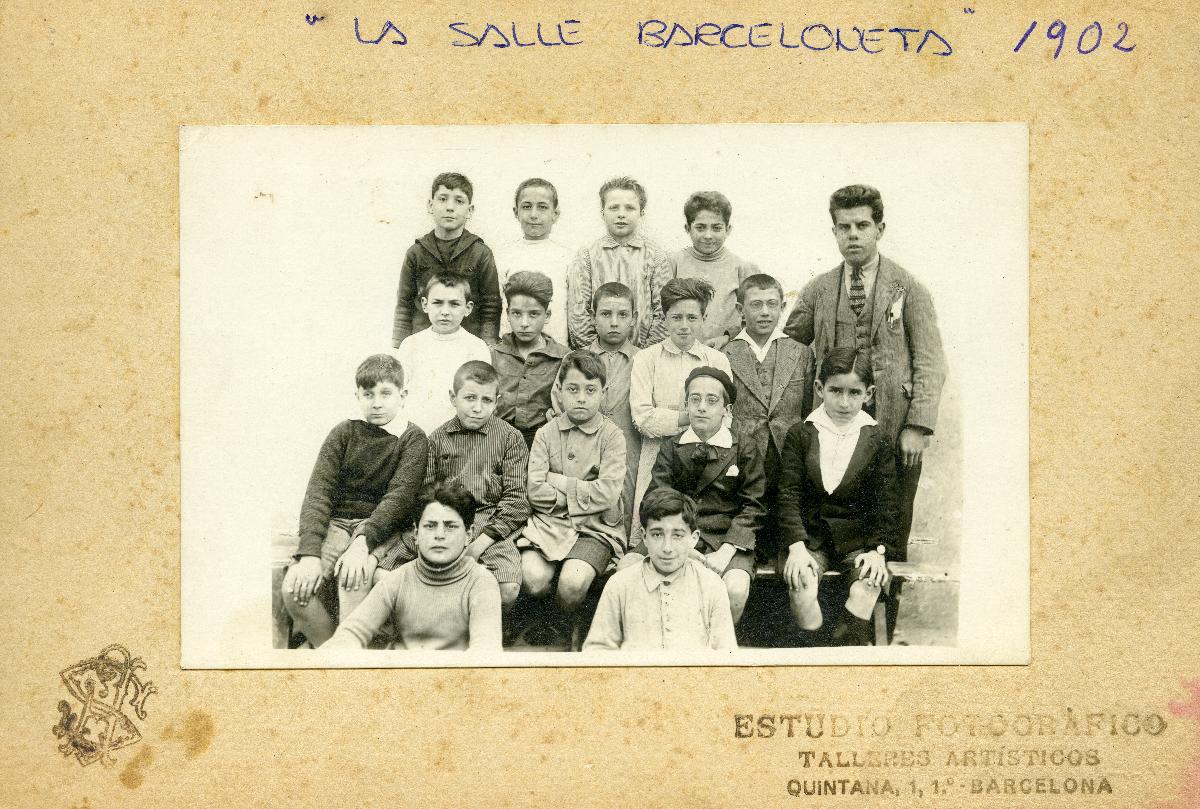
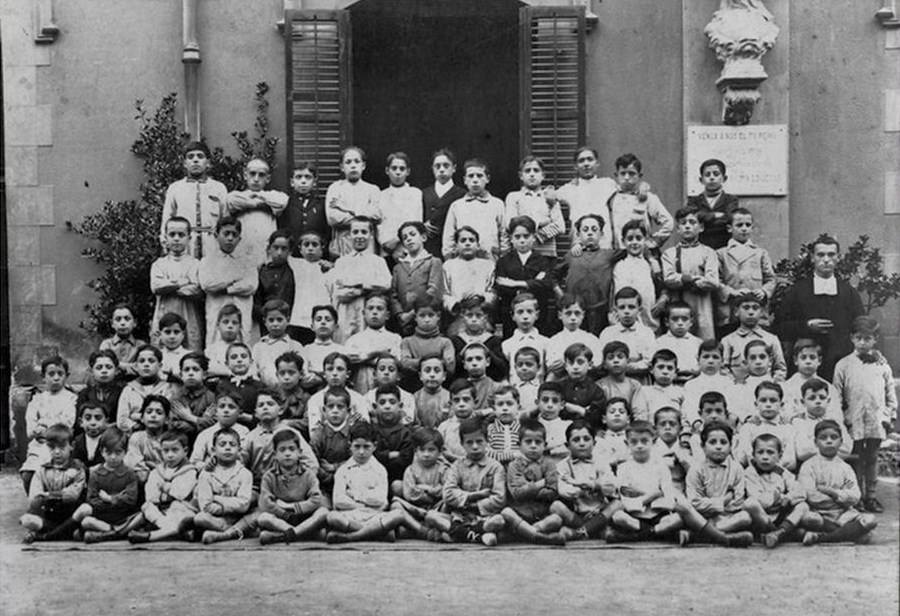
These figures reflecting extremely low levels of education—and, over time, the desire to restore morale among the local population—led the Church to adopt a strategy of “Catholic reconquest” through education, opening hospitals, nursing homes, and, above all, schools. The Moyano Law on Public Instruction (1857) facilitated education provided by religious orders in response to the demands placed on secular initiatives. Dorotea de Chopitea, a Chilean-born benefactor with a saintly reputation, was particularly active, financing a new orphanage in Barceloneta with capacity for more than 500 children, as well as a day school and a night school for girls. New secular schools, such as the one named after Victor Hugo, and Catholic schools emerged toward the end of the century, such as the school run by the Brothers of the Christian Schools—known today as La Salle—which in 1890 also received financial support from Dorotea de Chopitea. By the end of the 19th century, most students enrolled in schools in Barceloneta attended private Catholic schools, which, unsurprisingly, were predominantly attended by the children of families who could afford it; meanwhile, school enrollment among the poorest classes remained stagnant.
Students Enrolled in Barceloneta by School Type
School Type Assistents Matriculated
Municipal Public Schools 450 482
Individual Private Private 630 662
Private Religious Schools 1,055 1,236
Private Secular schools 105 121
Total 2,240 2,501
Population aged 3 to 14 years : 4,307%
School enrollment : 57%
20th Century:
The century began with a census result that was, shall we say, encouraging: in 15 years, the illiteracy rate in the neighborhood had dropped from 66% to 58%. However, according to various sources, Barceloneta was the neighborhood with the highest illiteracy rate in the city. Alongside the schools, the presence of casinos, cultural centers, and cooperatives—with activities and spaces dedicated, in part, to education—contributed, in their own ways, to the growth of literacy. There remained a shortage of public schools, while, conversely, there was a high number of religious schools and private initiatives, typically on a small scale. The result was the same: it was primarily the children of families with very limited resources who attended school. At the same time, the educational system in Barcelona during this period began to evolve toward pedagogical modernization, while school infrastructure conditions were also improving. During this period, the neighborhood—and Ciutat Vella as a whole—experienced a growing need for school renovation, with calls to improve public education being particularly prominent in the early decades of the century.
Children without schooling
In 1930, the neighborhood had 21 schools: 5 religious schools, with 1,240 students (52%); 10 private schools, with 600 students (25%); and 6 public schools, with 525 students (23%), out of a population of 31,590. That is, 7.55% of the population. This low enrollment rate resulted in approximately 2,000 children not attending school.
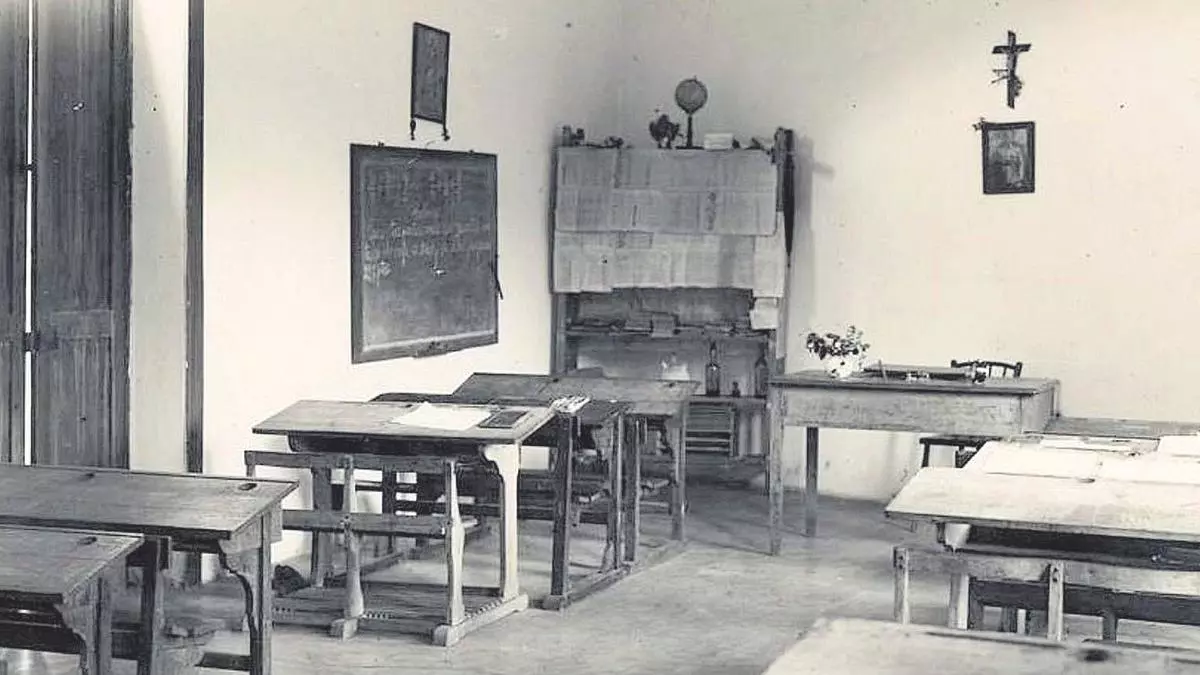
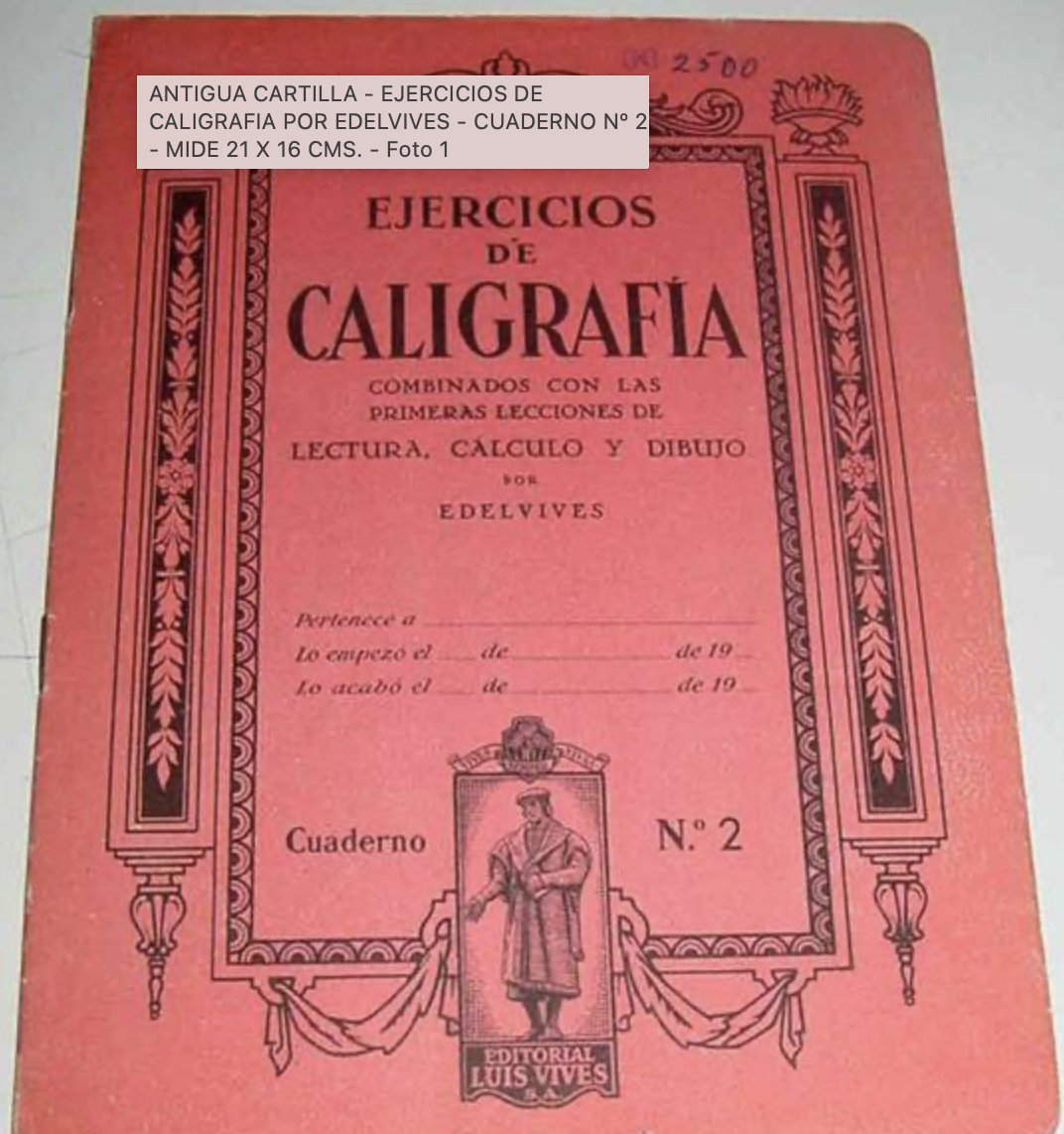
When discussing limited resources, it is important to consider that, for example, school supplies were limited to individual blackboards, chalk, notebooks, and a scarce number of textbooks to be shared. The students, seated two to a desk and, of course, separated by gender, were taught primarily arithmetic, spelling, geography, religion, and a history course in which the Visigothic Kings and the Catholic Monarchs played a prominent role. Almost military-style discipline and even physical punishment were the norm in classrooms where the saying “learning comes with a price” was upheld.
At the same time, the so-called “New School” movement emerged, supported by the government. The clearest example was the Escuela de Mar, founded on Barceloneta Beach in 1921 and directed by Pere Vergés, a leading figure in educational reform.
Educational Reform
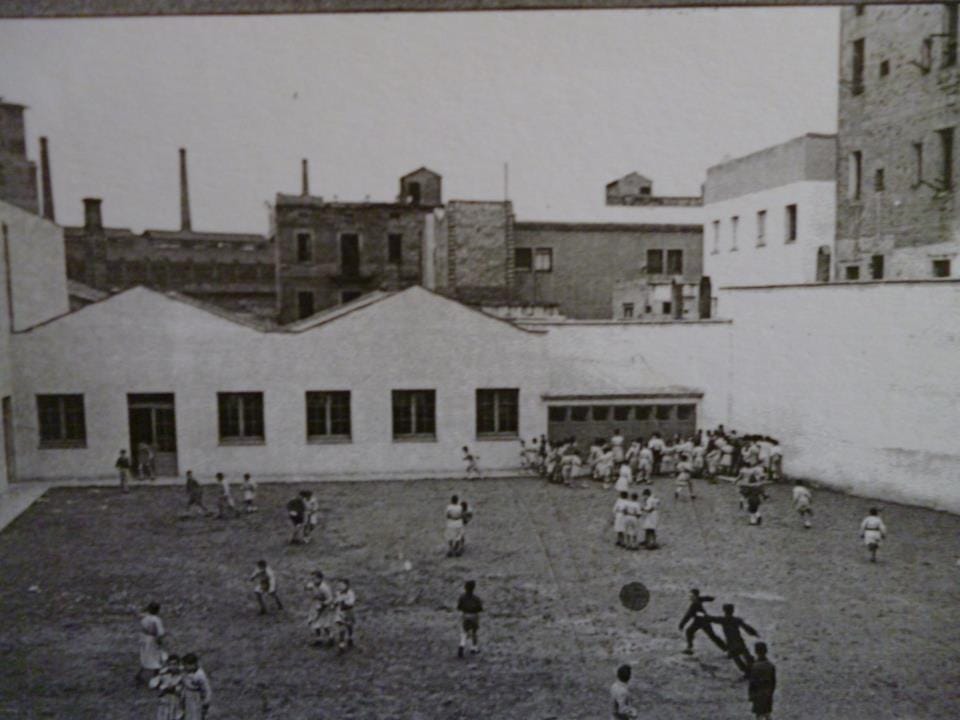
During the Second Republic, proclaimed in 1931, special efforts were made to combat the existing precarious state of the school system. This involved both opening schools for the entire population and improving existing ones, as well as implementing educational reforms aimed at promoting a more active, rational, and scientific approach to teaching. Some schools even adopted Catalan as their official language, while others eliminated the subject of religion. At the same time, the best-equipped schools were the two religious ones: San Juan Baptista and Sant Josep. In contrast, many of the private schools and some of the public ones were located in apartments and ground-floor spaces in conditions that left much to be desired. Between 1931 and 1936, it is worth noting the emergence of educational initiatives carried out by private institutions, which were grouped under what was known as the “Modern School” movement. In this system, rather than religious options, priority was given to a more rational and scientific education; it even addressed topics such as hygiene and public health, and promoted bilingualism. During the Civil War, most of these institutions were partially or completely shut down. Some, such as the Casal del Marí, were forced to close, and the Escuela de Mar was bombed and destroyed, completely burned to the ground. The subsequent Franco regime was, unsurprisingly, very favorable to the Church. The regime’s centralization and indoctrination, along with the marginalization of public education, characterized the early stages of Francoism, including the purging of teachers and civil servants deemed insufficiently aligned with the regime. Schools such as the Escuela Esteve Terrades, on Grado and Torres streets, and the Escuela Virgen de Mar were also opened, while others created by the CENU (Council for the New Unified School) during the Republic were shut down.
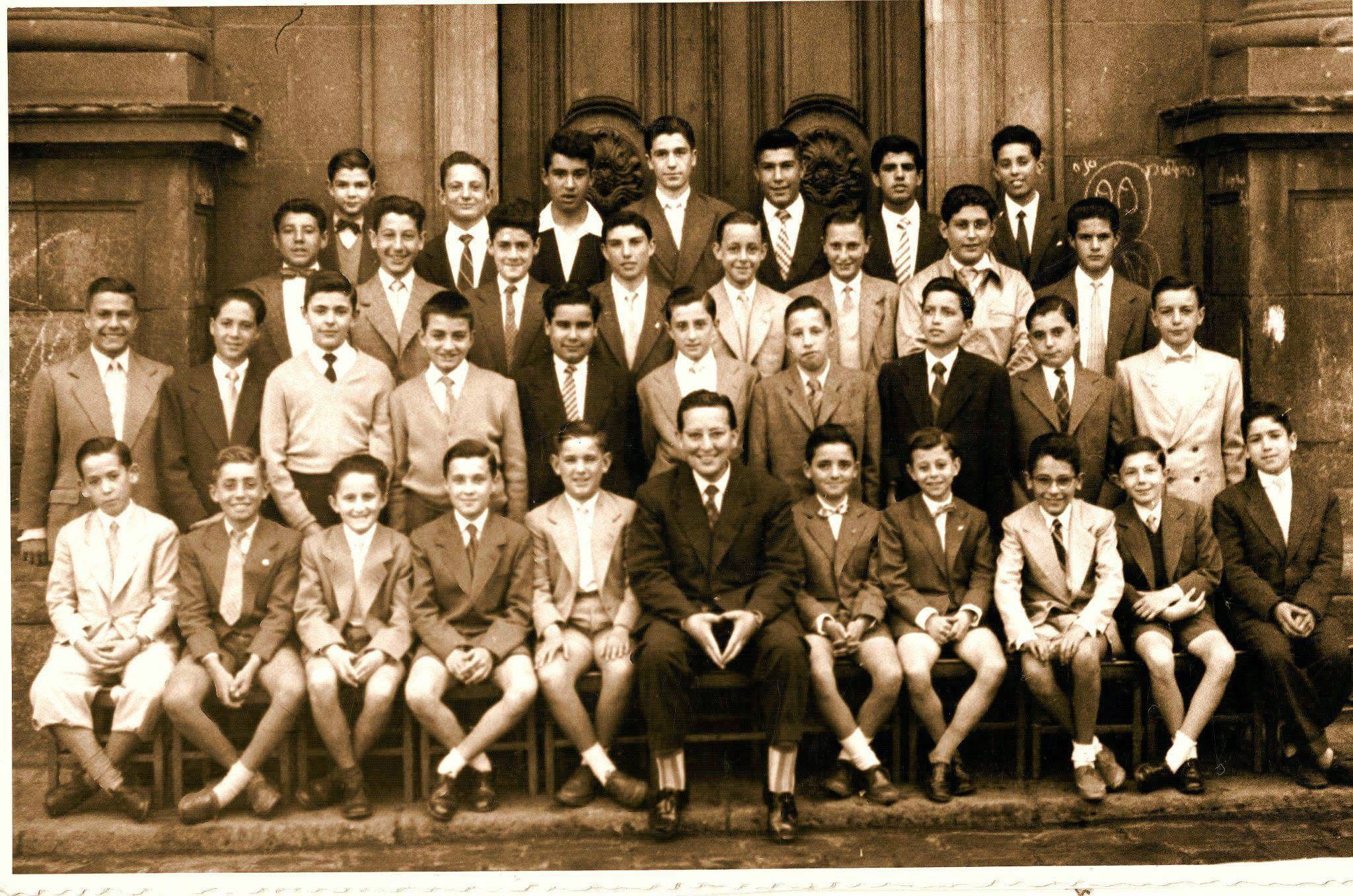
In the postwar period, the neighborhood was home to several public and private schools, such as the Graduate School on Grado and Torras Streets, the Mercantil School, Doña Lola’s School, Mr. Gay’s School, and the Ilustre Junta de Damas, among others. In 1951, the Virgen de Mar National School was inaugurated; it segregated boys and girls into separate classrooms and was based on the principles of National Catholicism. Another example of institutional support for Catholic education was the reopening of the Salle Barceloneta on October 2, 1957, following a 21-year hiatus caused by historical conflicts. Carmen Polo de Franco herself attended the ceremony. Classes resumed with 245 students, 3 brothers, and 2 teachers in the newly reconstructed building. The percentage of children enrolled in school gradually increased. By the late 1950s, nearly 75% of the population between the ages of three and fourteen was enrolled in school. For the authorities, getting children off the streets was primarily a matter of public order, while for the Church it was a serious social problem against which parishes actively took action by establishing educational centers such as Nuestra Señora del Puerto.
The beginning of the baby boom
In Barceloneta, a growing demand for schooling finally led to the opening, in October 1959, of a school for boys and girls on the Paseo Marítimo: the Lepanto School. With the new law of December 1965, which extended compulsory education to age 14, the educational system expanded to include middle school, high school, and technical or vocational schools.
Distribution of the School Population in Barceloneta (1970)
School Type Students
Municipal Public Schools 3,068
Religious Private Schools 2,356
Secular Private Schools 2,995
Total Public Schools 36.44%
Total Private Schools 63.56%
These were the years of the so-called baby boom, which doubled the number of births in just a decade. This period coincided with the disappearance of the so-called “school fragmentation.” Small, apartment-based academies and religious charity schools were forced to close for failing to meet the minimum requirements. The transfer of students from these schools to larger institutions resulted in more classrooms and more students per classroom. The 1970s were a time of neighborhood activism, aimed, among other things, at improving education. By 1970, a free and compulsory Basic General Education (EGB) program had been established for students aged 6 to 14, staffed by civil servant teachers with non-university training—a stark contrast to high school teachers, who were required to hold university degrees. Back then, the prevailing view was that those who got the best grades went on to high school and then college, while it was normal for those who failed and had to repeat a grade to opt for vocational training, which was considered of little value at the time. Those were the years of the EGB, the BUP, and the COU; of the new vocational training system; of the opening of more daycare centers; and, of course, of the demand for bilingual education, which would become a reality with the Transition. The most notable opening in the valley was that of the Joan Salvat-Papasseit High School in 1978. The transfer of educational services from the State to the Generalitat in 1981 marked the beginning of the expansion of universal public education. The LOGSE of 1990 transformed a large number of the neighborhood’s schools, many of which were forced to close because they were unable to adapt to the new reforms.
LIST OF SCHOOLS IN BARCELONETA, YEAR 1930
RELIGIOUS SCHOOLS
-Escola Sant Joan Baptista. Filles de la Caritat – Spanish nuns
C/ Balboa, 19-27 / C/ Mediterrània
-Escola Sant Josep
Germans de La Salle. School burned down in 1936C/ Mediterrània, 1
-Escola Ntra. Senyora de Montserrat
Filles de la Caritat – French monksC/ Tormenta, 9
-School Group Hogar María Niña
“Very Illustrious Board of Ladies”C/ Rector Bruguera, 2,4 and 6
-Centre Montserrat
Patronat Obrer Sant Miquel del PortPtge. Marquès de la Quadra, 1
ES PUBLIC SCHOOLS
-National Graduate School and Parvulari
Bombed on 1937
C/ Balboa, letter L
-Escola del Mar
Bombarde at 1938
Platja, at the end of C/ Almirall Aixada
-Unitary schools on Guitert, Grau i Torras i Balboa streets,
being moved in 1937 to the school rebuilt on the ruins of l’Escola de Sant Josep (La Salle), after being appropriated by the City Council
-“Casa del Marí” School Group (year 1934)
The neighborhood obtains the transfer of the Casa del Marí, with Hilari Salvadó as municipal councilor
PRIVATE SCHOOLS
-San Miguel School-Academy
Director J. Planell, successor of DF ManaplataC/ Sant Miquel, 37, pral.
-Barceloneta School,
Director Mr. Lluís Bech
Plaça de la Barceloneta, 1 and 3, baixos
-School of Nuestra Señora de los Dolores
Directed by Mrs. Magdalena BarberC/ Sant Miquel, 43, 2º
-Santo Tomás School,
C/ Alegria, 2
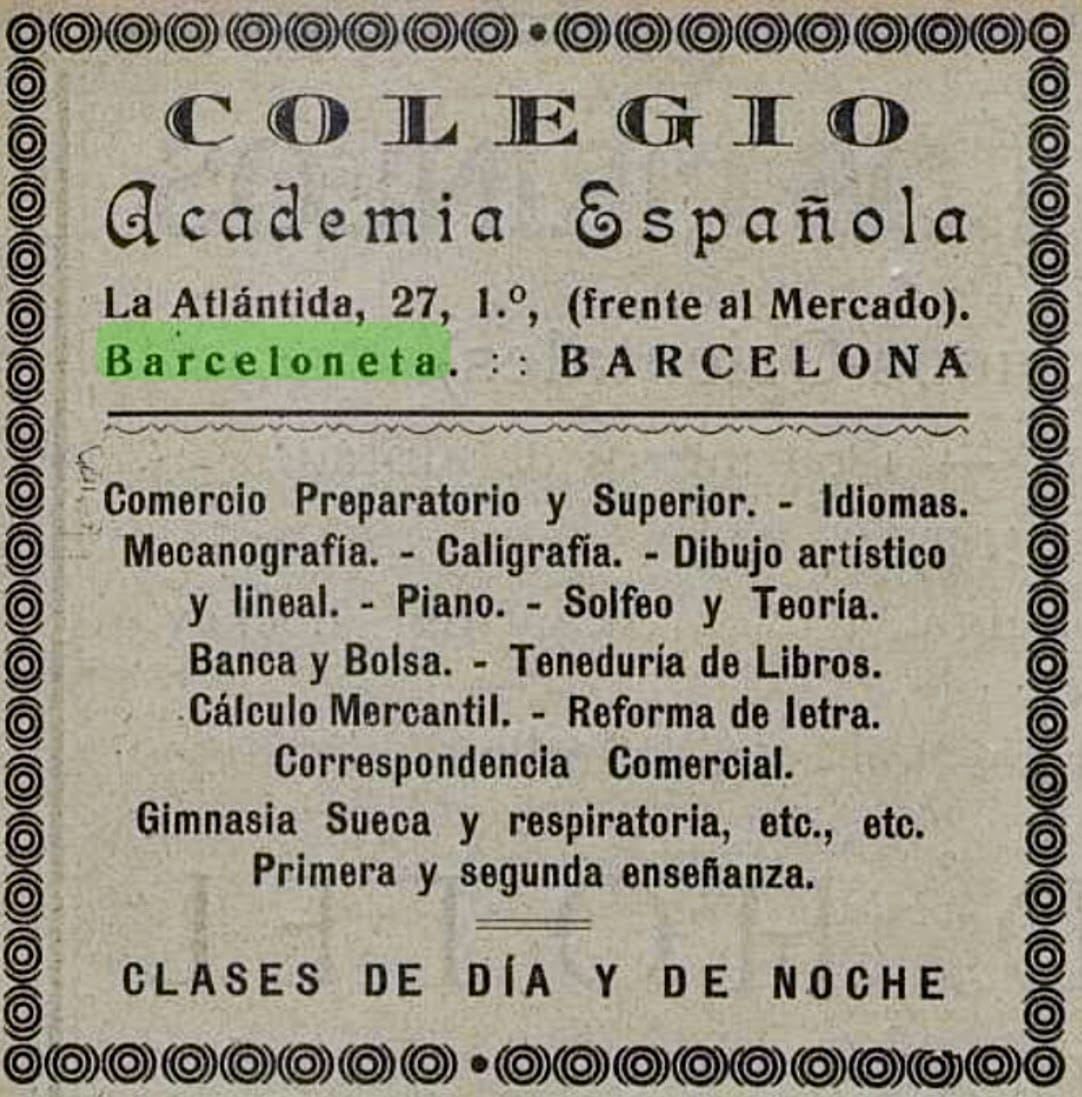
-Academia Española School
Director Mr. Sebastià GayC/ Atlàntida, 27-29-43/ C/ Baluard, 28
-Col·legi Mercantil del Casino Republicano
C/ San Miquel, 29, 1r 1a
-Mercantil College-Academy
Director Mr. José
Balboa Street, letter H
-Academy of Purísima Concepción
Directorate Ms. Joaquina M. Masdeu BertranC/ Geneva, 23
-Nuestra Señora del Rosario School
Address Dª Lola Codina Passeig Nacional, 27, pis
-Col·legi Pòsit de Pescadors
Moll del Rebaix
List of 21st Century Centers:
A list of facilities that current residents remember as either still in operation or having recently closed.
PRESCHOOL:
1. ZIP-ZAPE *
2. BUGS BUNNY *
3. SAN JUAN BAUTISTA (“the Nuns”) *
4. SANTA MARIA DE CERVELLÓ PARISH NURSERY *
5. EL MAR NURSERY
6. MEDITERRANEAN (formerly LEPANTO)
7. ALEXANDRE GALÍ
PRIMARY:
1. ESCUELA DE MAR *
2. SAN JUAN BAUTISTA (“the Nuns”) *
3. LA SALLE BARCELONETA (currently only Baccalaureate + FP) *
4. VIRGIN OF THE SEA *
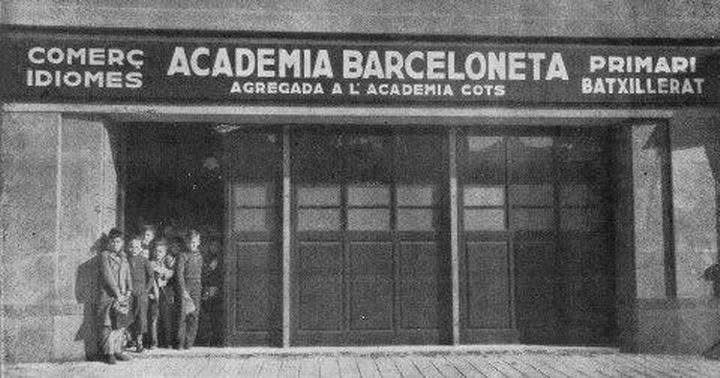
5. ACADEMY BARCELONETA *
6. ACADEMY SPANISH *
7. THE LADIES (School Group) Home of Mary Little girl) *
8. OUR LADY OF MONTSERRAT SCHOOL *
9. MONTSERRAT CENTER *
10. CASA DEL MARÍ SCHOOL GROUP (Fishermen’s Wharf) *
11. COL. HOLY TOMAS *
12. COL.- ACADEMY COMMERCIAL *
13. COL. OUR LADY FROM ROSARIO *
14. COL. OUR LADY OF THE DOLORES *
15. COL. MERCANTIL DEL CASINO REPUBLICAN *
16. ACADEMY PURÍSIMA CONCEPTION *
17. MEDITERRANEAN (formerly LEPANTO)
18. ALEXANDRE GALÍ
SECONDARY:
1. VIRGIN DE MAR *
2. MEDITERRANEAN (currently only Primary)*
3. LA SALLE BARCELONETA (currently only Baccalaureate + FP) *
4. JOAN SALVAT- PAPASSEÏT
BACHILLERATO:
1. LA SALLE BARCELONETA
2. JOAN SALVAT- PAPASSEÏT (including Sports Baccalaureate)
3. BARCELONA NAUTICAL INSTITUTE
4. BARCELONA LOGISTICS INSTITUTE
FP:
1. LA SALLE BARCELONETA
2. IQBB-*Inst . of Chemistry and Biotechnology of Bcn (formerly Narciso Monturiol)
3. HOSPITAL DE MAR INSTITUTE – FP SANITARIA (France Station)
4. CESUR (Nursing)
UNIVERSITY:
1. UPF (MEDICINE AND LIFE SCIENCES)
2. SCHOOL OF NURSING HOSPITAL DE MAR (including Masters, PhD and Specialization Courses)
3. FACULTY OF NAUTICAL STUDIES / UPC (including Masters, Postgraduate, PhD and Specialization Courses)