Screenwriter and writer
People from Vizcaya have a famous saying that goes: ‘People from Bilbao are born wherever the wind takes them’. Because if we are to believe them, Nacho is from La Barceloneta, even though his ID card says he was born in Moratalaz. Because he fell in love with La Barceloneta at first sight, made it his home many years ago, and wants to stay there for ever and ever. You may well have bumped into him without realising that he is the screenwriter behind many of the most-watched series in the history of Spanish television drama.
From Moratalaz to Barceloneta
– How on earth does a bloke from Moratalaz end up living in Barceloneta?
Moratalaz is a neighbourhood that emerged during the economic boom of the 1960s on what was then the outskirts of Madrid. In other words, the sort of place where many of us were born – the very people who are now referred to as ‘boomers’. Elvira Lindo and Alejandro Sanz, for example, are from this neighbourhood.
Moratalaz was a commuter town, lacking a sense of community and not much character.
In 1991, whilst still at university, I came to Barcelona to do a feature on a school for children with autism. I was taken to the Bodega Boemia, in what was then the Barrio Chino – now known as the Rabal – on Lancaster Street. That was when I fell in love with Barcelona.
– But Rabal is not Barceloneta.
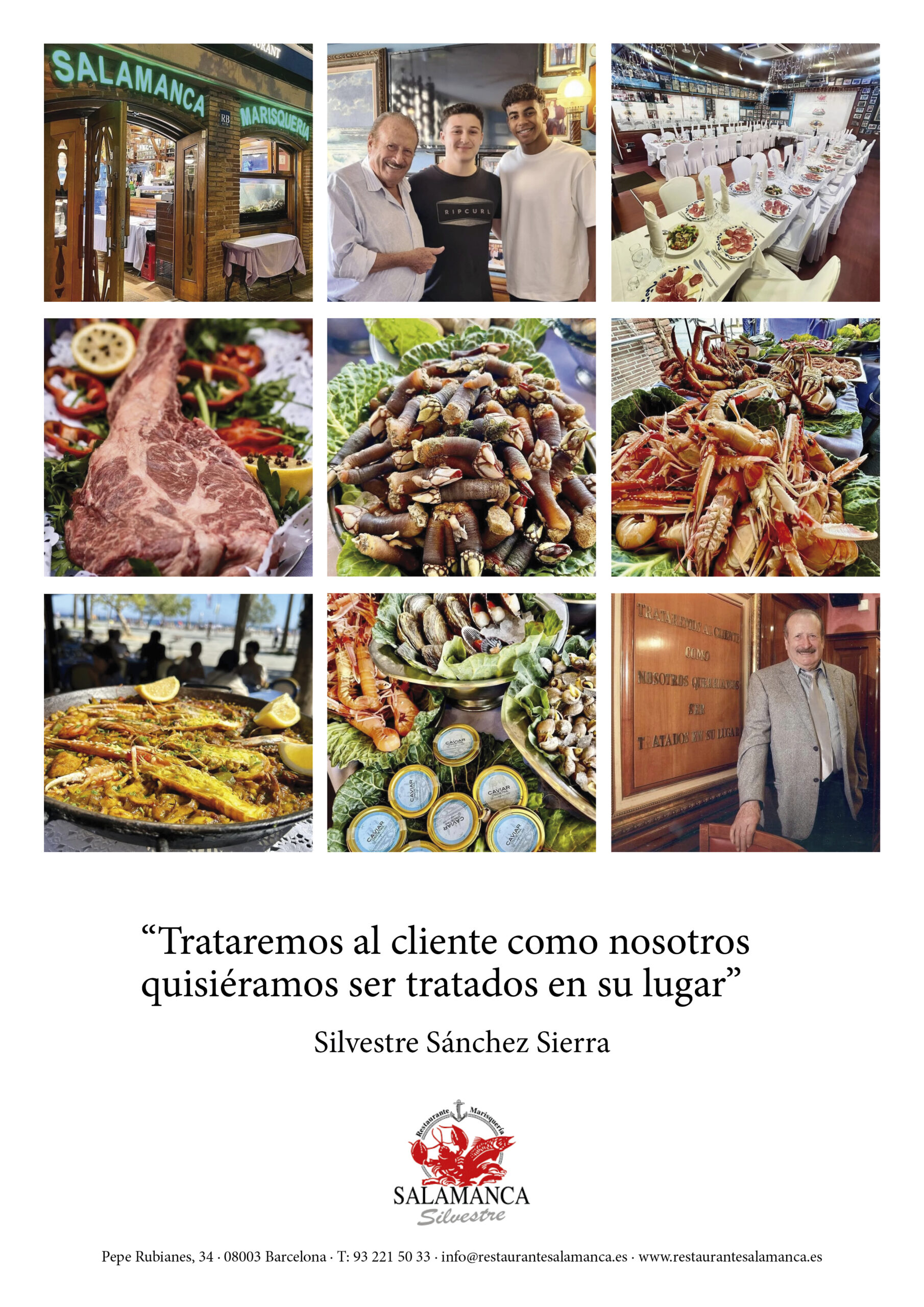
Right, right… The story continues years later, when I went back to Barcelona for a wedding and the taxi driver recommended the Salamanca, in Barceloneta. Eating a ‘sartén’ right by the sea! For that lad from Moratalaz, it was a dream come true.
– You had a wonderful host in our dear Silvestre ( DEP) .
This is where my love affair with this neighbourhood began. Whenever I needed to spend some time writing without having to go to the office, I’d come here to do it. That’s how it was until I bought a little flat – a one-bedroom flat – in 2002, if I remember correctly.
– Because the neighbourhood isn’t exactly quiet enough to concentrate on writing.
The thing is, I like opening the balcony and hearing people shouting, taking in the sounds of the neighbourhood. I love the fact that in Barceloneta, life happens on the streets, and I like to soak up that atmosphere. What’s more, I often find myself writing in local cafés amidst all the hustle and bustle. Silence gets me down.
-From Madrid to Barcelona and from Barcelona to Madrid.
At the time I was working at Globomedia and couldn’t move here permanently. Until I’d had enough and launched my ‘Escape Plan’. I quit my job and took a year and a half’s sabbatical to travel the world.
-“ Escape Plan ” could be the title of one of your series.
I’d had enough and said, ‘That’s it!’ Brazil, Argentina, Chile, China, Japan, Cambodia… and Mexico, where I met the woman who is now my wife. We lived in Madrid and Mexico City… until we settled permanently in La Barceloneta in 2011. We both love it here and we’re not going anywhere.
– Mexico is very special to you .
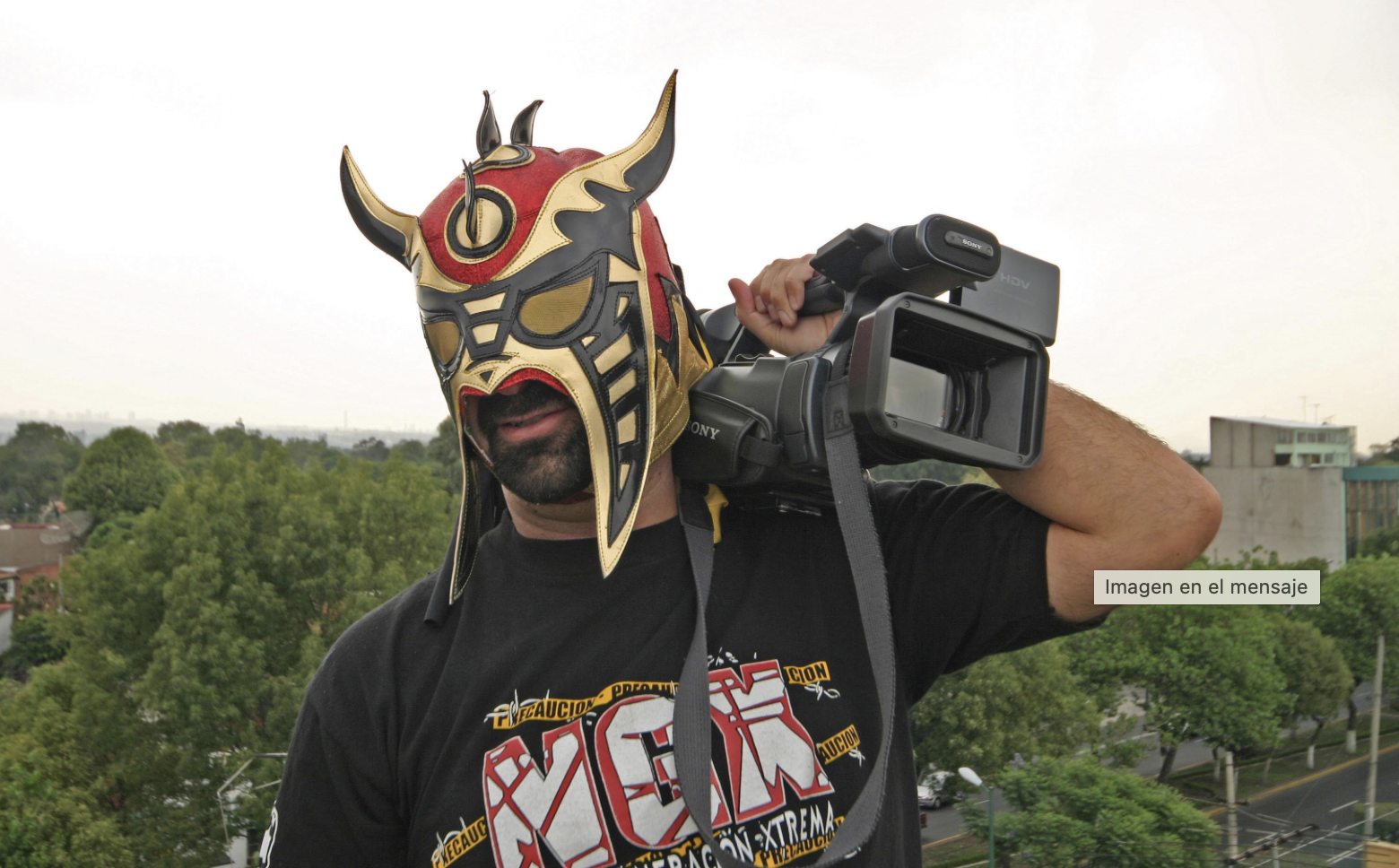
As well as falling in love with a Mexican woman, I fell in love with the country and, in particular, with Mexican lucha libre – the masked wrestlers. It captivated me. Halfway through the ‘Escape Plan’, I stopped off in New York to buy a video camera and film, all on my own, a documentary about Mexican lucha libre. I spent six months filming all sorts of matches from ringside: those held in massive venues like the Arena México, but also those taking place in the car park of a supermarket on the outskirts of town.
– How real is this wrestling?
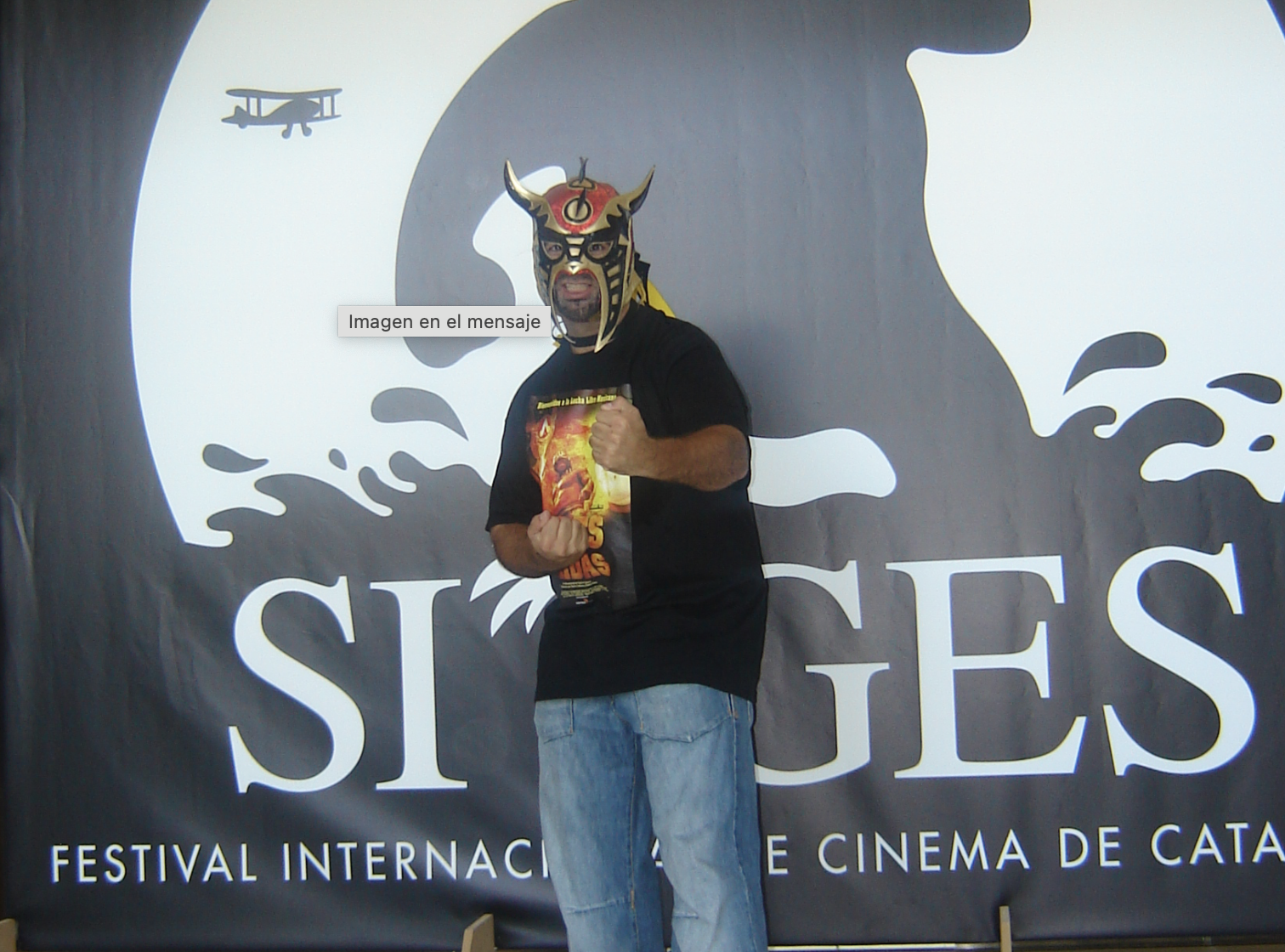
They say it’s a circus, ‘a bit of a shambles’ and theatre. There’s certainly a folkloric, cultural element to it. It involves a lot of acrobatics and there isn’t a set script, as many people think. It’s true, however, that many wrestlers have died in the ring or years after retiring as a result of injuries sustained during their careers. It’s more authentic than what became known here as ‘pro wrestling’. All of this led to the feature-length documentary *Tres caidas*, which we premiered at the 2006 Sitges Film Festival. The screening was spectacular. We even set up a ring with real wrestlers.
Vocational screenwriter
– Your relationship with screenplays… is it a vocation or simply a trade?
A vocation. I’ve wanted to be a screenwriter since my earliest childhood. By the age of 10 I was already writing screenplays, stories and short tales. We used to spend our summers in La Manga del Mar Menor and I’d spend my afternoons writing in a notebook, without a typewriter or, of course, a computer.
– Did this young screenwriter receive any formal training?
Back then – in the mid-1980s – the Official Film School had already closed down and the ECAM (Madrid Regional School of Cinematography and Audiovisual Arts) hadn’t yet opened, so I enrolled on the Image Sciences course within the Faculty of Information Sciences. It was a degree course where, apart from five or six modules, we talked about everything except film or television. If you studied, you’d get top marks. What I did learn, though, was ‘how to sell the motorcycle’ – as the spanish people say.
– It’s essential to know how to sell the idea… if there’s anyone to sell it to.
I was lucky: when I graduated, it just so happened to be the era when the private channels (Telecinco, Antena 3, Canal Plus…) were emerging, which, together with La Primera, La 2, TV3, Telemadrid and the other regional channels, formed a market where job opportunities were beginning to emerge.
-What was yours?
My fellow student, Manuel Ríos, and I each developed a TV series project – one each – which, as it happened, had a lot in common. We both ended up on Manuel Valdivia’s team at Telemadrid.
– Manuel Valdivia.
The channel’s head of drama and the person from whom I learnt everything I know about screenwriting. At a time when domestic production was very scarce, Telemadrid wanted to make a sitcom for a young audience. And that’s how *Colegio Mayor* came about, starring Jorge Sanz, Cayetana Guillén-Cuervo…
-A great debut for a bunch of beginners .
Newbies who paid the price for being ‘rookies’. Two veterans who, in theory, were coordinating the scripts were pocketing 70 per cent of what Telemadrid was paying us and, on top of that, were rewriting our scripts to suit themselves.
– How did it end?
Manuel Valdivia stumbled upon the scheme by chance, sacked them and stayed on with us. The blokes took it really badly. They threatened us and we nearly came to blows at the Café Comercial in Madrid.
-From Telemadrid to Globomedia.
I was there for 12 years straight. With series such as *Médico de Familia*, *Compañeros*, *Policías en el corazón de la calle*…
-*Médico de Familia*, starring Emilio Aragón, defined an era.
It carved out a third way between RTVE’s major productions, such as *Los gozos y las sombras*, and series like *Farmacia de guardia*, which were somewhat closer to the American sitcom. The production system we proposed was very different from the one that was the norm at the time. In RTVE productions (‘Anillos de oro’; ‘Brigada Central’), 12 or 13 episodes were filmed (on film) and weren’t broadcast until they were all finished. If they were successful, a second series would be commissioned, though it wasn’t always possible to resume filming due to scheduling issues with the director, the actors, and so on. With *Médico de familia*, we proposed a continuous production run of up to 22 70-minute episodes a year. It was a real slog. It was broadcast whilst we were still filming. And it was shot using a multi-camera setup.
– What’s your favourite series?
“Policías en el corazón de la calle”, starring Josep María Pou, Adolfo Fernández (RIP), Toni Acosta… that’s the one I’m most proud of. “Compañeros” was also a resounding success. Generally speaking, almost all the ones we made with Manolo Valdivia.
– Does the scriptwriter make a lot of changes on set if the filming doesn’t match what you’d envisaged?
But the scriptwriter hardly ever turns up on set! Besides, nobody knows who you are and they look at you strangely; it’s a nuisance. But they do have to optimise the scripts with the filming in mind. It’s essential.
– Optimise?
The script isn’t a work of literature. It serves the production – or, to put it another way, the budget. The script is the foundation, the tool on which the rest of the departments work and, above all, the assistant director, who’s the one organising the shoot. They may even ask you to change things so that the scene can be filmed within the estimated time. It can happen, for example, that a scene originally planned as an exterior shot has to be adapted to an interior setting.
– So films and TV series aren’t shot in the order we see them.
It’s practically doable. The assistant director’s job is to draw up the shooting schedule, grouping sequences by location and/or by actors. If, for example, you’re going to shoot in Collserola, make sure it’s for three sequences – even if they’re from different episodes – rather than just one… And you need to bear this in mind when planning the script.
For example, *Policías* was an 80-episode series with lots of sequences set in the city centre. If we hadn’t planned all the storylines at the start of each season, the production would have been unfeasible.
– How do you write a script ?
It’s a bit different in film than in television, but in both cases you absolutely must draw up a shot list, which is like an outline—a description of what will happen in each scene, but without dialogue yet. Once everything is firmly in place in the storyboard, the dialogue is added. Unlike in a novel, in a script you can’t start improvising later on. It would be disastrous.
-What are you working on at the moment?
I’m a tutor for the television drama module on the Master’s programme at The Mediapro Studios with JAQUE. I also work freelance on projects and individual episodes for series, amongst other commissions. And you can read my theatre and musical reviews at www.revistatarantula.com.
-There is also a novelist called Nacho Cabana.
As I mentioned, he’s been writing since he was a child. First stories, then short stories, until in 1993 he submitted a work, *Los que comensopa*, to the City of Irún Prize and won in the short story category. In 2003, he won the same competition again, this time in the novel category, with *Momentos robados*. I also won the La H Confidencial Prize for crime fiction with *La chica que llevaba la pistola en el tanga*. And its sequel, *Verano de Kalashnikovs*, has been published in Mexico.
-Can you make a living from writing novels?
Phew, you’d have to sell a lot… or win a Planeta Prize, hehe. But TV drama is more lucrative.
– Recommend three classic series and three current ones.
Classics: “The Shield” (Prime Video), “The Leftovers” (HBO MAX) and “Six Feet Under” (HBO MAX).
Current: “DTF St. Louis” (HBO MAX), “De puntillas” (HBO MAX) and “Ravalear” (HBO MAX). ).
CURRICULUM VITAE
Drama Series . Spain – Mexico.
Policías, en el corazón de la calle — Executive producer, creator and screenwriter. Antena 3 TV · 2000–2003 · 83 episodes. Available on Prime Video.
Matadero — Screenwriter. Weekly series · Diagonal TV for Antena 3 TV. 2018
CUENTA ATRÁS — Screenwriter. Police drama · Globomedia for Cuatro · 2008
UCO. UNIDAD CENTRAL OPERATIVA — Screenwriter. Police drama · Chollo Producciones for La Primera · 2008
COMPAÑEROS — Executive producer, creator and screenwriter. Globomedia for Antena 3 TV · 1997–2000 · 35 episodes
MÁS QUE AMIGOS — Executive producer, creator and screenwriter. Globomedia for Telecinco · 1996
MÉDICO DE FAMILIA — Screenwriter and executive producer. Globomedia for Telecinco · 1994–1996
COLEGIUM — Series creator and screenwriter. Globomedia for FUERTE and TVE · 1993–1995
LOS SIMULADORAS — Screenwriter. Weekly drama · Notro Films for Cuatro · 2006
SMS — Dialogue writer. Daily series · Globomedia for La Sexta · 2006–2007
HERMANOS DE LECHE — Screenwriter. Weekly comedy · José Frade for Antena 3 · 1994
CANGUROS — Screenwriter. Weekly comedy · José Frade for Antena 3 · 1994
QUÉ LOCA PELUQUERÍA — Screenwriter. Weekly comedy · Cartel for Antena 3 TV · 1995
FEATURE FILMS (FICTION)
PROYECTO DOS — Screenwriter. Dir. Guillermo Groizard
NO DEBES ESTAR AQUÍ — Screenwriter. Dir. Jacobo Rispa · Alquimia Films · 2002
FEATURE DOCUMENTARY FILMS
AUTE RETRATO — Screenwriter. Dir. Gaizka Urresti
ARIZMENDIARRIETA, EL HOMBRE COOPERATIVO— Guionista y ayudante de edición. Dir. GaizkaUrresti · 2018
TRES CAÍDAS / LOCO FIGHTERS — Director, productor y guionista.
LITERARY FICTION
NOVELS
Verano de Kalashnikovs — HarperCollins Mèxico, 2018 · España, 2019
La chica que llevaba una pistola en el tanga — La H Confidencial Crime Novel Prize 2014 · Roca Editorial
Momentos robados — City of Irún Prize 2003 CUENTOS
¿Quién te ha hecho mal? — Relatos de la orilla negra · Ediciones del Serbal, 2016
Los cazadores de medusas — Todos su sospechosos · Pan de Letras, 2014
Los que comen cena — City of Irún Prize 1993
The Black Hole — Finalist for the City of Zaragoza Prize, 1996
Lo método perfecto — First prize, Carreño Town Council, Candás, 1994
María — Second prize, Benasque Town Council, 1994