Since its creation in 1855, it has been a national and international benchmark in the industrial sector. Most families in the neighborhood had a relative working there. La Maquinista Terrestre y Marítima has been the largest industry located in Barceloneta.
Beginnings
We must go back to the early decades of the 19th century and mention those initial local workshops, protagonists of the Catalan industrialization boom that turned Barcelona into the industrial center of Spain.
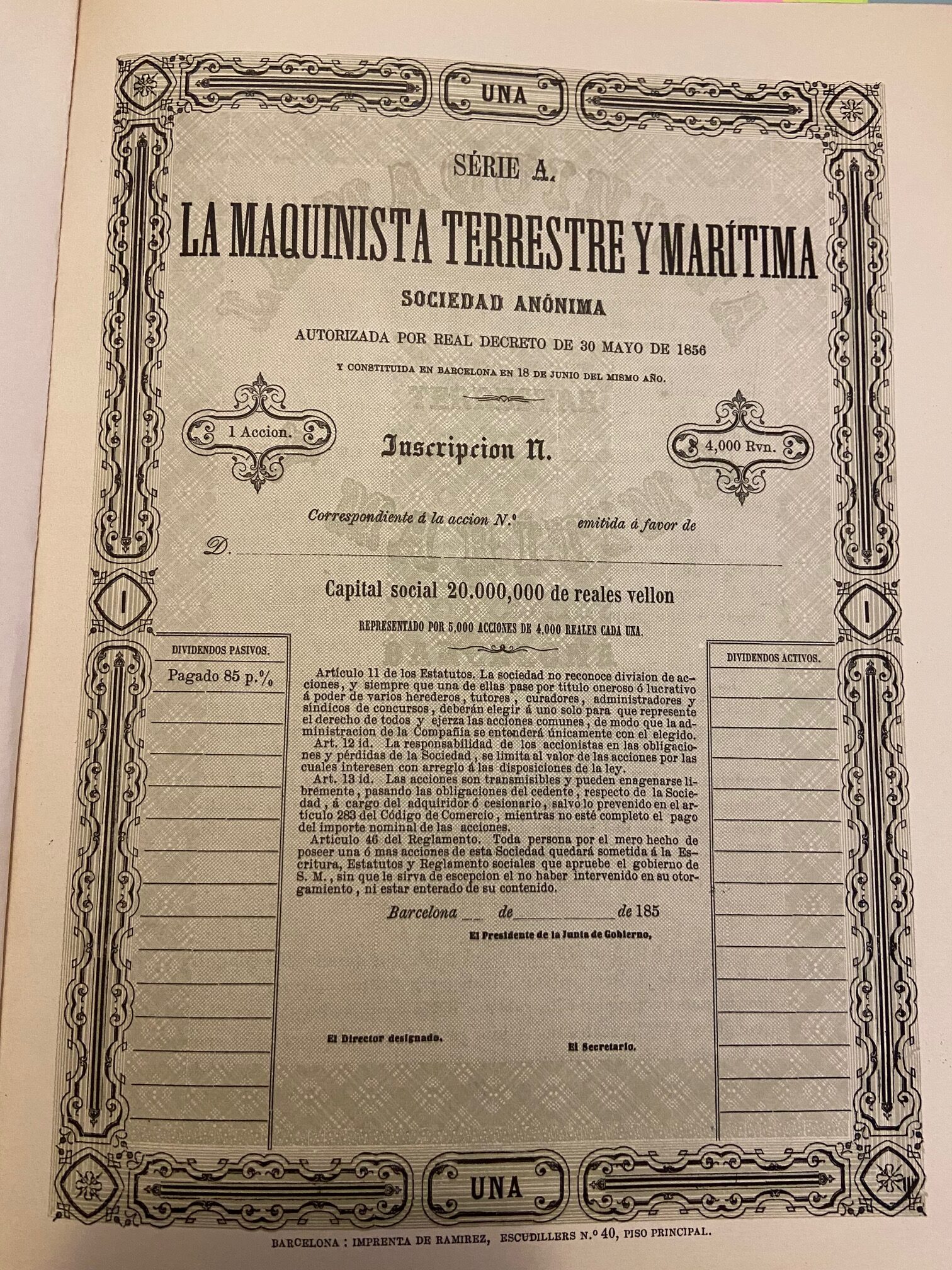
Faced with the need to grow in order to take on increasingly ambitious and complex projects, La Sociedad Anónima La Maquinista was founded in 1855 as a result of the merger between the workshops of Valentín Esparó Giralt (Valentín Esparó y Consocios), acquired from the Bonaplata company in 1839, and Sociedad La Barcelonesa (Tous, Ascacíbar y Compañía), founded in 1838 by Nicolás Tous Mirapeix and Celedonio Ascacíbar. They were joined as main shareholders by Ramón Bonaplata, Josep M. Serra, Juan Güell Ferrer, José Antonio de Mendiguren, and Nicolau Tous Soler. All were prominent members of the bourgeoisie.
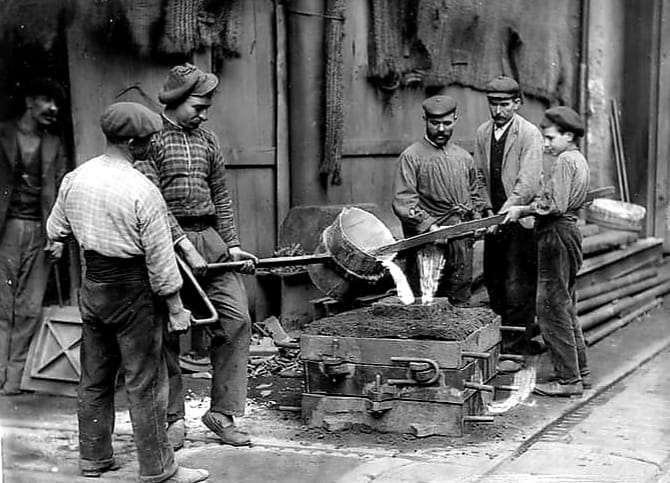
According to its statutes, “La Maquinista’s purpose is the smelting of metals, the construction of ships, boilers, land and sea steam engines, railway locomotives, hydraulic motors, motion transmitters, spinning, weaving and printing machines, and any other machines deemed appropriate.”
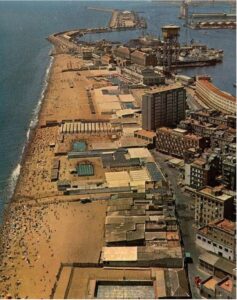
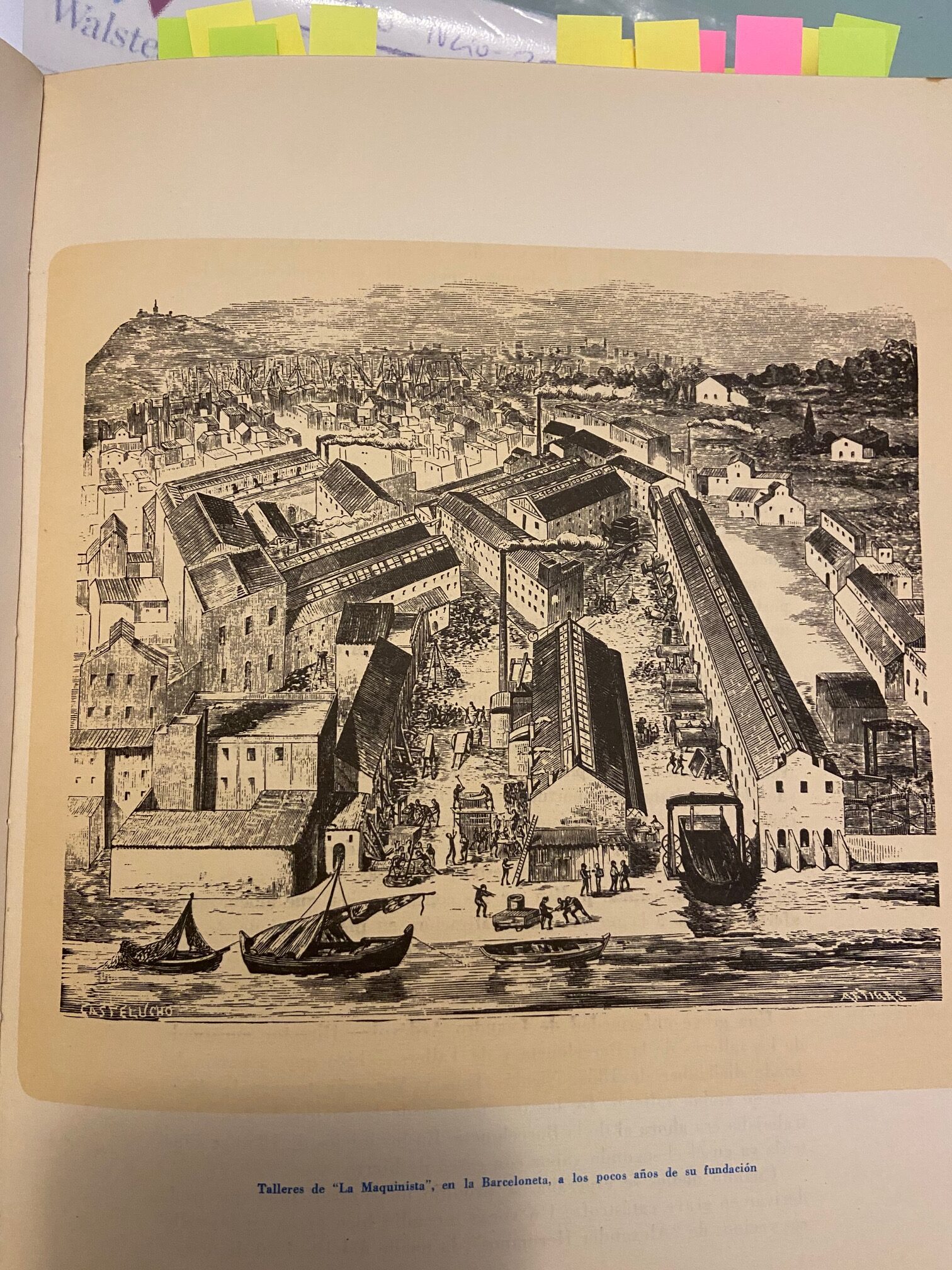
It was in 1861 when the new workshops were built on the land that Valentín Esparó had acquired in Barceloneta in 1852, located next to the sea and adjacent to the Alexander brothers’ machinery workshops and Antonio Valls’ baths. The facilities had a total area of 17,500 m².
The value of these workshops was estimated at 1,600,000 reales de vellón. One real de vellón was equivalent to 0.25 pesetas. In other words, 1 euro would be 664 reales de vellón. Following the conversion, La Maquinista was valued at €2,409 in today’s money… but 170 years ago!
Industrial development
The railway and industrial boom of the period catapulted the production of the newly created company. At that time, the company still maintained its workshops on Calle Tallers and Calle San Pablo, but production at the new Barceloneta workshop quickly rendered them obsolete and with residual production, until their closure in 1862.
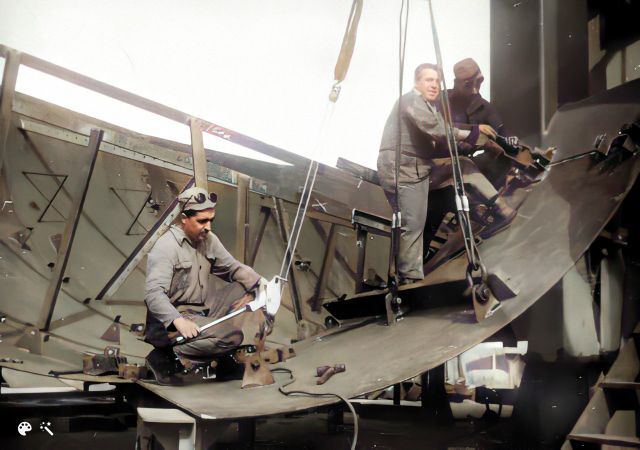
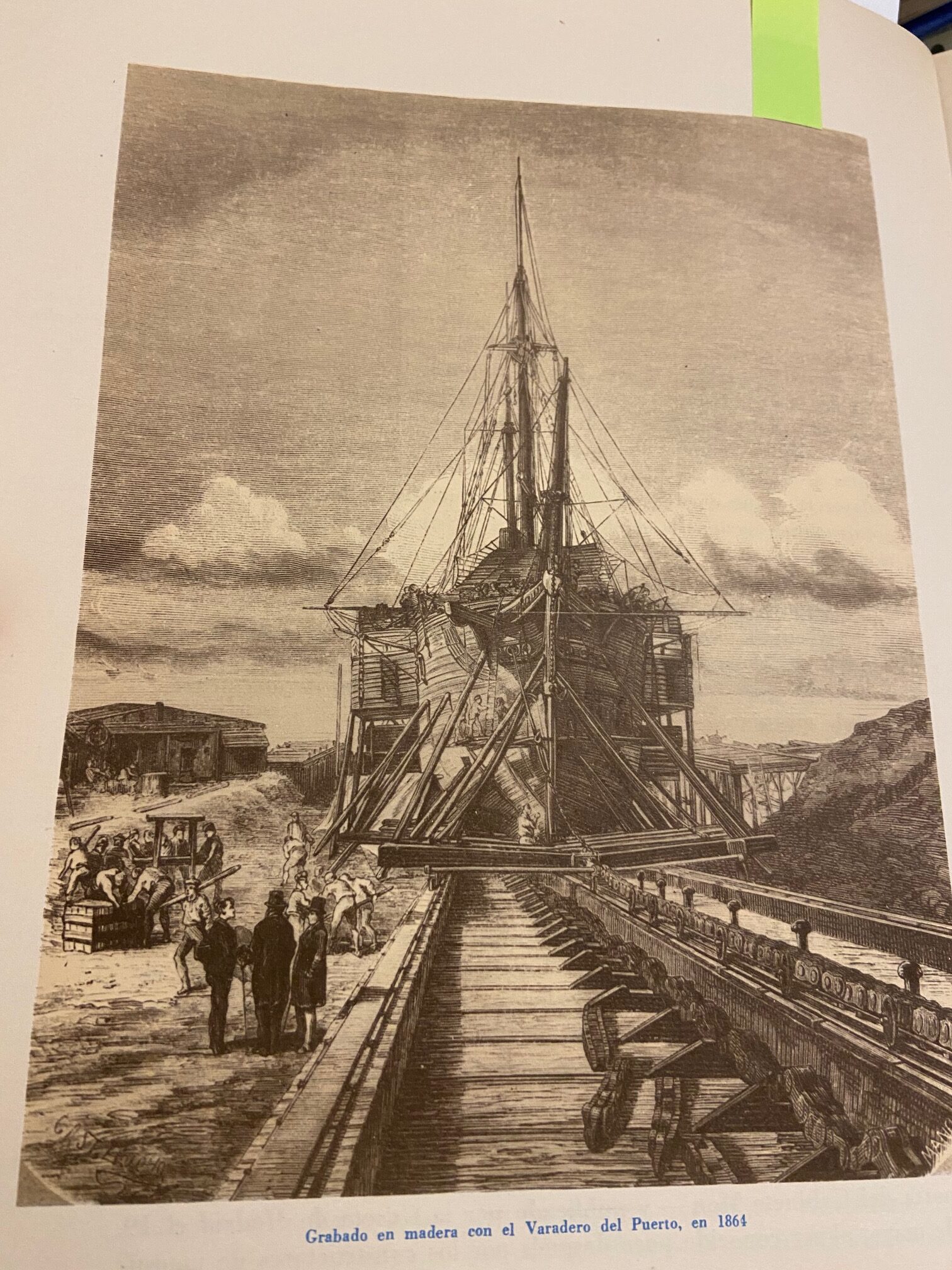
In parallel with orders for the railway and industrial sector in general, the first nautical work began. Initially, this involved repairs, but later on, it expanded to include the construction of steamboats, barges, and all kinds of increasingly larger vessels. This necessitated the construction of its own slipway, which was inaugurated on June 3, 1864. With this slipway and in coordination with existing workshops in the area, such as Talleres Vulcano, the company was able to take on ambitious naval projects.
In addition to machinery manufacturing, there was demand for civil engineering works, especially bridges for the growing railway network (in 1884, Spain had 70 railway lines totaling 8,266 km of track) and buildings such as markets, notably the construction and installation of the Mercado Central del Borne in 1875.
International projection
La Maquinista was an example of progress and pride for a country that was embarking on a process of industrialization in which Barcelona played a leading role. With a presence at the Universal Expositions in Barcelona in 1877 and Paris in 1889, La Maquinista also began to receive orders from other European countries. This increase in demand necessitated the expansion of workshops and the continuous renewal of machinery and facilities.
It is worth mentioning some unique and, of course, innovative commissions for the time, such as the spectacular iron scaffolding used to erect the Statue of Columbus, and a novel hydraulically operated elevator. These were one-off projects that were combined with recurring and larger commissions, such as those from the Spanish Navy. At this time, demand from the nautical sector exceeded that of the railway sector for the first time.
20th Century
As is often the case, political movements always play a decisive role in the economy. La Maquinista went through periods in which tariffs, trade agreements, and biased awards and decisions had a positive or negative impact on its work. The early years of the century were quite “turbulent.” In addition to political upheaval, there was the growth of the labor movement, with demands, strikes, and not always peaceful actions by anarchist groups. There was also national competition led by the Sociedad de Altos Hornos de Bilbao.
Some orders were reduced and new ones arose thanks to new “needs.” New gas and electric lighting, sewerage, and other civil works required iron. It was during this period that Barcelona’s Ensanche district was developed.
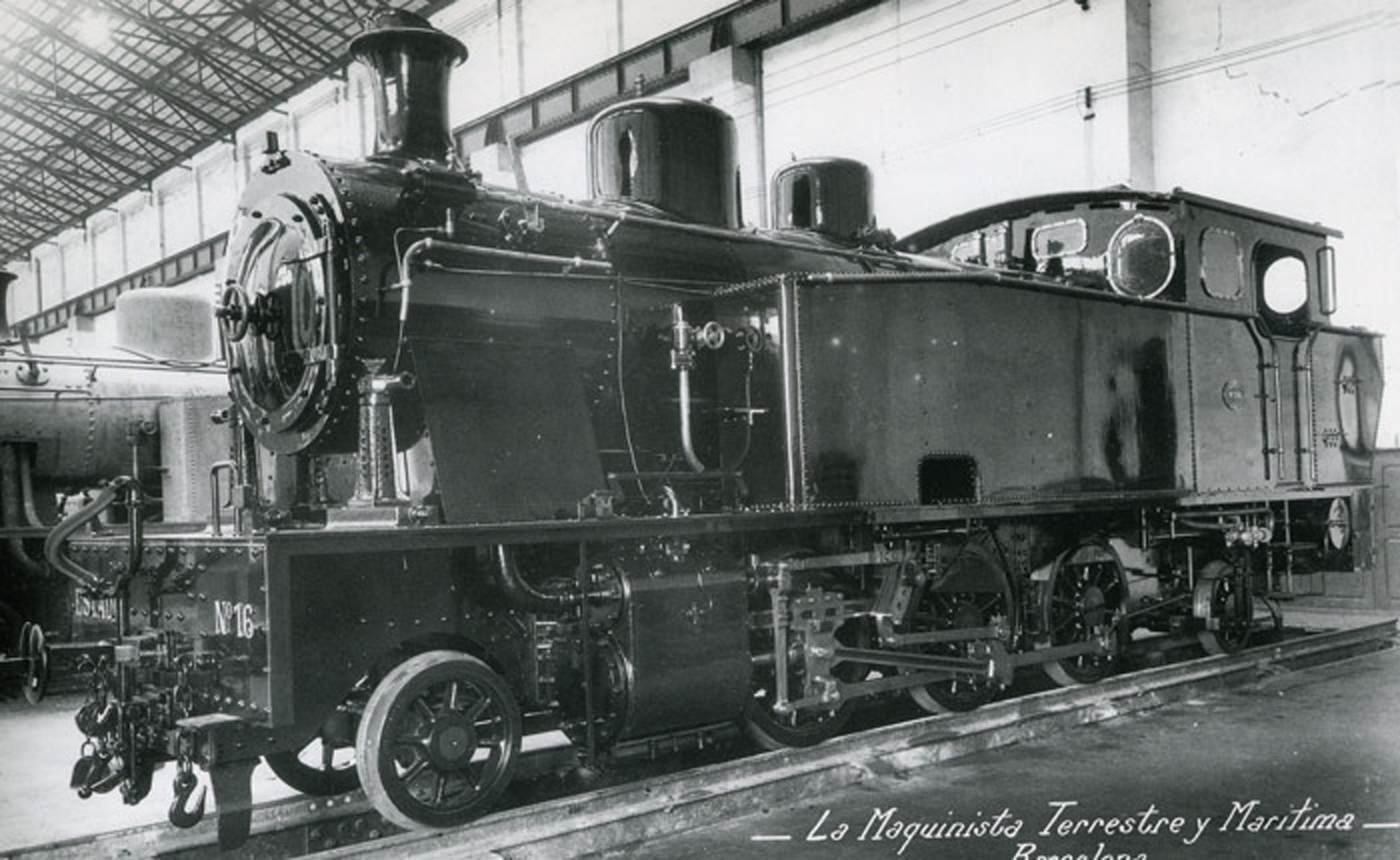
More good news! Maquinista signed an agreement with the Madrid to Zaragoza and Alicante Railway Company first and then also with the Northern Railway Company to cover all locomotive production. The company positioned itself as a large-scale specialist in this sector, which guaranteed it a continuous flow of work, the interest of investors, and the consequent capital increase. In a Europe emerging from World War I, this renewed and prosperous Maquinista found a market in need of its services.
An example of this capability was the manufacture of the “1,400,” an innovative locomotive with large dimensions, high power, modern design, and low consumption, mass-produced to meet demand for dozens of units.
The Sant Andreu workshops
The Barceloneta facilities were expanded to cover all production, and in 1920 workshops were also built in San Andreu on an initial area of almost 10,000 m².
This period saw the emergence of the first “underground railways,” the Metro as we know it today. This created new and productive demand for the company, which was already considered internationally as the leading specialist in locomotive manufacturing. Orders such as the one placed by the government in 1926 (250 locomotives, 9,000 freight cars, and 300 passenger cars, plus a public works plan budgeted at more than 3.5 billion pesetas at the time) allowed the company to double its production and significantly expand its workforce. In 1927, La Maquinista reached its peak production, which has never been surpassed since. In addition to its usual orders, it received other specific orders, such as those for the 1929 International Exposition, including the Estación de Francia railway station.
Turbulent times
Although production remained acceptable, the Second Republic was a complicated period, with numerous labor disputes and strikes that did not help an industrial sector that was predicted to face difficult times. The situation forced the company to resort to layoffs and early retirements.
Logically, the Civil War period (1936 to 1939) was not much better. In the first phase of the conflict, La Maquinista was declared a “war industry” under the control of the Republican War Industries Committee, and was taken over and collectivized by the Generalitat. With Franco’s victory, it was agreed to “reiterate La Maquinista’s adherence to the National Movement and the Government of the Generalissimo, to establish its registered office in Seville and not to recognize any validity in the agreements made by the workers’ councils” during the Republican period.
Under the new regime, La Maquinista resumed its activity in order to, as the press of the time said, “participate in the noble task of rebuilding Spain.” Aware of the company’s importance in the industrial development of the state, the new Board of Directors decided to appease employees with incentives, pensions, and aid, including for the families of workers who had died in the conflict.
After the war, rebuilding Barcelona, among other towns, was a priority task that required the participation of La Maquinista, both to renovate and to construct new buildings, housing developments, pipelines, and facilities of all kinds.
Boom in the textile sector
A new and very interesting line of manufacturing was launched, but one that was very different from those that had been common up to that point. The manufacture of textile machinery had little to do with production for the railway, shipbuilding, or urban development sectors. In order to meet this demand, the company decided to acquire a workshop in Manresa with proven experience called Maquinaria Industrial S.A.
This slow but steady industrial boom in Spain coincided with the outbreak of World War II in Europe. There was a logical lack of international demand, but also a shortage and increase in the price of raw materials.
The end of the war brought a new world scenario. Spain joined the Western military system and, among other things, signed an economic and trade agreement with the United States that favored industry, and La Maquinista in particular.
On May 24, 1947, Franco visited La Maquinista, taking advantage of the commemoration of the centenary of the first Barcelona-Mataró railway in 1848.
At this time, a new demand emerged: electric and diesel turbines and engines used in the dams that were regularly being built.
Urban development boom
It was also a time of urban development. Cities were growing and there was an urgent need to build housing. The Ministry of Public Works accelerated urban improvements and the construction of large housing complexes. Logically, La Maquinista was a key supplier in this construction boom.
In 1941, Renfe (Spanish National Railway Network) was created to nationalize the railways, and it naturally became one of the main customers of the company specializing in the sector. During these years, there was also a notable increase in demand for naval vessels, both merchant and military.
A century-old company
In the 1950s, the neighborhood had become a kind of industrial hub, home to La Maquinista, Talleres Nuevo Vulcano, and Astilleros Cardona, among others. All of them were pioneers and synonymous with modernity, providing employment for a large number of local families.
The centenary of La Maquinista was celebrated in October 1955 with an extensive program of events, both in the Barceloneta and San Andrés workshops. Among others: a speech by the then president of the company, Félix Escadas, mass at Santa María del Mar, a tribute to all the presidents and directors in the company’s history, a reception at the City Hall, the Provincial Council, and the Monastery of Montserrat, music festivals at both the Palau de la Música and Montserrat, a visit from the Minister of Industry, and, in the days that followed, a visit from the then Prince Juan Carlos de Borbón.
In 1956, the company was declared a “company of national interest.” In theory, this was a kind of official guarantee, but it also meant a certain loss of autonomy. These were years in which the national economy was experiencing a period of expansion, with high demand in construction, both public and private, and in the other industrial sectors in which the company was present, while at the same time increasing the production of increasingly popular diesel engines.
Closure of the Barceloneta workshops
Production was gradually transferred to the San Andrés workshops, which had been built in 1917. Their facilities were more modern, and their size of over 100,000 m² allowed them to expand without the constraints of Barceloneta, which was surrounded by buildings and the sea. It quickly reached a workforce of 3,000 employees, while sections of the neighborhood factory were closed and shifts were cut.
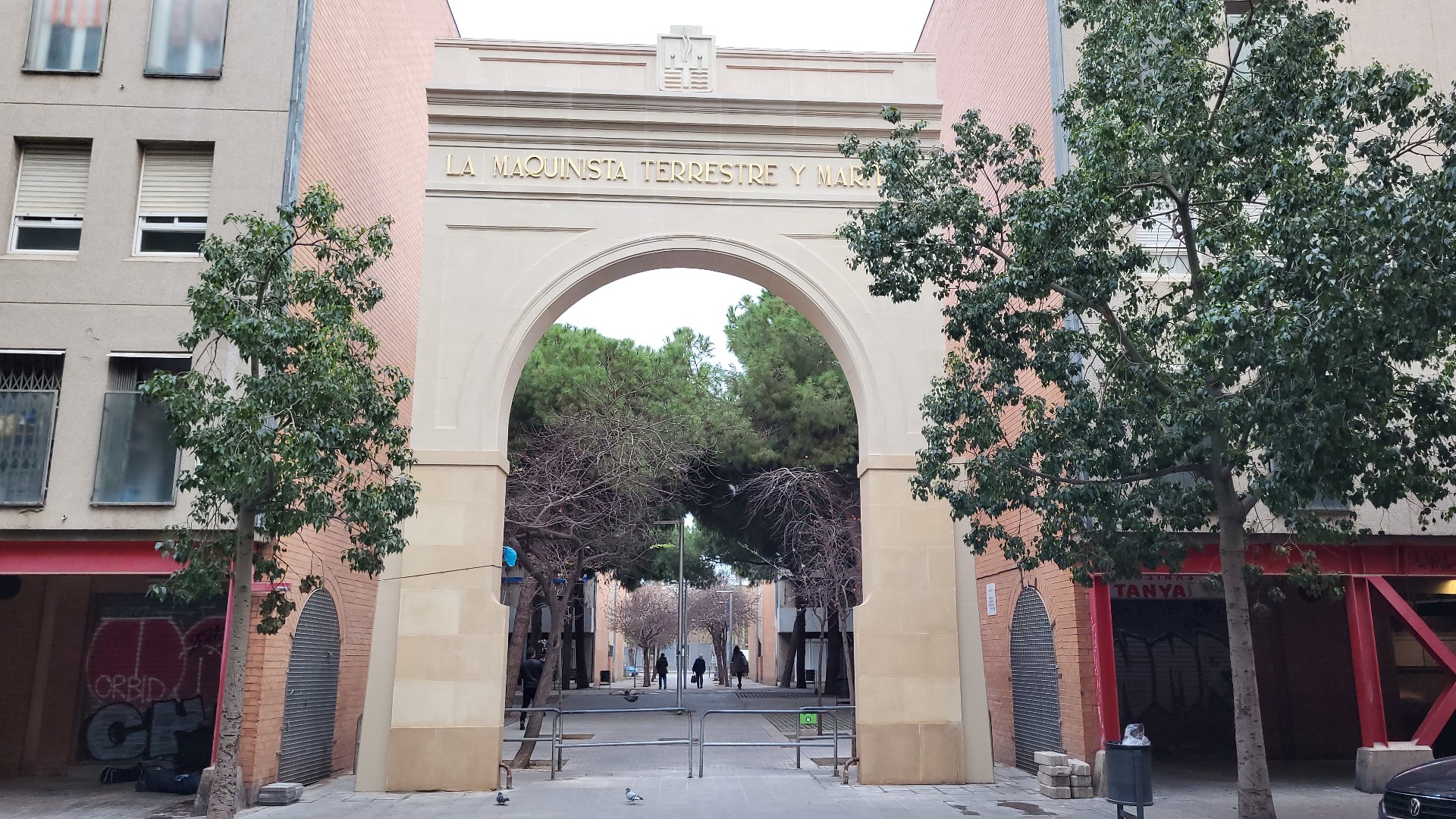
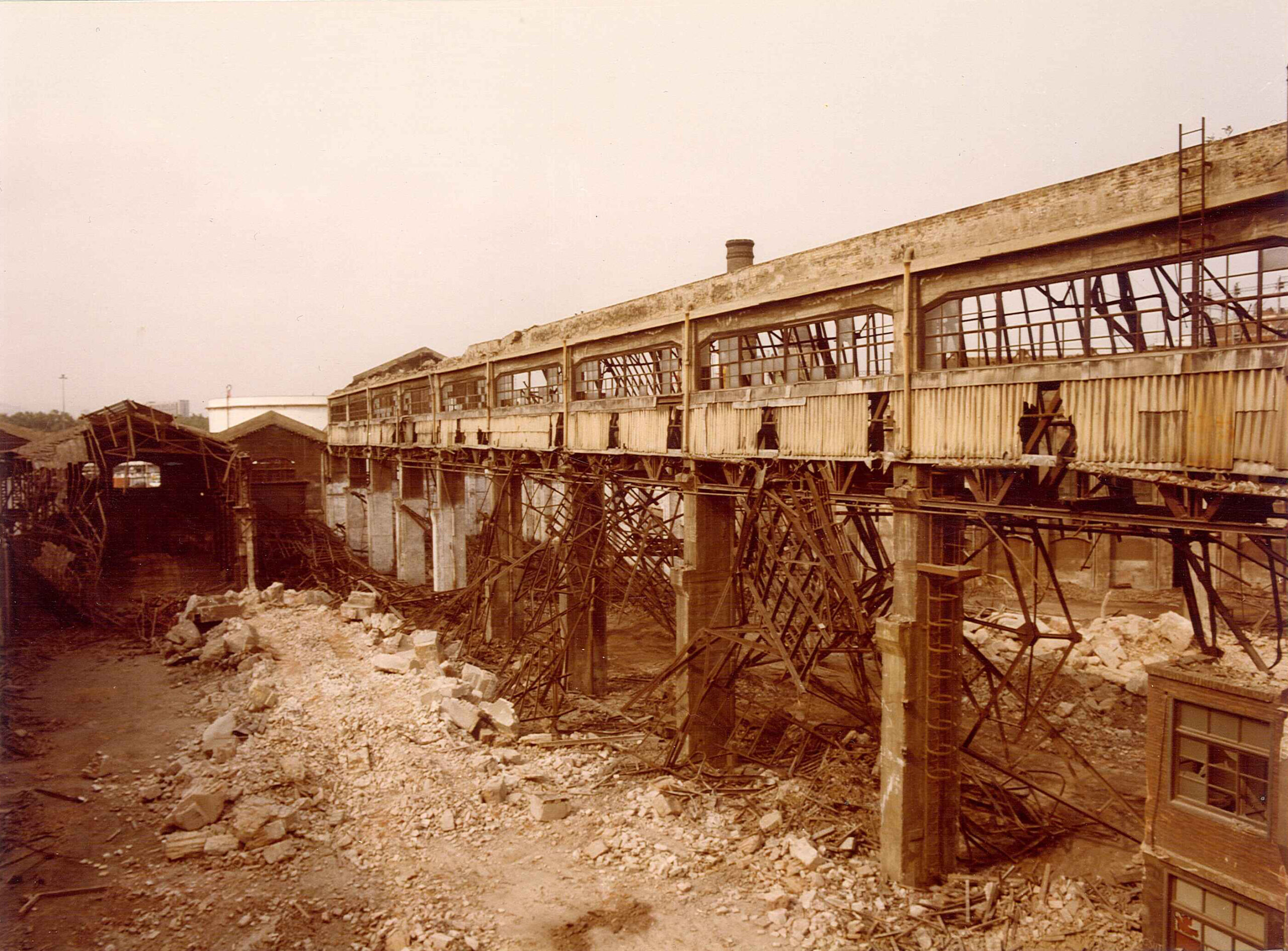
Finally, in 1965, the Barceloneta workshops were dismantled and used as a warehouse until their final demolition in 1979. The land was used for housing and school facilities. The entrance arch of the old factory is still preserved.
In 1989, La Maquinista merged with Macosa, giving rise to the creation of Mediterránea de Industrias del Ferrocarril, S.A. (MEINFESA), which was acquired by the French multinational Alstom.
Around 1993, the San Andrés de Palomar workshops were also dismantled and moved to the facilities built between the municipalities of Santa Perpetua de la Moguda and Mollet del Vallés.