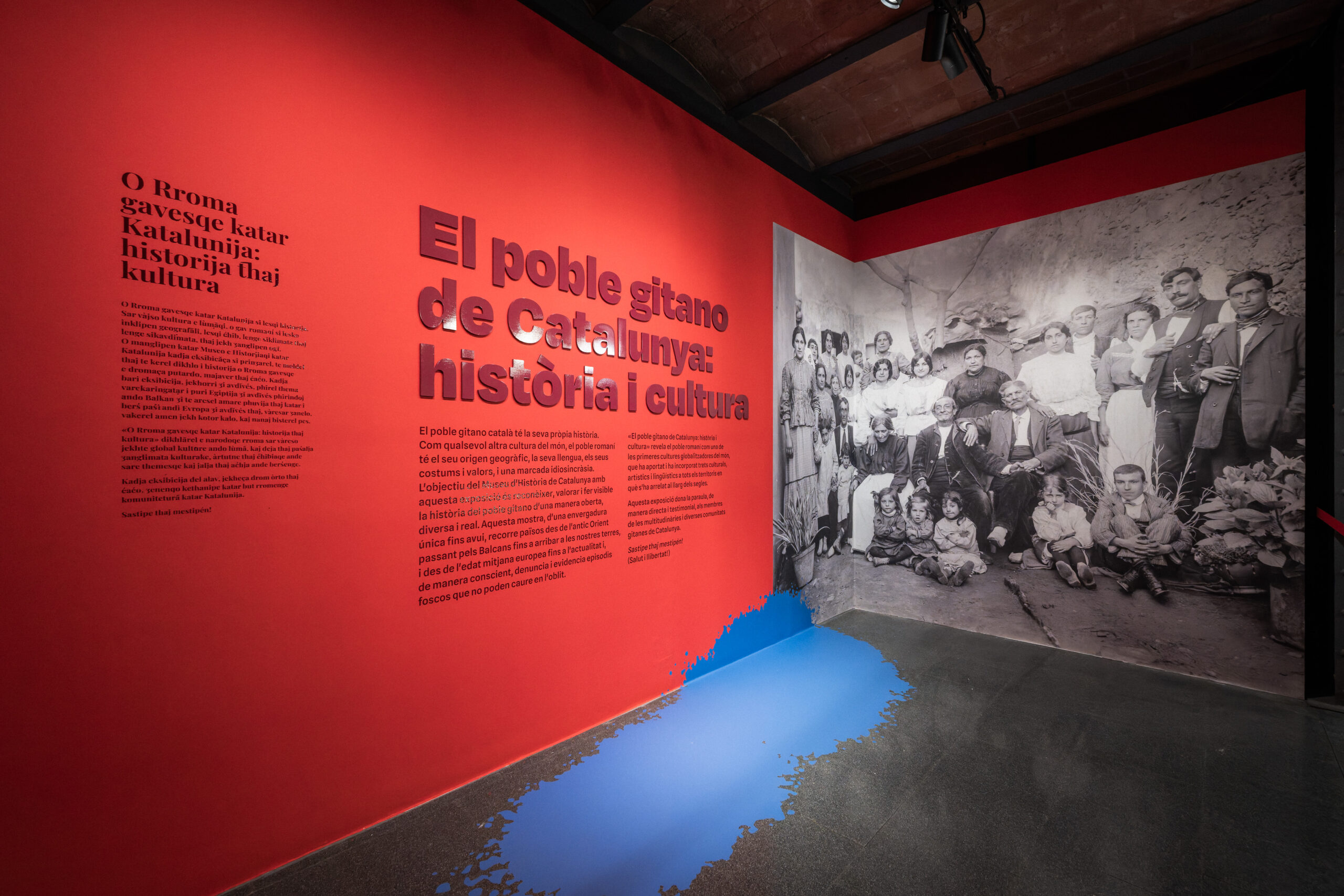
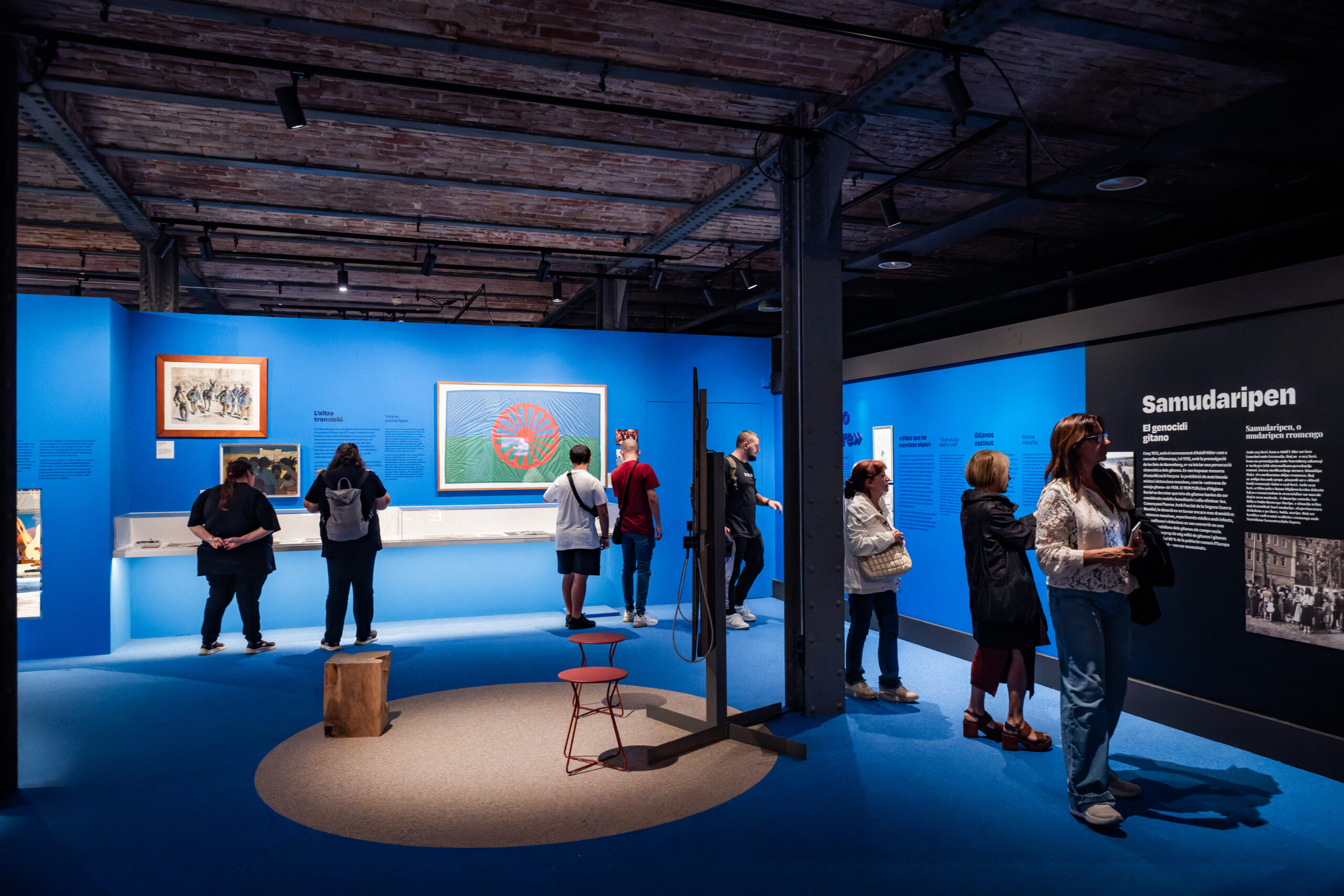
Until August 2, 2026, visitors can see the exhibition “The Gypsy People of Catalonia: History and Culture” at the Museum of History of Catalonia (MHC), a large-scale exhibition organized by the MHC with the direct collaboration of the Catalan gypsy community. The exhibition is part of the commemoration of the 275th birthday of Baron Estardipen and the 600th anniversary of the arrival of the Gypsy people on the Iberian Peninsula, within the Year of the Gypsy People 2025.
The exhibition invites the public to discover the historical, cultural, and social legacy of the Gypsy people in Catalonia and, at the same time, to reflect on the difficulties and discrimination they have suffered over time and which still persist today.
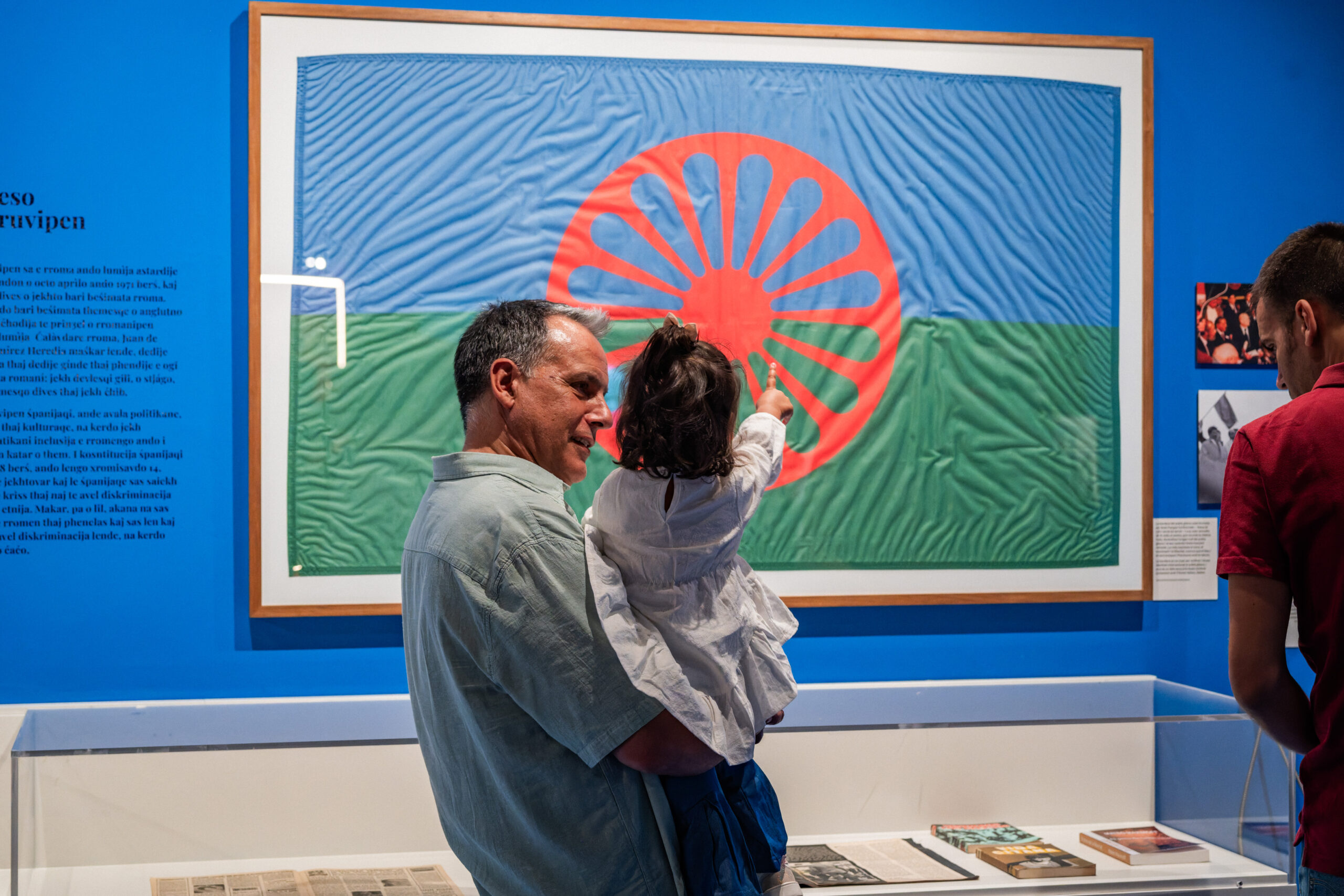
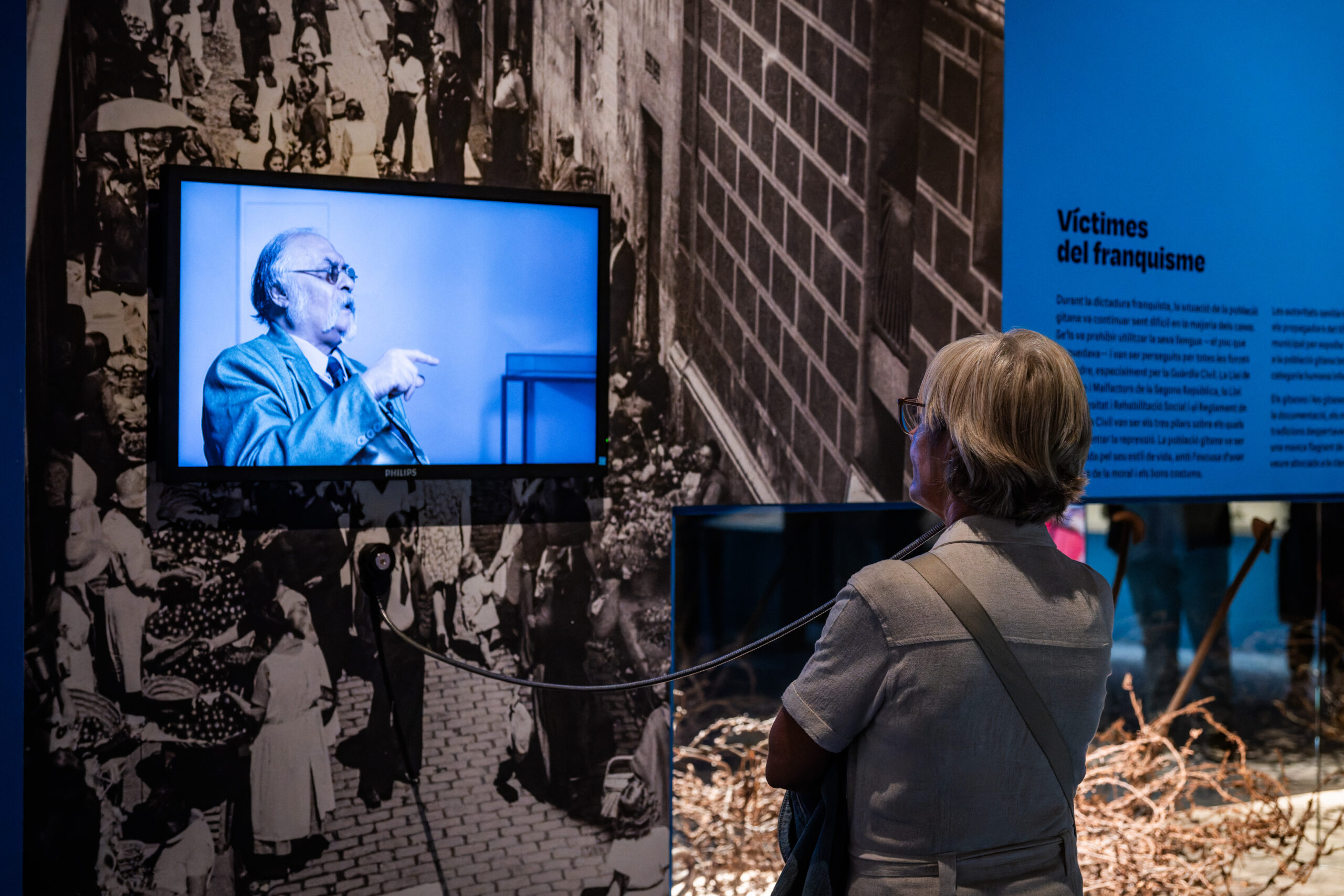
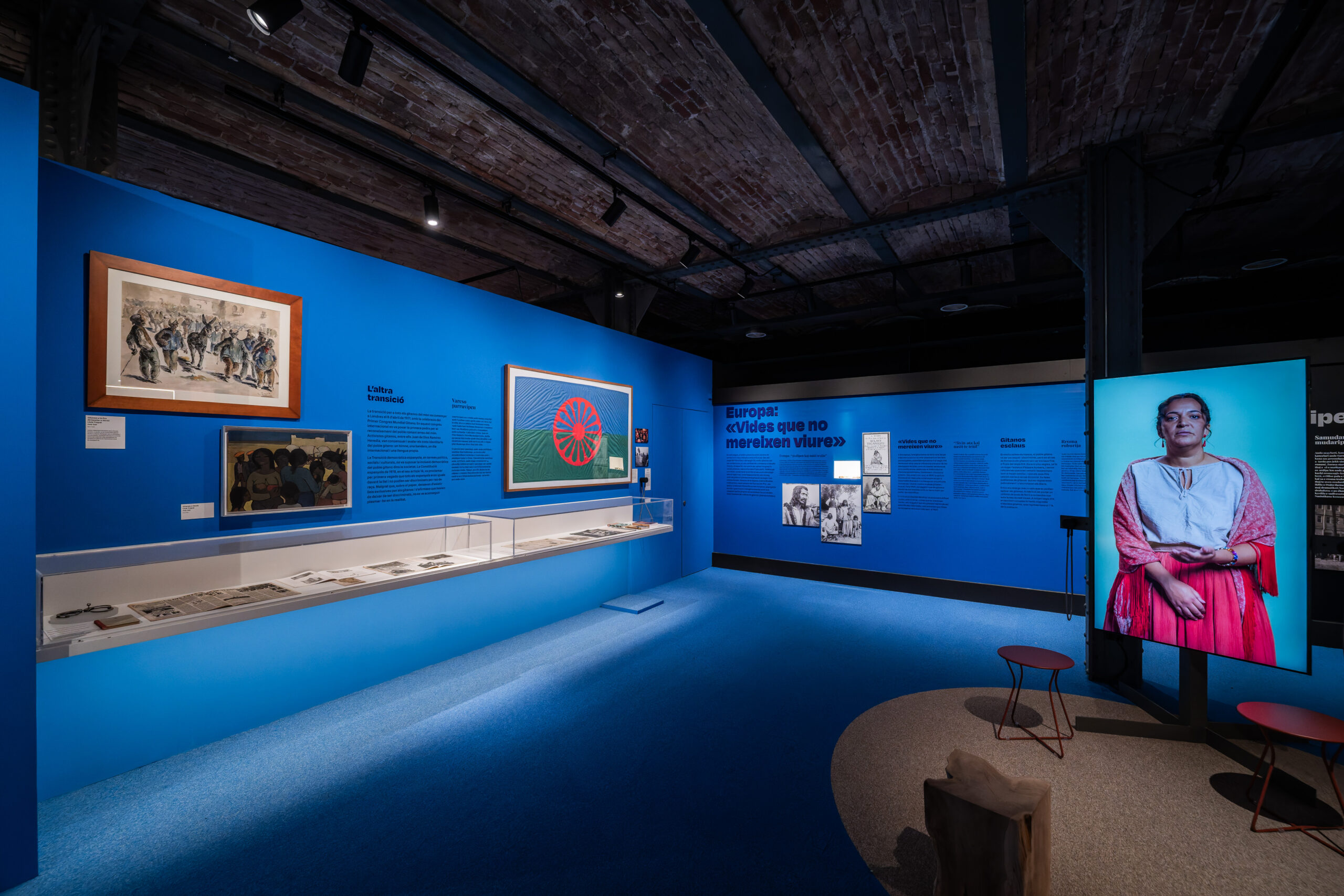
The exhibition is organized into nine sections that combine historical explanations with personal testimonies, from the origins of the Romani people to their struggles for rights, living culture, and future challenges. Through photographs, historical objects, instruments, audiovisuals, and an immersive space, the exhibition focuses directly on Romani men and women from across the region. The narrative highlights their contributions to the culture, language, and social life of Catalonia, and addresses issues such as structural anti-Gypsyism, recognition, and the need for symbolic reparation.
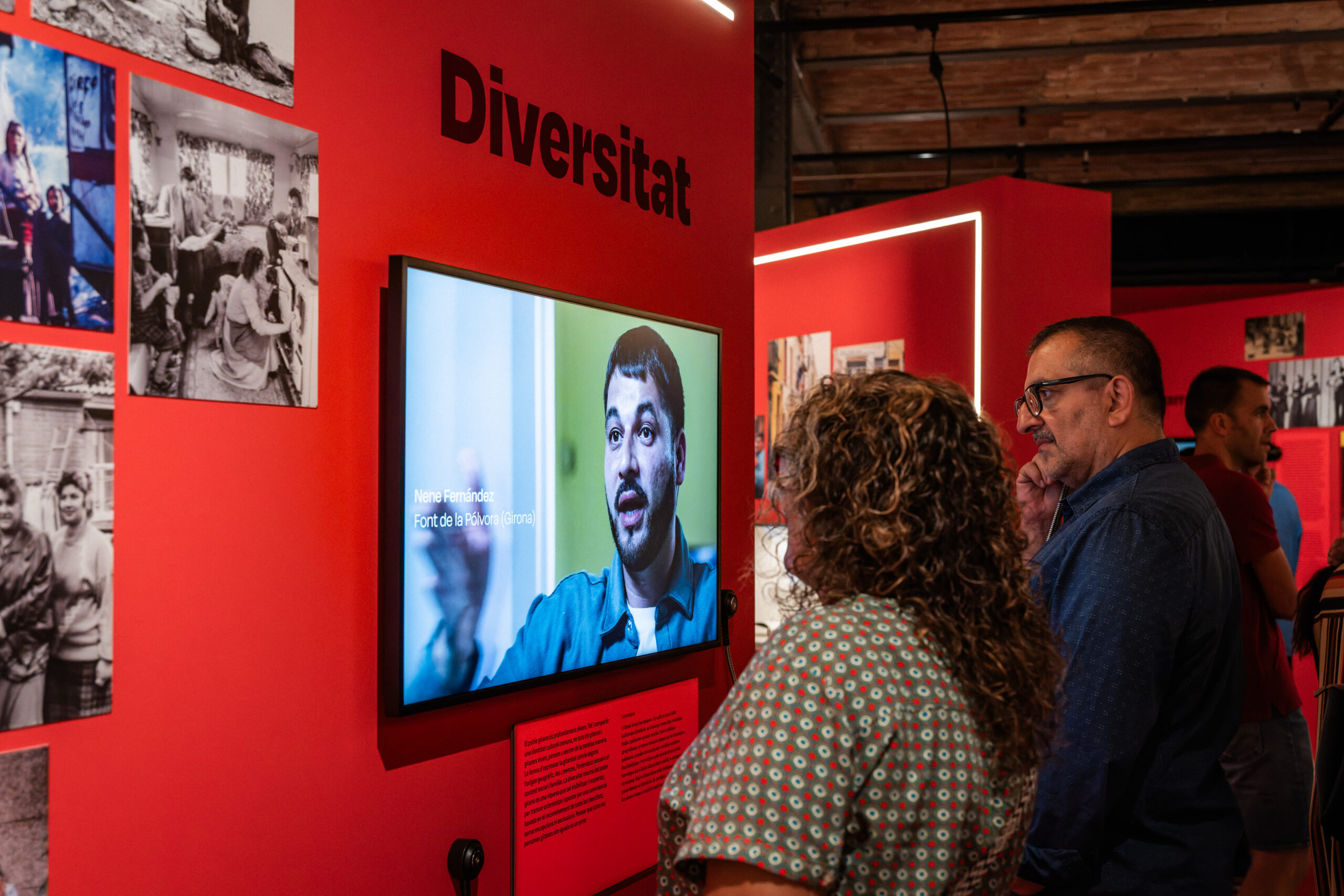
The exhibition is the result of an extensive participatory process with the Roma community in Catalonia, facilitated by the MHC team, led by Raquel Castellà, coordinator and documentalist of the exhibition. As she explains: “Mediation work has been key to creating this exhibition, which is the result of constant dialogue with the community that has allowed us to construct a rigorous, plural, and shared narrative. The contributions of the community have been essential in giving authenticity to the narrative of the exhibition. Each witness is a unique piece of the puzzle, narrated in their own words and with the particular wisdom of those who have lived it. The community has asked us for a living exhibition, where people are the protagonists and speak to us in the first person.”
One of the central elements of the exhibition is the role of the Romani community as the protagonist of the narrative. The project is the result of a broad participatory process promoted by the MHC, with more than 160 oral testimonies collected in Catalonia and Northern Catalonia. Through these voices, the community shares memories, experiences, desires, and dreams, offering the public a plural and diverse view of their reality.
The exhibition also brings together previously unseen objects and more than 150 images from various Catalan archives, as well as pieces loaned by Romani families, a gesture that reflects the trust and collaboration established with the museum. This alliance between heritage institutions and the community helps to strengthen Catalan Gypsy memory and heritage. With this proposal, the Museum of the History of Catalonia reaffirms its commitment to community participation and the inclusion of voices historically absent from the official narrative, consolidating itself as a space for encounter, dialogue, and the construction of collective memory.