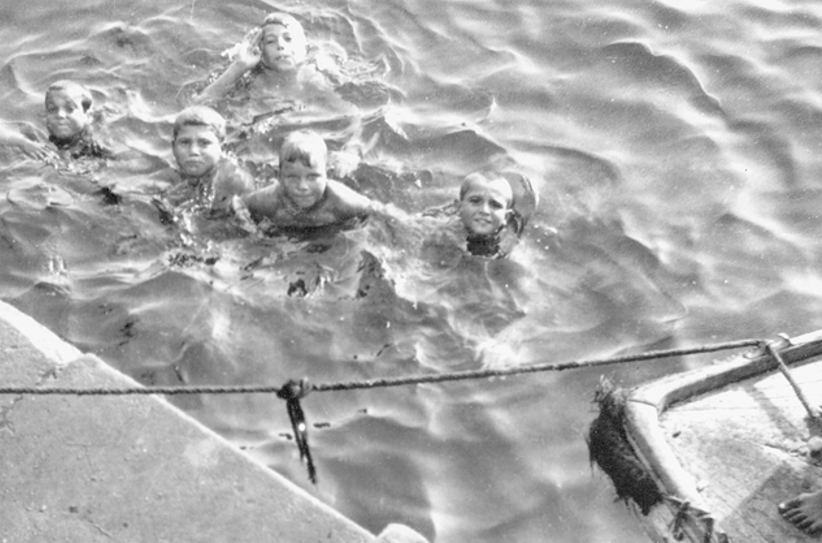
We kept repeating this phrase from the water, with our heads above the surface and our right hands waving in the air like a water polo goalkeeper.
Visitors from Barcelona and foreigners stood watching those kids, who, with the work ethic of ten-year-old, were able to retrieve the ten-cent coins thrown into the murky waters of the harbor from the bottom. They thought we were gathering them from the bottom, but in reality what we did was catch them just as they hit the water, and then we’d dive a couple of meters with the coin in our hand to resurface right away and show it to that group of hypocrites, who, far from doing charity, were driven by the morbid possibility that one of those “miserable” children might drown, even if only so they could recount it at their sleepy rich-people gatherings, or in front of their wives and children, who would be incredulous at a story he would strive to make as dramatic as those in Buñuel’s films (another distinguished figure who surely, in his day, must have also tossed the ten pesetas into the harbor waters).
Florinda stood waiting on the pier with a few kids who were more afraid of the cold and loved jumping even more when they tossed the coin, just to make it more spectacular. The tourists and the Barcelona locals tried to throw it farther and farther to make it harder for us, but there were a lot of us, and we could fan out, so we covered a lot of ground. They threw a lot at Florinda because they knew she was a girl; she was wearing some boxers (her brother’s, I suppose) and covered herself with a towel that she let fall the moment she jumped, much to the delight of the charitable pedophiles, who for four pesetas could enjoy a show that under other circumstances would have cost them much more.
After a morning in the water, we could each make a peseta, though Florinda made double that. We used to dive into the Moll de Llevant, right between the cable car tower (which was closed at the time) and the breakwater. The show ended when we got tired of splashing dirty water or the donors’ generosity waned, and only the photographers remained—who didn’t spend a penny because they surely needed the money more than we did, and hoped that a photo essay like that would one day become part of a historical archive, from which they could make a tidy sum.
* Extract from the book “Ostia Chronicles . Barceloneta 1949-1992”.