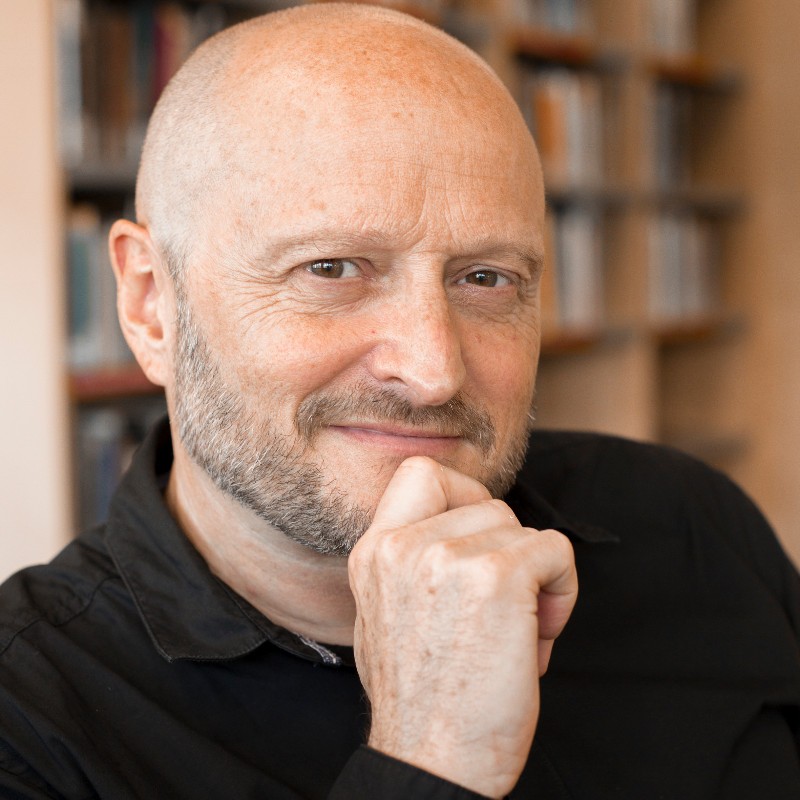
Marcel Cano Soler, PhD in Ethics
He was born twice, he says—once in Narbonne, the geographical location, and once in La Barceloneta, where he came to understand who he is, who his people are, and what his neighborhood is all about (though he still loves the Languedoc a little, too!).
With dysorthography and dyscalculia, and having been a poor student, it’s not bad to go on to become a Doctor of Philosophy and a recognized specialist in applied ethics. Something that is sorely needed in these times.
-Bon Jour, Marcel.
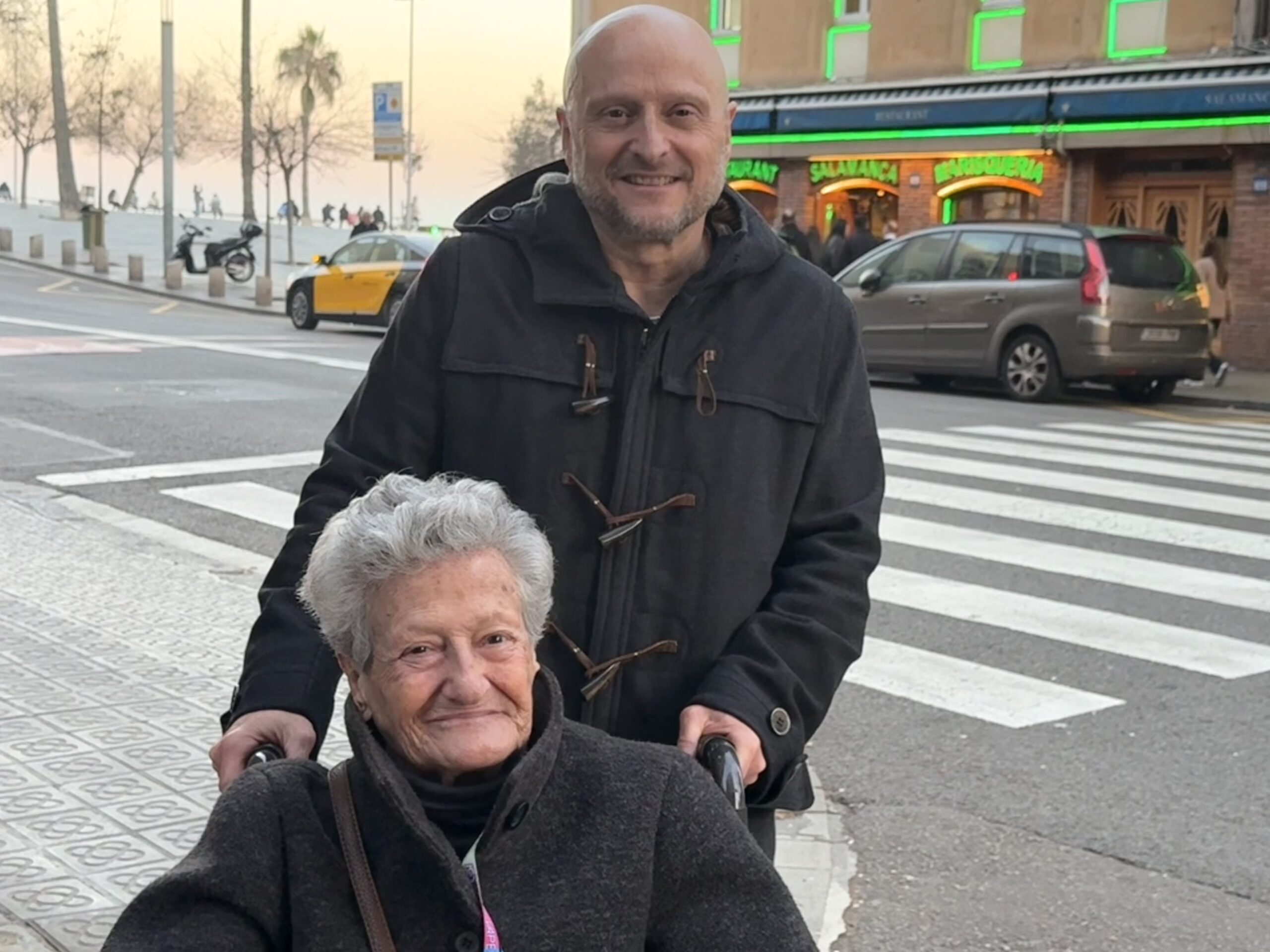
Better „Buenos dias”. I was born in Narbonne, France, but I moved to Barceloneta before I was a year old. My father is French, and my mother was born in Barceloneta, as were my grandfather and other generations of my family. We were a working-class family living on Vila Joiosa Street. A family that has always loved me. To me, the best.
– Buenos dias, then, Marcel.
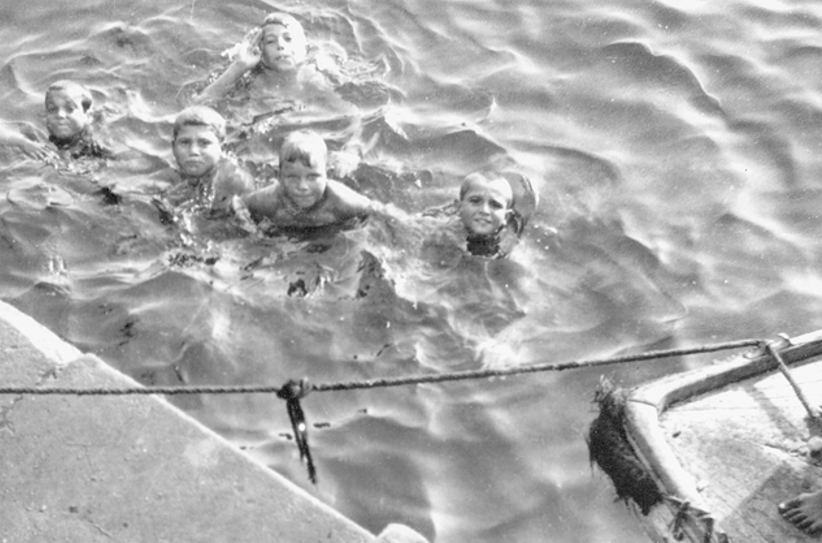
When I was 15, my whole world revolved around the neighborhood, the beach, and the club; we played at Takatá and soccer. When we were 15, we moved to Narbonne for work, but we always came back to Barceloneta for vacation, until I moved back for good when I was 18.
-Difficulty with languages, complicated training…
School was a struggle for me when I was little—so much so that my grades were like binary code: all zeros and ones. I was a terrible student.
-Says a university professor.
For me to get good grades, two conditions had to be met: first, the subject had to interest me, and second, I had to like the teacher!
-When did it change?
In France, I did vocational training in gardening. The school counselor asked me what I liked, and I told him nature. So I went to study this subject, which I ended up really enjoying: creativity and some basic principles of applied science. The school was in Castelnaudary, 90 km from Narbonne. After finishing the two-year program, I wanted to pursue engineering, but the school was even farther away, in Pau. So my mother told me that, since I was going so far, I should go back to Barcelona to live with my grandmother—which made me very happy!
-Studying gardening in Barcelona in the 1980s?
This was a shock: the only school where you could study gardening was the one in Montjuïc, and at that time, the teacher there told me that what I had studied was much more advanced than what they did there, which was very basic. But I was lucky because something happened that would open up new horizons for me: they recognized my two years of vocational training as equivalent to the first year of high school, and I enrolled at our Joan Salvat Papasseït High School.
-With failing grades and all that again?
It was difficult… I spoke Catalan, obviously, but I’d never written it (as a kid, I went to the French school in Barcelona), and then there was high school math and physics… Combined with dysorthography and dyscalculia, it wasn’t easy, but I had some fantastic teachers.
-Your situation: did you just happen to get along with the professor?
That luck included meeting Salvi Turró Tomàs; he opened the doors to philosophy for me. I discovered a whole new world. Thanks to him, I pursued my degree at the UB, where I had him as a professor again.
– What a coincidence.
Well, there’s more. A friend from the neighborhood—Joan García Serrano, “Juanito” to us—a biologist and professor at the UPC, encouraged me, capitalizing on my interest in nature, to apply my knowledge of philosophy to environmental and technological issues. I did a graduate program with Dr. Margarita Boladeras. She was my first thesis advisor (along with Norbert Bilbeny). Later, Juanito again introduced me to a group of engineers and scientists who taught and conducted research at the UPC in the UNESCO Chair in Sustainability at the UPC in Terrassa. It was a truly unique team. We had students from all over the world, and now, a strange oddball in Philosophy.
-Plus, a university professor.
The chair offered an international master’s program and a doctoral program… I taught courses on ethics applied to sustainability, technoscience, and bioethics—subjects that not many people knew much about in the 1990s.
-Well, in 2026, I’m not entirely sure what it is either.
It’s a discipline that emerged in the 1970s, blending Philosophy, Law, and Anthropology with the Biomedical Sciences, but it also addresses environmental and social issues. Plus, it’s constantly expanding its scope—for example, with Neuroethics.
-And what is Ethics?
There is a wealth of literature and books on the subject, but I always try to approach it as a critical and rational reflection on morality, prejudices, and our actions. It always requires: providing a basis, presenting arguments, and offering justification.
-For example?
From a young age, we’ve always been told, “You shouldn’t say that” or “You shouldn’t do that.” There comes a time when we must ask ourselves, “Why?” and, above all, “Why not?” What is the reason behind this prohibition? What are its consequences, whom does it affect, and what interests lie behind the “no”? Why isn’t it possible?
-And that “why not” is a typical example of angry children.
Well, everyone should practice it. There are actions we take simply because that’s how it’s always been—they’re considered correct merely because we’ve inherited them, and we follow them without question. If moral norms rooted in society or culture end up creating injustices, are based on prejudice, or exclude entire groups, we must not obey them. The next step is to ask ourselves how we should behave, what our principles should be, whom we harm or whom we favor… that is, to reflect deeply, to put our critical thinking into action.
-Critical thinking?
And there are two types: the good and the bad. Like cholesterol. The bad kind is the “no just because,” and that’s it. The good kind argues, is open to dialogue and debate, changes, and adapts.
-I’m interested in what’s good.
We might think it’s impossible to build an iron chili pepper that can fly. Why not? Because it weighs tons and can’t fly—logically. Well, someone questioned that, created an airplane, and today it seems normal to us that there are machines that fly.
Or, we used to live in a world where people couldn’t decide about their own life and death, but someone rethought the right to decide what it means to live and die with dignity, and now, after many ethical, social, and political debates, we have a law (Euthanasia) that allows us to decide for ourselves. Established morality said we couldn’t do it. We asked ourselves, “Why not?” and the rest is history.
-Let’s talk about Artificial Intelligence.
For now (and it seems this will continue, though we can imagine it will be perfected much further), AI is “an algorithmic parrot,” as one researcher defined it.
-So, it can’t think for itself.
Some argue that it will in the future. In other words, it will be able to ask itself, “Why not?” But it’s not clear if this will happen; everything points to it remaining science fiction. Right now, AI is a revolutionary tool—we’ll see how far it goes. Throughout human history, there have been many technological revolutions that have changed everything, starting with fire and writing.
Will they destroy jobs?
There are neoliberal arguments that claim it will transform them—that it will destroy many but also create some we can’t even imagine yet. But the question is: for how many people? Will all these jobs be well-paying, or will they exacerbate the widespread job insecurity we already face?
-Can’t we trust the algorithm?
Technology is never neutral, and this technology even less so. There’s always a commercial or other interest behind it. As Melvin Kranzberg, a technology researcher in the 1960s, once said: “Technology is neither good nor bad, but it is never neutral.”
-If you’ll allow me, here’s a tip for messing with AI.
Heh heh. Do what kids do. Keep repeating “Why?” and it’ll freeze up.
-Does the “And why?” also work when I’m listening to politicians?
In these times of polarization, more than ever. We distrust absolute truths. I may agree more with A than with B, but the moment I believe there’s only B, I become a fanatic, a dogmatist.
-And isn’t that precisely what they want?
They use simplified realities that give you a pre-digested, simplified version of complex problems. We don’t question it and we don’t demand explanations. This is what they—whether parties or companies—are after: our polarization.
-When you’re polarized, you’re easier to manipulate.
Vote for me, buy from me, consume me, but don’t think too much.
-Those who don’t think don’t suffer, they used to say.
On the contrary. New processes in our personal, social, and professional lives are accelerating, just as processes like transportation and manufacturing are accelerating. I’m not talking about a positive evolution. That acceleration prevents us from thinking. Your life speeds up, and you have to do more and more, be more productive, and consume more and more until it overwhelms you and you break down.
-Stress.
Mental health… This way of life makes us sick, and on top of that, they tell us the solution lies solely within us, making us solely responsible. Depression, disorders, illnesses… The use of anti-anxiety drugs and antidepressants is skyrocketing, especially among young people!
– What advice does the philosopher offer us?
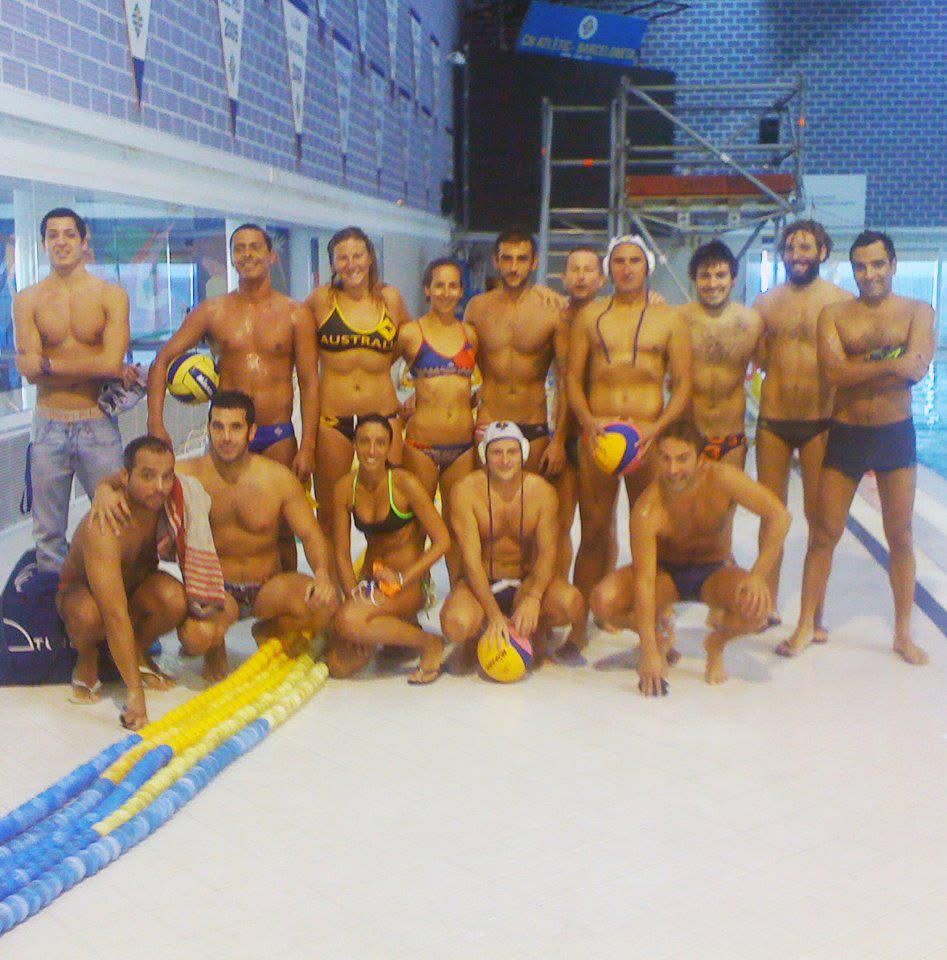
First, to know that we’re not alone, that we’re social beings, that we must share our concerns and struggles with others, just as our grandparents did—in the neighborhood square, at the barber shop, or in the tavern. Socialize. I’ve played sports since I was young. That’s what I’ve always instilled in my daughter. We also need to champion “our” water polo—the social and master’s programs we find at the CNAB, for example.
-Do you recommend going to a bar?
I’m not really a bar person! But when we take it easy, sit down at a table or the bar with our friends to catch up on how things are going, how our sick mother is doing, and—above all—just listen to each other, we’re doing what really matters.
It’s about having a place to meet and talk; it can be the best therapy. You can do it anywhere, but there are still a few old-school neighborhood bars left where you can chat.
-Well, I’ll turn off the recorder, and let’s go grab a drink at one of them.