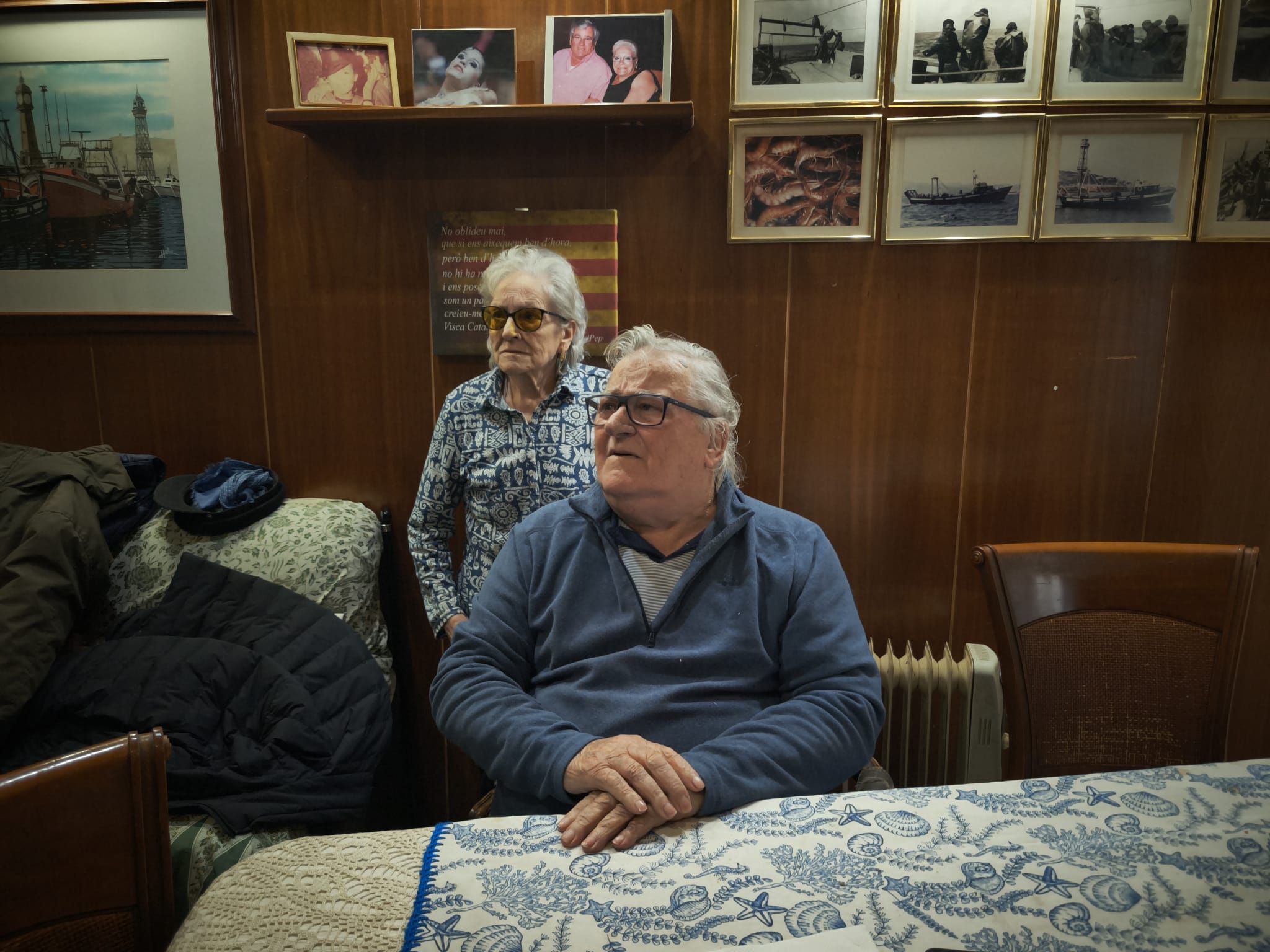
“I was a fisherman before Saint Peter”
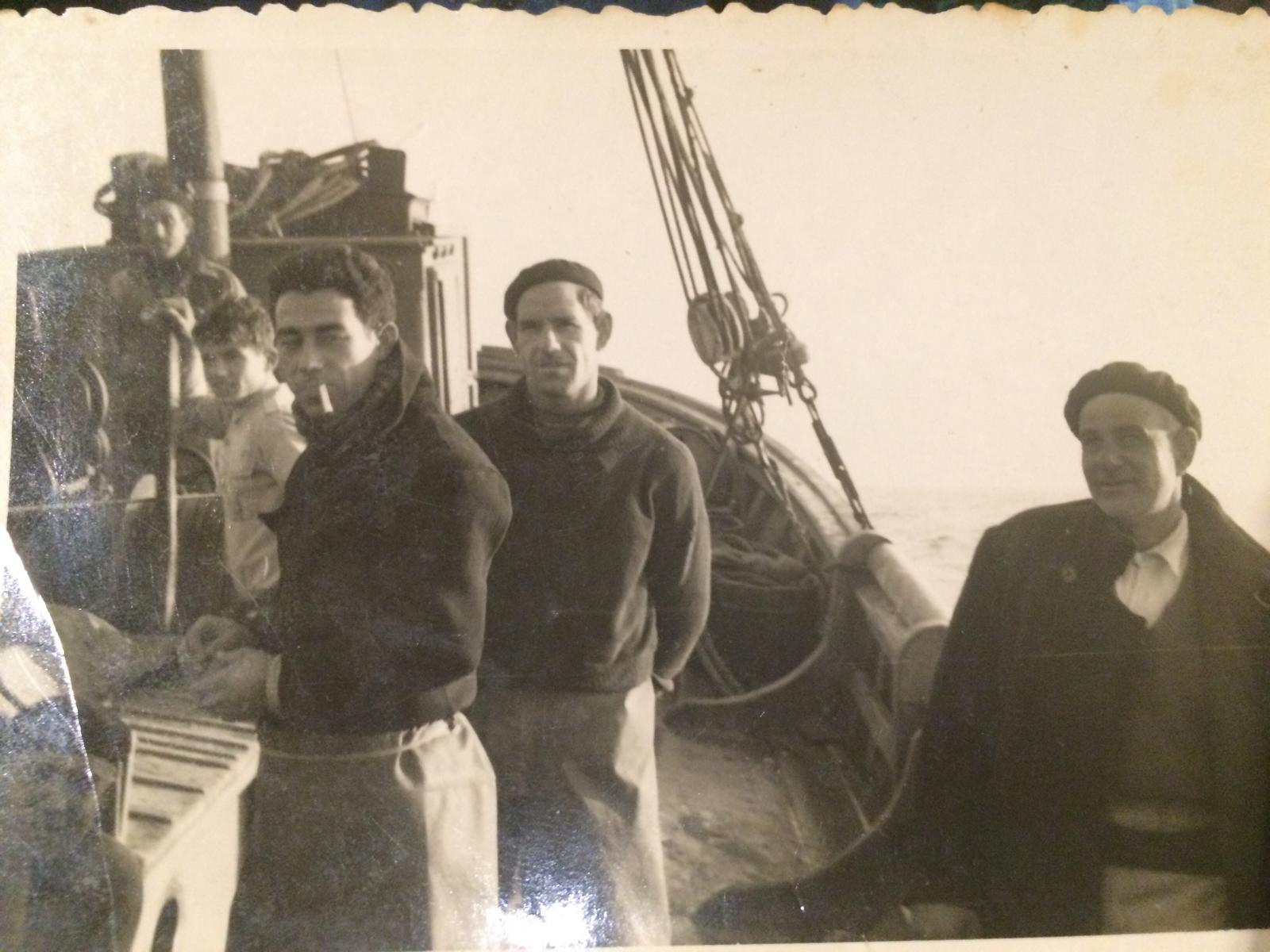
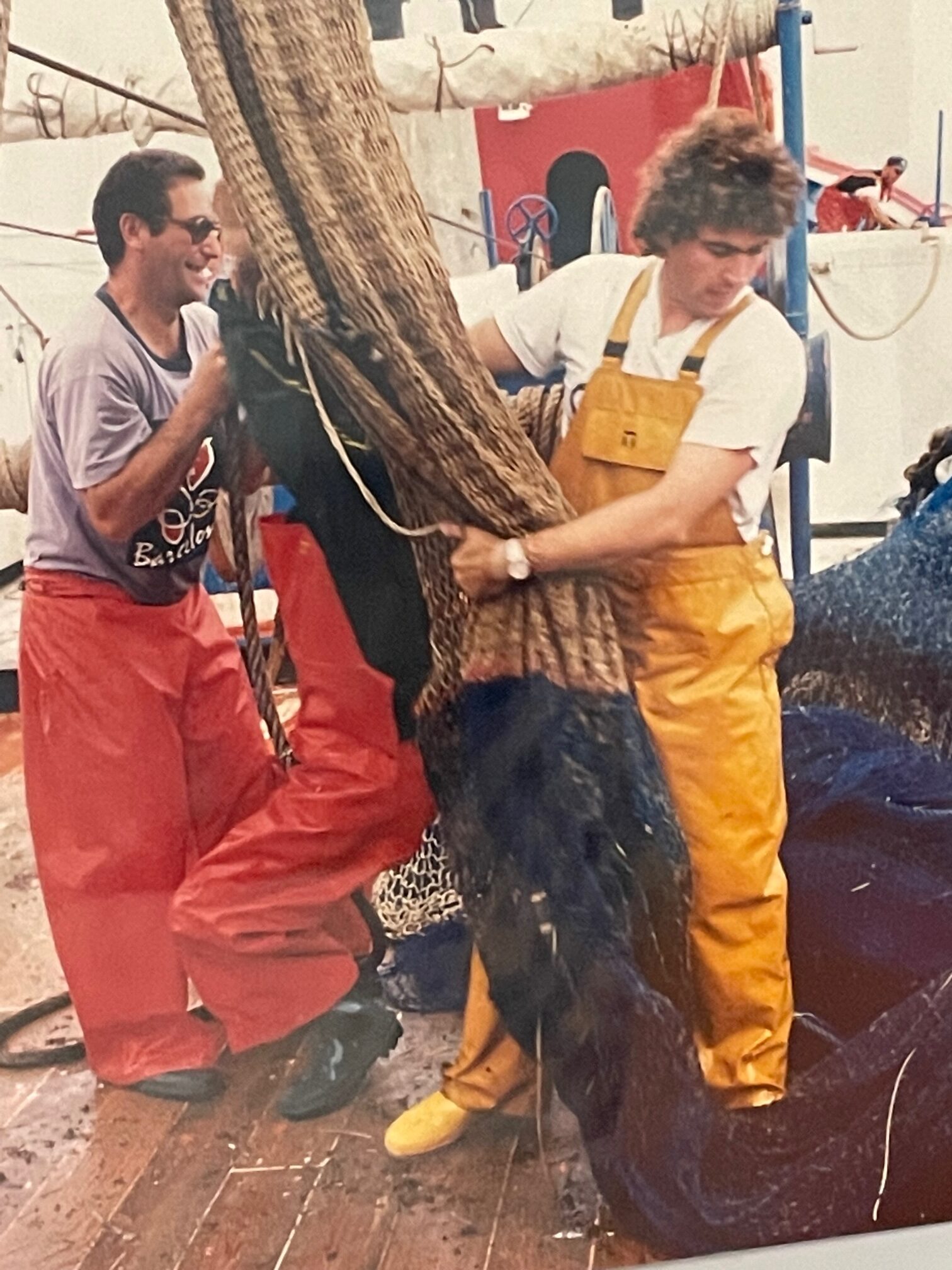
Toni Albiol, Maireta, is the patriarch of a long line of fishermen. They have one of the few trawlers currently remaining in the Port of Barcelona. Every day his son David goes out fishing, as he did, as his son Simó did, as his grandfather, his great-grandfather and others before him did. The Mairetas, like the Pau and Lagarto families and a few others, are a centuries-old family of fishermen, spanning generations. They are one of those families that, as I hope you know, dear reader, are now fighting for survival in the face of the abusive regulations imposed on them by the EEC. Let us hope that if the sea could not defeat them, it will not be the authorities who sink them now.
-Introduce yourself.
I’m Toni Albiol Sibera. I’m 84 years old. I was a fisherman before Sant Pere and I’ve been married to Tere forever. I’m Ratat on my father’s side and Fustero on my mother’s side. I have four children: Rosa, David, Tere and Simó (RIP), nine grandchildren, one great-grandchild and another on the way.
-Ratat and Fustero?
Nicknames always come from something. Ratat because my grandfather had smallpox and his face was scarred, and the children his age said he had a face bitten by rats. So he was called Ratat, and so were his descendants. I don’t know the origin of Fustero.
-But you‘re known as Maireta?
My father started as a skipper at a very young age, at 14, and at that time without papers, of course. Seeing him so young already in charge, people would say, ‘Look at that kid, he looks like a maireta.’
–He gets emotional when he remembers it.
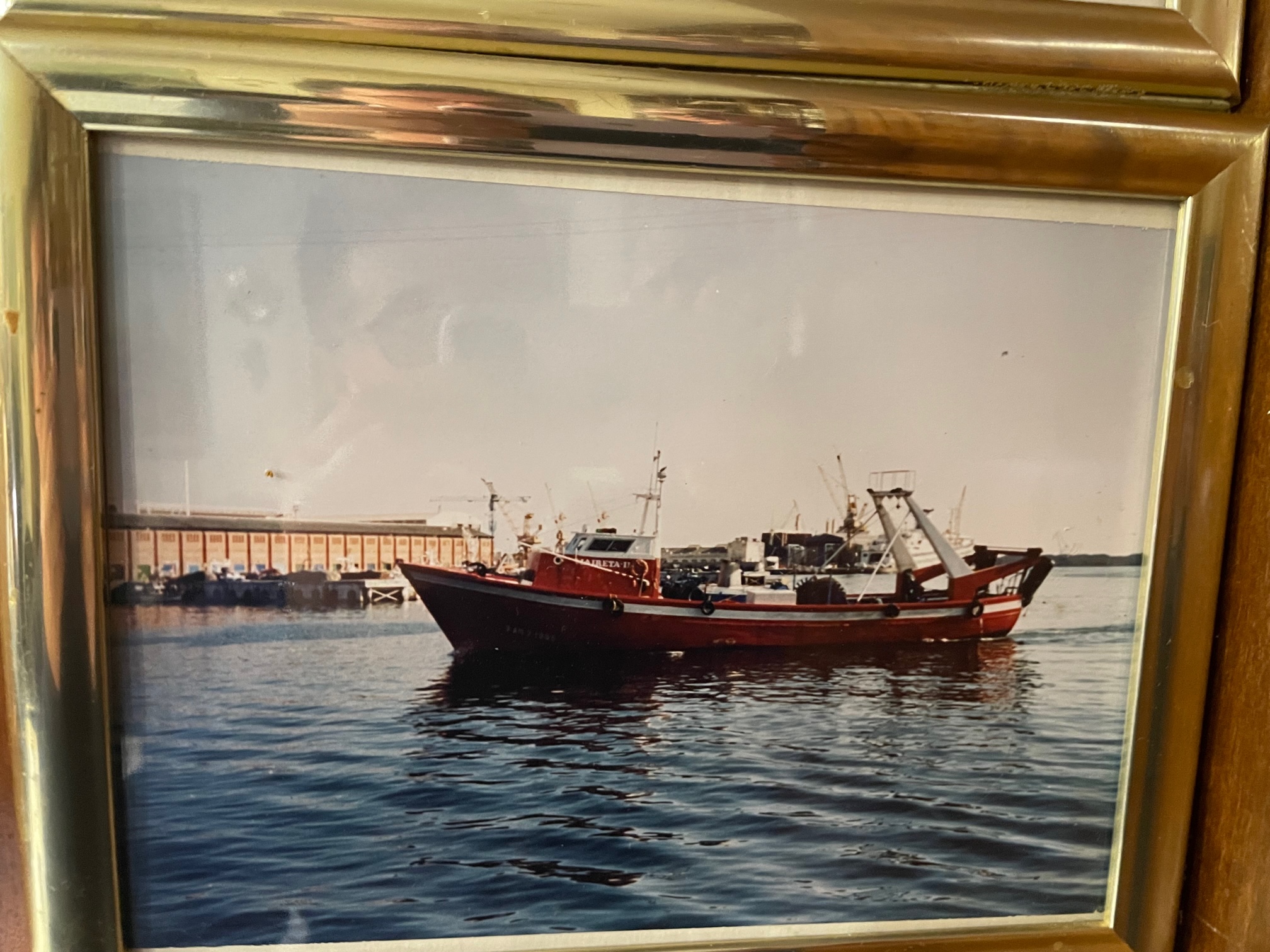
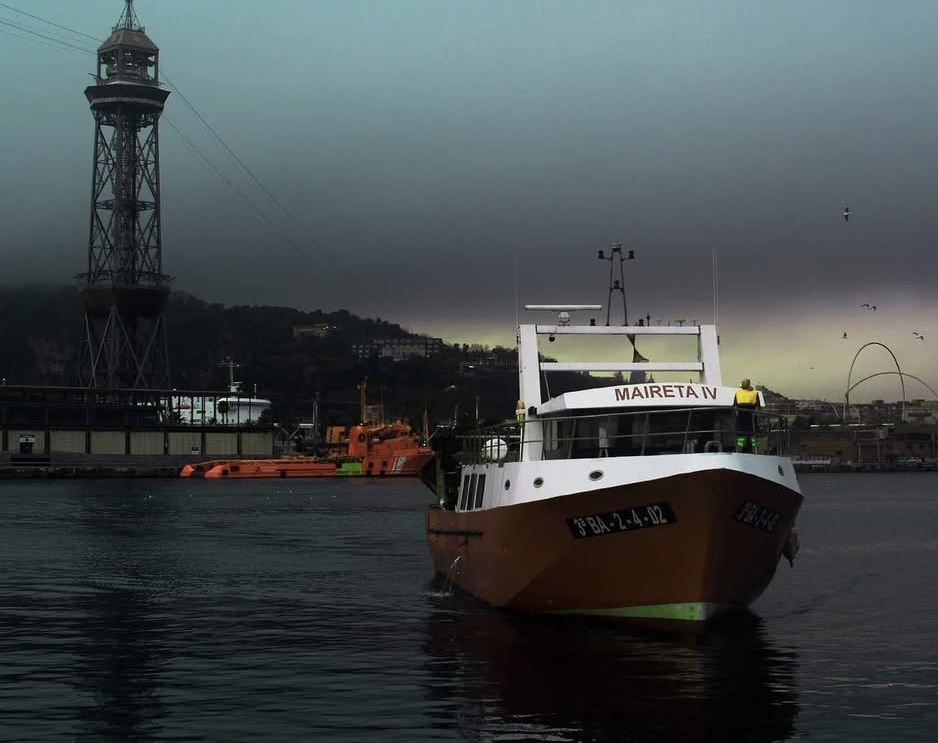
In his honour, I named the first boat I built Maireta, then Maireta II, Maireta III and even the current Maireta IV.
– A fisherman from birth.
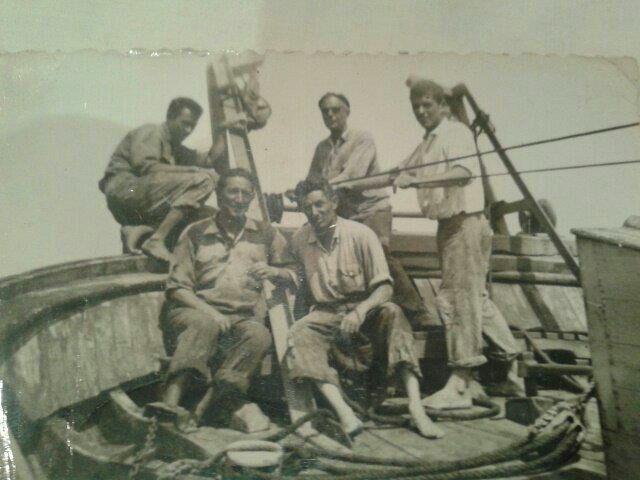
On my father’s side and on my mother’s side. I don’t even remember when I started going to sea, my grandfather was still going. And my sons David and Simó started going out to sea when they were four years old, when they had school holidays.
-Sailors.
Mind you, fishermen; it’s not the same thing. Those who go to sea are navigators or sailors. We go to sea and fish. We are fishermen.
-Let’s call it ‘pre-GPS’ fishing.
We used ‘senyes’ to guide us. We used the coastline as a reference point. The mountains, the bell towers, a tower, the stars… They were our GPS. It’s called ‘dead reckoning’. And with that, you knew exactly where to drop anchor and what the seabed was like.
-It’s hard to imagine that you could get such a precise location that way.
We could pinpoint it to within a few metres. You had to cross two reference points, two senyes, and that gave you the exact location of that rock on the seabed.
-Should the sea be respected?
I respected my father and my mother. The sea is something to be feared.
-Shall we talk about your boats?
My first boat was the José Canalejas, a “mule” because it carried cargo. My father bought it from a smuggler. That’s why customs always stopped us, because it was on file.
-The second boat?
The Pericañas, in the late 1960s. A small boat for catching noodles and, on weekends, for acting as a garbage collector for the ships of the American Sixth Fleet. It cost me 100,000 pesetas.
-Until the “Maireta saga” began.
In 1970, the Maireta I, a large boat that belonged to me. That was my dream, although my father didn’t pay much attention to me when one day, pointing to a photo of a boat in a calendar he had, I told him that I was going to have one like that. He’d had a couple of drinks too many and must have thought I was being overly enthusiastic. But when I came back from military service, I went to a shipyard in Mataró called Xufre to order a boat.
-With what money?
The first thing the gunner’s mate asked me was how I was going to pay for it. I showed him my hands. They were my guarantee. He replied that he wanted to go out to sea one day to see how much fish he could catch. I was a rascal, and that day I managed to get them to let me fish in a prohibited area where there was a lot of fish. We loaded up with fish and the guy was convinced.
-And in 1978, Maireta II.
I wanted a boat just for myself because La Maireta I was shared with my father. They built it in Almería, and we went to live there while they finished it. Nine months without fishing and therefore without income.
-But the worst was yet to come.
When we returned, my own colleagues wouldn’t let me fish. They said that with a 1,000 horsepower engine, even though it was actually 700, I couldn’t go out to sea. We had a hard time until we managed to reverse the situation.
–And a boat for your son David.
In 1984, we acquired La Beni, which David skippered for three years. I bought it half-jokingly because it was idle, and without thinking, I told the owners that it would sink if it wasn’t used. That same afternoon, they were waiting for me at the dock, and we closed the deal for 6 million pesetas.
-For 6 million in 1984, you could have bought 6 apartments.
When I bought it, I didn’t have a penny to my name. But that’s how we fishermen are. We’re born poor and we die poor.
-Maireta III.
In 1986, we scrapped the Beni to build the Maireta III. I had two sons, and they both wanted to fish. So we had two boats: the Maireta II and the Maireta III.
-Finally, the current Maireta IV.
Built in 2003, it shared the waters with the Maireta III until it was scrapped in 2008.
-The Maireta saga will continue.
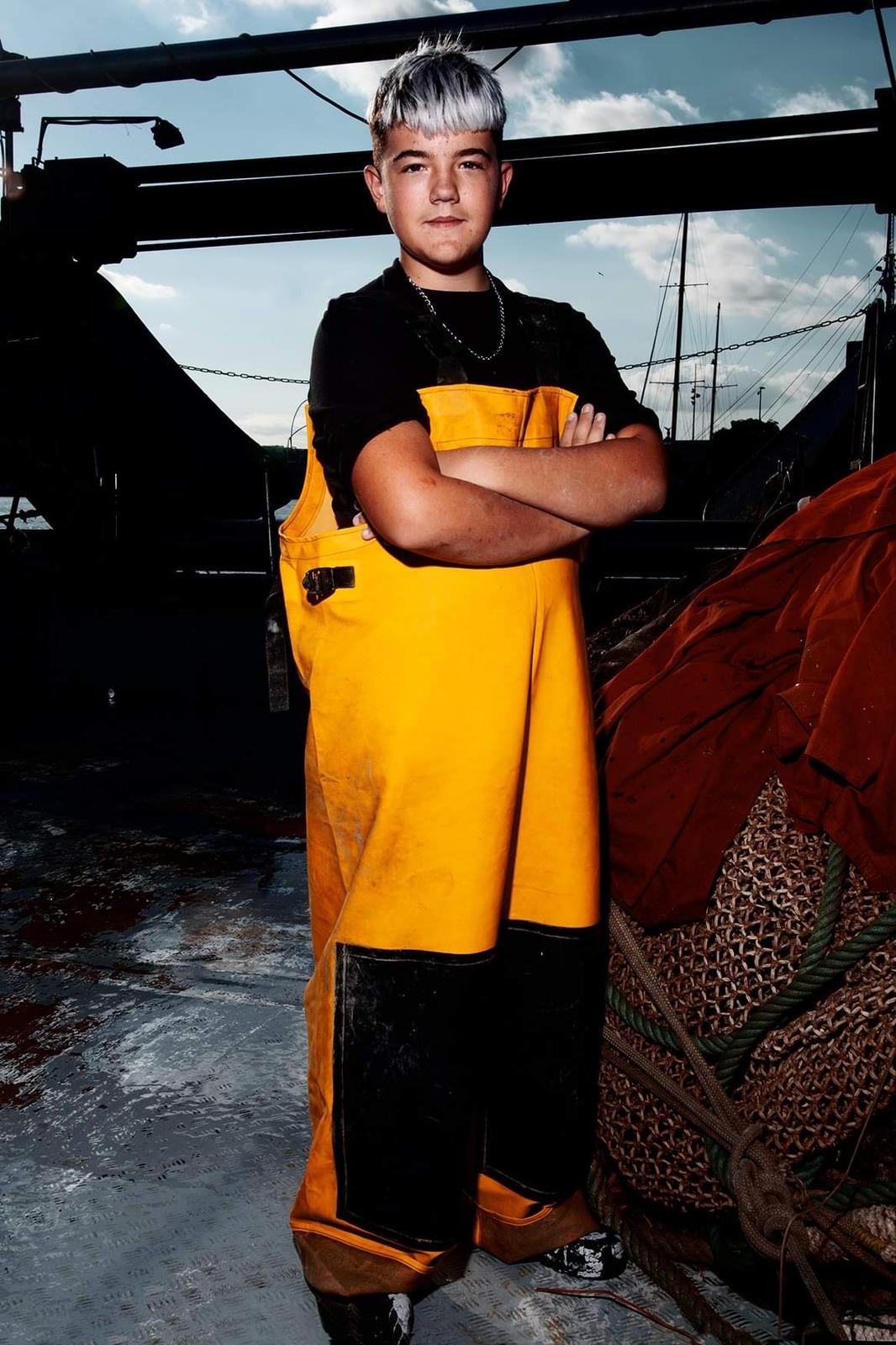
You are born a fisherman; it is difficult for someone from land to become a fisherman. In this port, there is not much family continuity at present. I have my grandson Toni, Simó’s son, who goes to sea in Motril, as his mother lives in Granada. He is 18 years old and has wanted to be a fisherman since he was a child. There is more of a future there. There are more young fishermen.