At Maquinista Terrestre y Marítima, a replica of the locomotive that ran on the first railway line in our history: Barcelona-Mataró was built, with a help of an unexpected guest. On August 21, 1848, Saint Cyriac’s Day, a three-masted cargo ship named Milvill entered the port from Liverpool. The stevedores found a cargo of large metal cylinders, green plates, and other pieces of iron in different shapes, some round like cart wheels.
They were deposited on the dock and, lying on the ground, looked like pieces of a huge Meccano set. One said that they were parts for a pipeline for the Rec Comtal. Another shouted that it must be material for building a small factory because there was a chimney. They spent hours racking their brains. Finally, a boy with very blue eyes who was barely five feet tall appeared on the dock. What those men had failed to see in two hours, he saw in five seconds: “It’s a train!” Everyone started laughing: “Kid, there are no trains in Catalonia or Spain!” Then the harbor master arrived, and everyone made room for him. “This will be the locomotive that will pull the first train in this country,” he told them. The pieces were put together and that train engine was named the Mataró.
The new Barcelona-Mataró railway line was inaugurated on October 28, 1948, in the presence of civil, military, and ecclesiastical authorities, from the Captain General to the bishop. The sturdy Mataró transported 400 passengers to the capital of Maresme in 36 minutes. They arrived at 11:45 a.m.
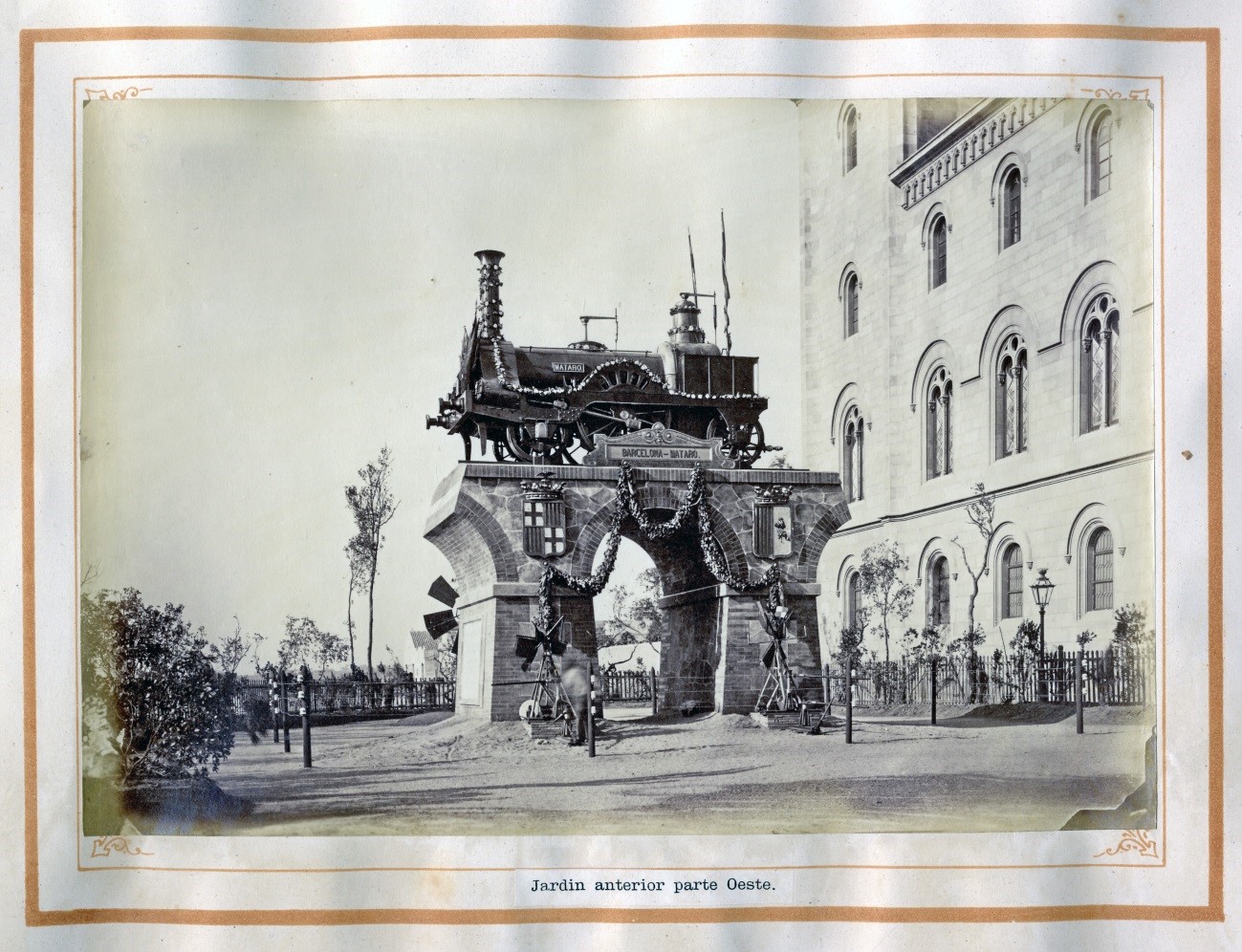
People enthusiastically welcomed this new means of transport, which was more comfortable, faster, and more reliable than horse-drawn carriages. Train technology developed rapidly, and twenty years later, the Mataró was already obsolete. It was taken out of service and left as an auxiliary machine for towing tasks in the station depot. A few years later, they wanted to give it the historical value it deserved and took it to the Catalan Exhibition of 1877.
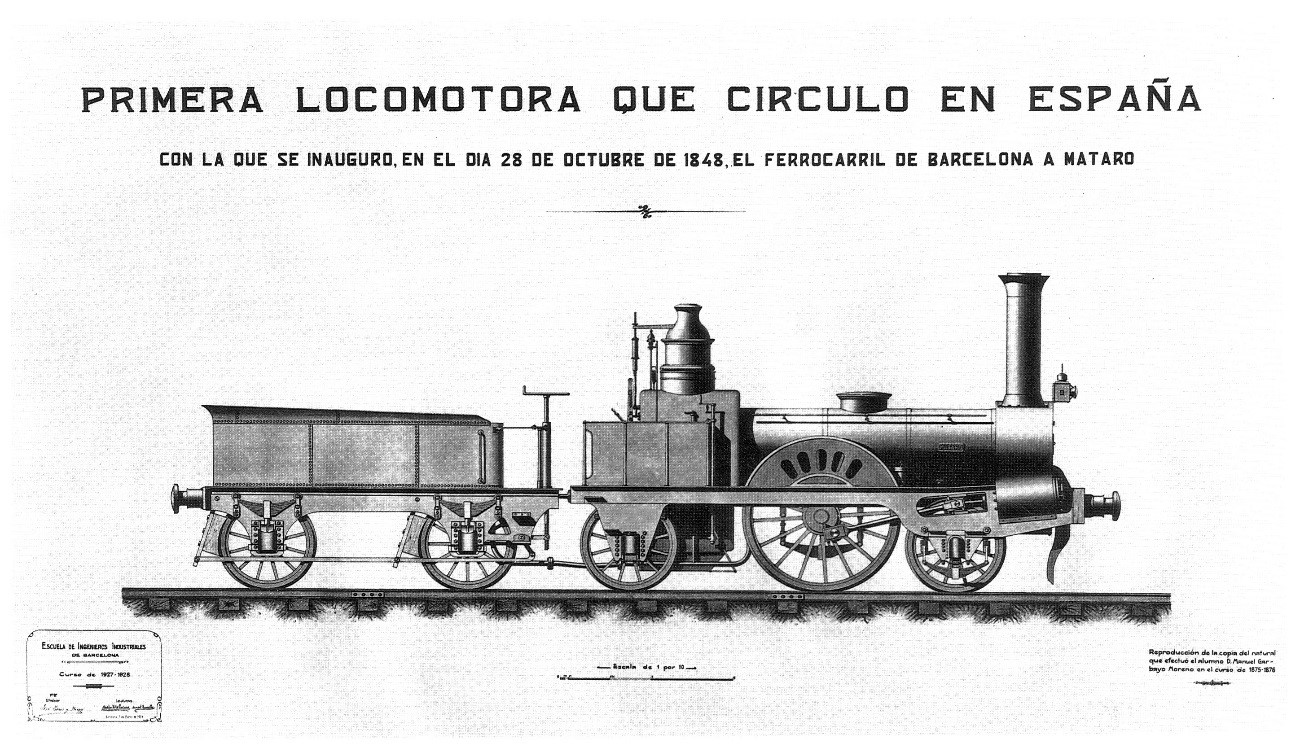
In front of the façade of the University of Barcelona, they raised it on a very high pedestal, like a triumphal arch, all decorated, but when they lowered it, it fell to the ground and was damaged. It was discarded and left in the Hoyo workshops with the junk. In the mid-1940s, there was a desire to commemorate the historic milestone of Spain’s first railway line, and the historic Mataró locomotive that inaugurated it was requested. However, it was discovered that some fool had scrapped it decades earlier. The authorities, eager to celebrate something after the tragedy of the war they themselves had caused, ordered a replica to be built by Maquinista Terrestre y Marítima de la Barceloneta.
But it wasn’t that easy. There were only a few drawings by an engineering student from the 1875-1876 academic year. Details were missing and, above all, it lacked the vigor that they said the Mataró radiated. The replica was turning out to be bland and vulgar. The workshop manager was desperate because many people would be scrutinizing this replica. It was the woman who was in charge of bringing sandwiches to the night shift who told him that she knew a neighbor in the neighborhood who knew this machine by heart. When the workshop manager saw the man who was to reveal the secrets of the locomotive to him enter in a wheelchair, and that he was 104 years old, he began to shout profanities that shook the heavens. But the man silenced him with the force of his gaze: he was large but had young, very blue eyes. He was the boy who saw the Mataró arrive on the ship from Liverpool that distant summer, and for years, every afternoon after leaving the academy, he would go to watch it pull into the station platform. He gave the workshop manager all the details, corrected the mistakes, and the replica left the Maquinista as if it were the Mataró itself.
The celebration of the centenary of the first railway journey was one of the few joys of those dark post-war years. However, after giving speeches and praising the value of the train that ushered in a new era, the authorities abandoned it once again. It ended up in a forgotten corner of Ciutadella Park, rusting away and covered in cat urine. Fortunately, train enthusiasts rescued it from decay in time, and today, restored and in working order, the daughter of the Mataró continues to fire up its boiler once a month at the Railway Museum in Vilanova i la Geltrú. There is something very surprising about this story: on that inaugural journey from Barcelona to Mataró in 1848, the old locomotive took 36 minutes to complete the journey. Two hundred years later, in the age of GPS and plans to travel to Mars, RENFE still takes the same amount of time, if we are lucky. But we call it progress.