The theater in Barceloneta
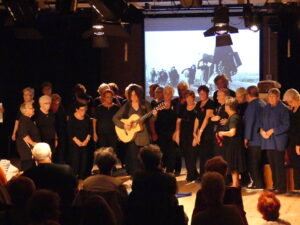
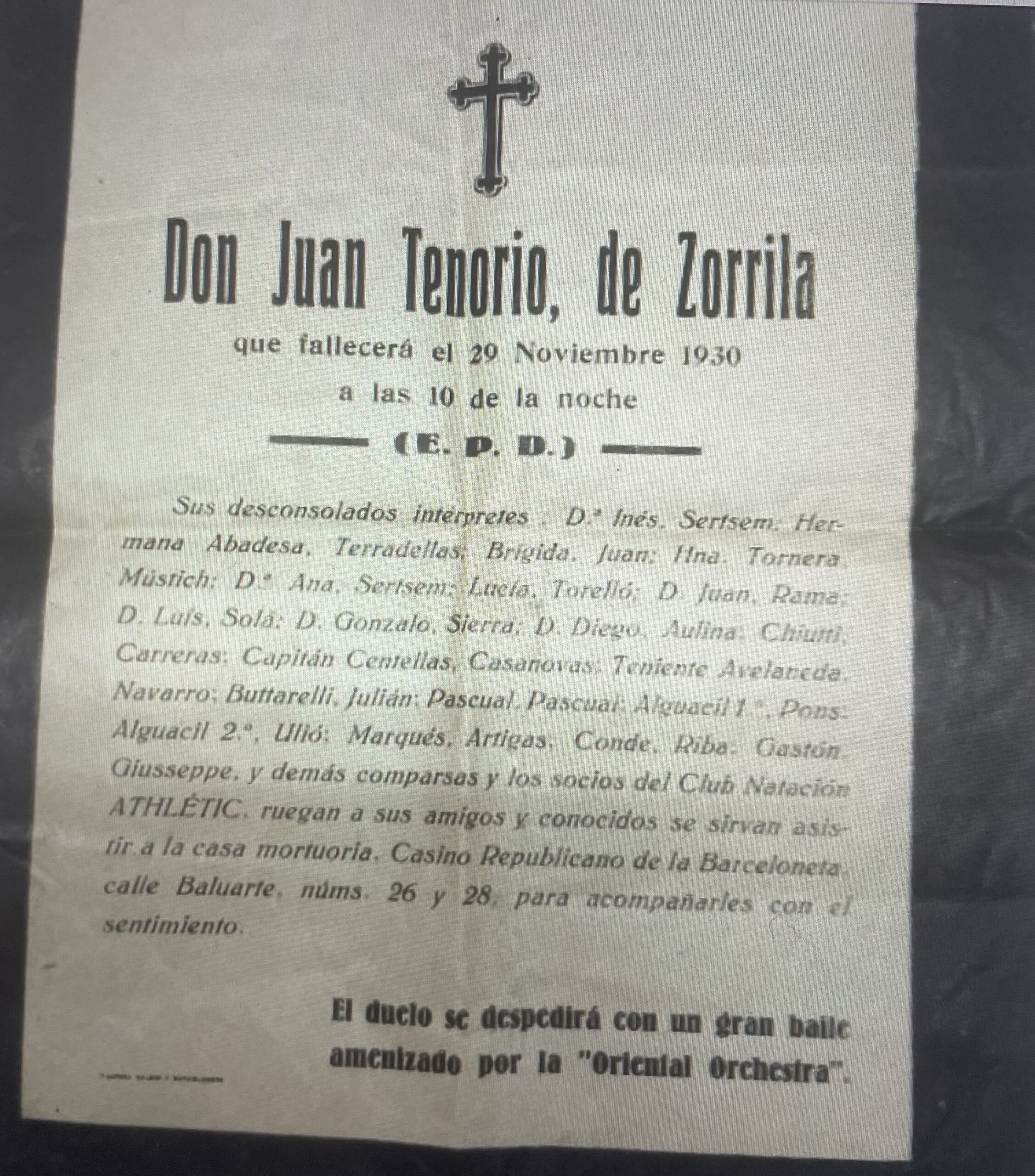
There was a time when theater was performed in every neighborhood and every town. Perhaps because there were no other alternatives yet—ones that would later emerge and overshadow this activity. But it was common to see groups of young and not-so-young theater enthusiasts spending hours each week rehearsing plays that they would then perform, usually at venues in their neighborhood or town.
It was a way to pass the time, have fun, socialize, and, very importantly, become more cultured. Young people, some with little formal education, knew perfectly well who Arniches, the Alvarez Quintero brothers, Benavente, Buero Vallejo, Mihura, Lorca, and Valle-Inclán were.
Many of those amateur actors overcame their shyness and insecurity; they learned to communicate, to charm, and to persuade by portraying different characters and situations. The stage experience they gained on these stages surely served them well—and greatly—in navigating life.
Background
Although there isn’t much documentation from past periods, there was a proliferation of recreational and cultural organizations in which theatrical works and all kinds of performances were held regularly or sporadically. Records show that in Barceloneta, between 1850 and 1960, there were no fewer than 150 such organizations! Ranging in size, with different orientations and natures, but all of which staged some form of performance on a stage. Some of them evolved into today’s choirs.
Listing them all would be very extensive. We can mention for example: Sociedad la Constancia, Casino de Instrucción y Recreo Artesano de la Barceloneta, SCH La Perla Dorada, Cooperativa La Fraternitat, Societat L’Aureneta, Center Catalanista Clavé and Center Clavé, Casino Republicà de la Barceloneta, La Cadernera, SC La Perla, Cooperativa El Siglo XX, Center Cooperatiu de Pescadors, Foment Marítim de la Barceloneta, Societat CH Els Barretayres, SCH Els Tranquils, Patronat Obrer Sant Miquel del Port, among many others.
A permanent theater installation , properly speaking. That is, with a curtain, stage, and space for the audience, with or without fixed seating, is known to have been found at El Siglo XX, La Fraternitat, L’Ateneu Marques de la Mina, El Casino Nacionalista, and La Església. Later, La Salle and probably some others, but this is not 100% documented.
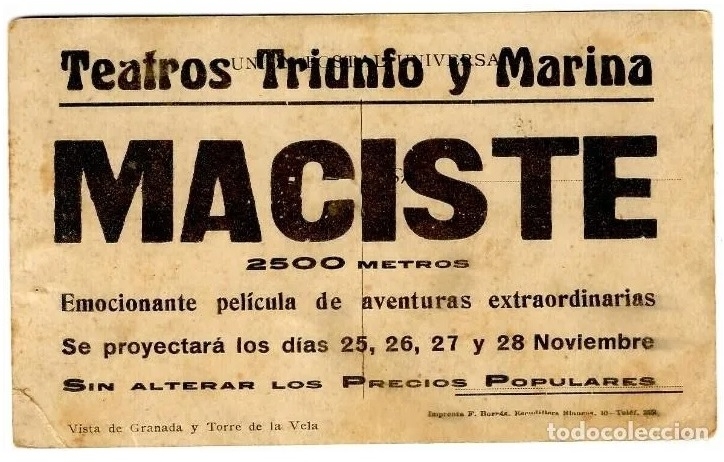
The Teatro de la Marina
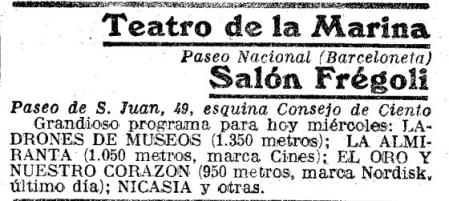
Barceloneta had a theater located on Paseo Nacional, now known as Paseo de Joan de Borbó. It was the Teatro de la Marina.
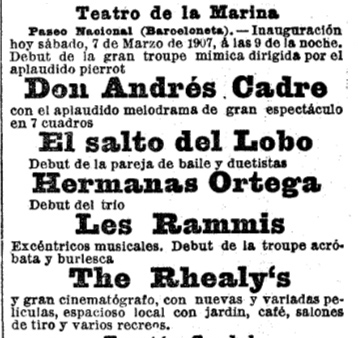
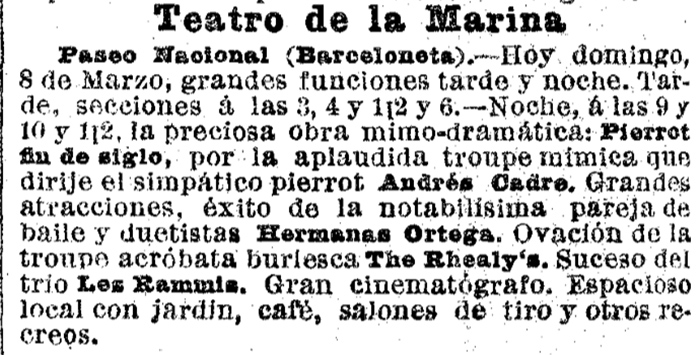
Owned by businessman Pedro Trilla, the venue opened in grand style on March 7, 1908, with the great mime troupe led by the famous Pierrot duo Andrés Cadre, presenting: El salto del lobo, a drama in seven scenes. Also performing were Las Hermanas Ortega, a dance couple and duet performers; Les Rammis, a trio of musical eccentrics; The Rhealy’s, an acrobatic and burlesque troupe; and a large cinema, featuring new and varied films.
It is easy to imagine that such a special event delighted spectators unaccustomed to attending this type of show.
In a working-class neighborhood, the Teatro de la Marina played a clear social role for the local residents. In this regard, it was customary to hold benefit performances on special dates or, for example, to support fishing families who had lost a member at sea.
In 1915, the theater changed hands. Guillermo Juncà took over the venue. Among the various performances, the one held on Friday, October 13, 1919, stands out. The venue, transformed into a summer circus, hosted Willy Frediam’s Equestrian Circus—a major event! Renowned stars of the time—now unknown to us—performed, including Paul Leonar, Beby and Miss Gladie, The Remo, Mr. Augusto, the Frediani Family, Antonet and Beby, Micc Lucia, the Balaguer Troupe, and other highly successful acts.
Urbanization and demolition
A new urban development project in the neighborhood marked the end of the Teatro de la Marina. In March 1923, City Council members Marimón, Casero, Alegret, Castillo, Garriga, García Anné, Escalas, and Gasea submitted the following motion to the permanent municipal commission: “to proceed without further delay or postponement to open Balboa Street, connecting it to Palacio Square, by demolishing the Teatro de la Marina and adjacent barracks.”
Neighborhood demands
During its active years, the venue hosted not only artistic performances and film screenings but also rallies and demonstrations, which were so common in working-class neighborhoods at the time. For example, on May 27, 1923, the strike committee of the companies affiliated with the Port Transport Employers’ Association organized a rally at the theater in response to a change in the sector’s work schedule.
The motion to demolish the building was carried out in 1928 with the opening of Balboa Street and the subsequent closure and demolition of the Teatro de la Marina.