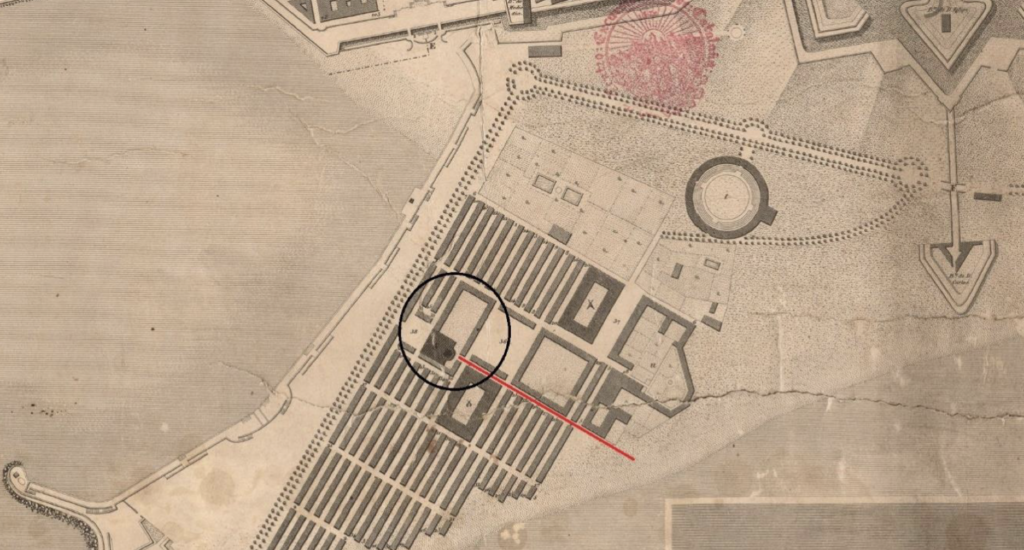
The new Barcelona Fish Market was inaugurated on May 31, 2024, located in the Moll de Pescadores del Puerto Viejo, popularly known as “Platjeta.” This new market has 3,233 m² of facilities dedicated to fishing activities and also has a new ice factory. There are two areas dedicated to auctions. The auction of trawl catches takes place in separate areas from those for seine or light fishing, because the dynamics and requirements are very different. In this report, we will briefly explain both auctions.
Afternoon auction: trawl fishing
-Start of fishing day: 7 a.m.
-Arrival of boats: 4 to 5 p.m.
-Start of auction: 4:30 p.m.
Process:
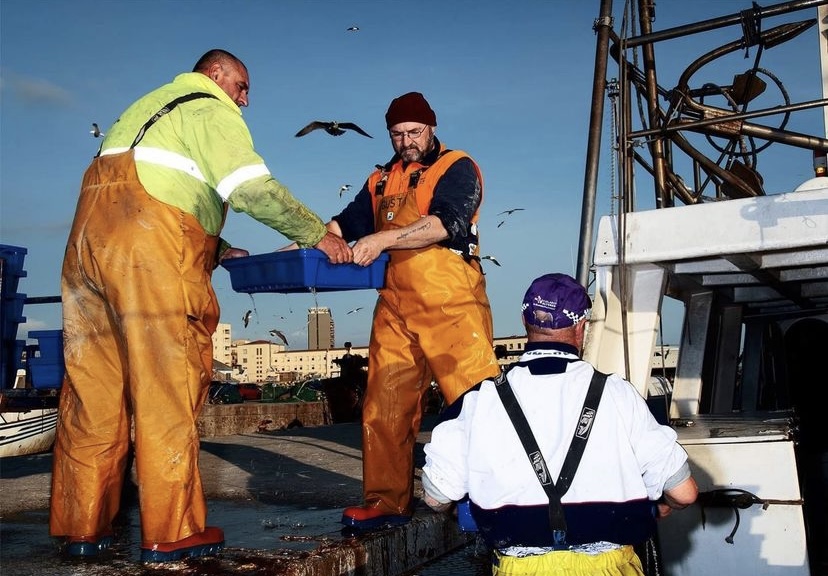
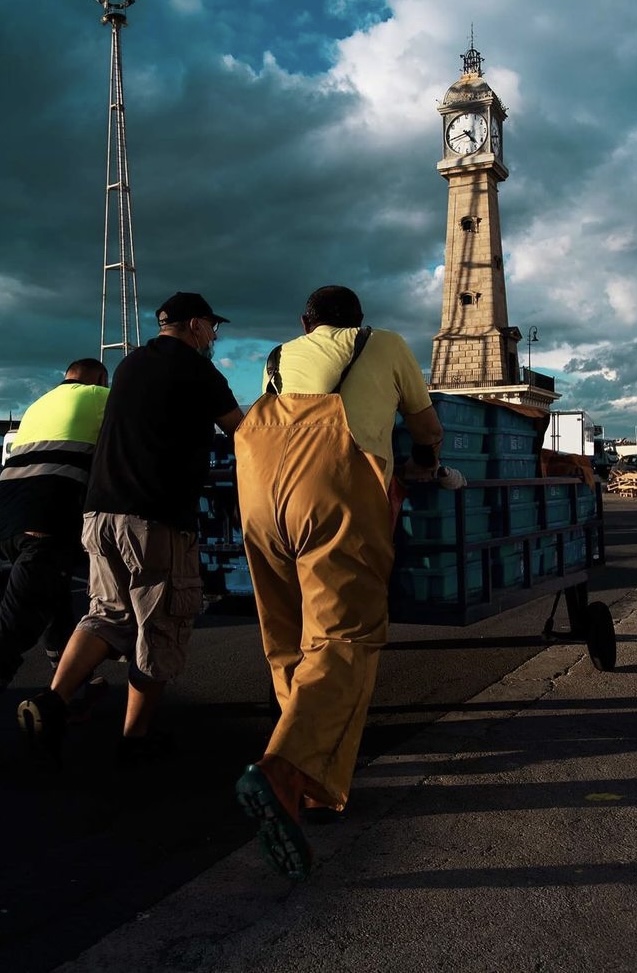
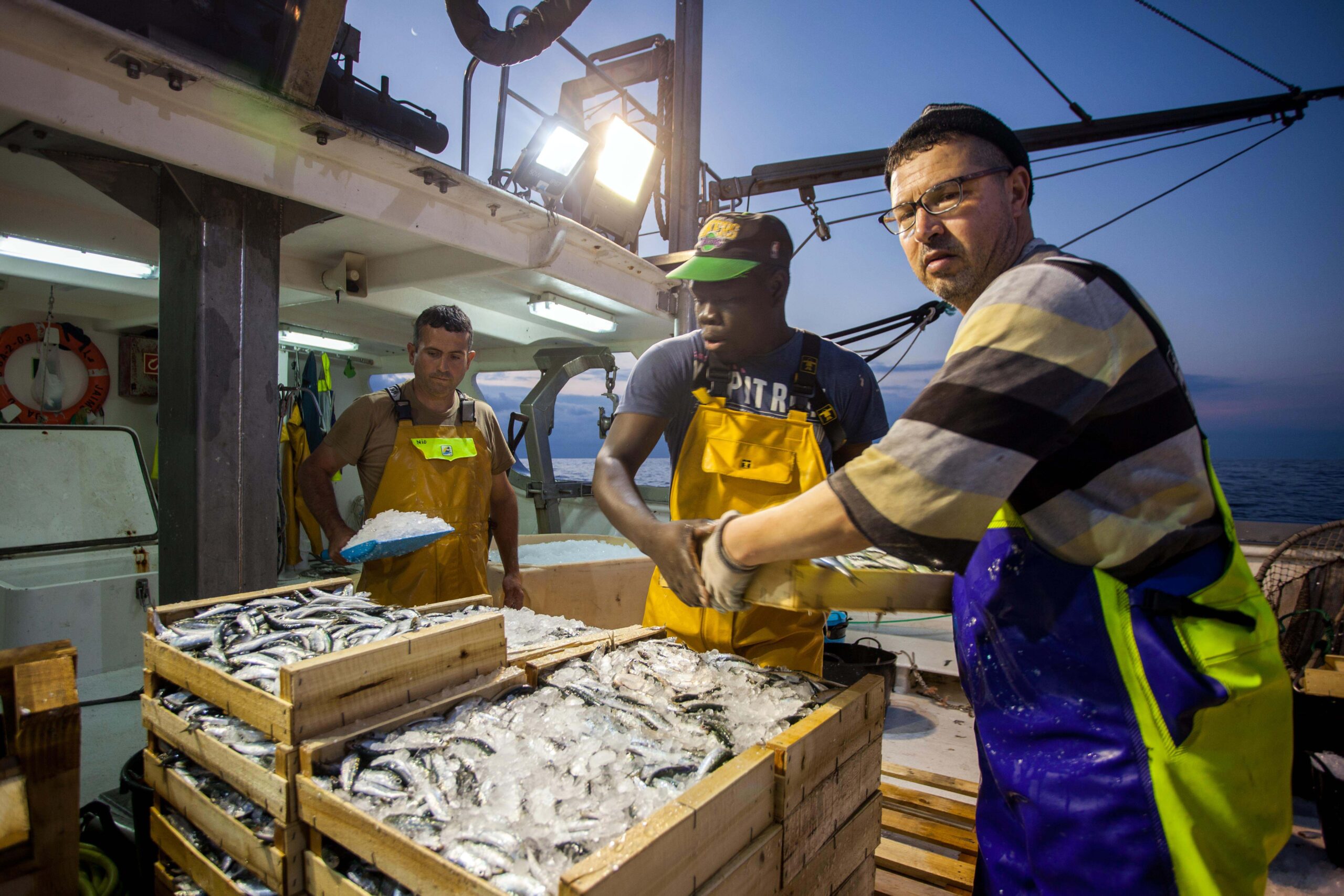
The buckets on the boat, which have been prepared by the crew on the return journey, are unloaded according to species, size, and sales criteria. -The catch is transported by cart to the auction site in order of arrival.
-The buckets are placed on the conveyor belt.
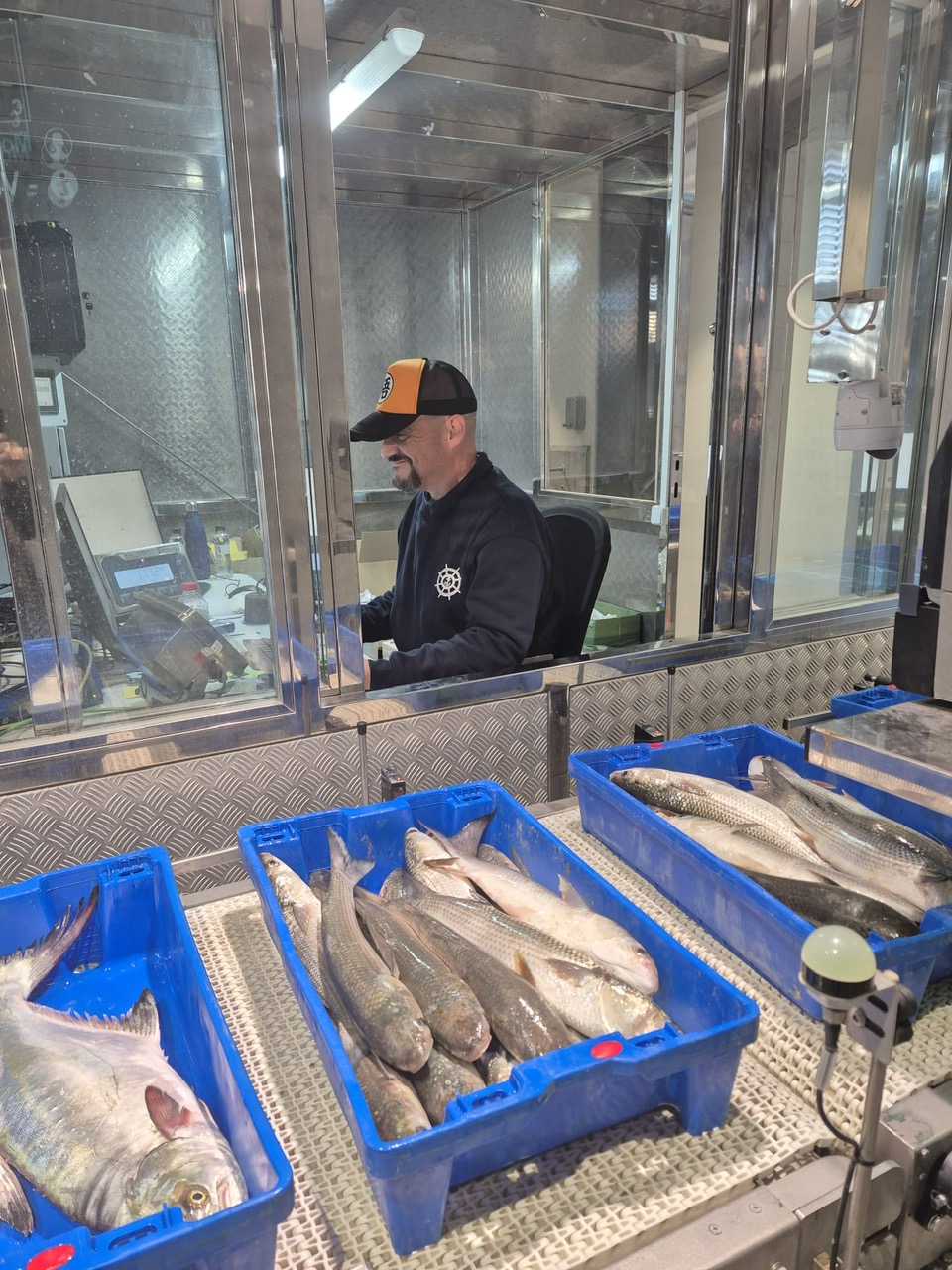
-The weighmaster and auctioneer of the Guild (Miguel and Camil) “label” the bucket with its weight, size, species, boat of origin, freshness, size, packaging and, most importantly, mark the starting price*. Starting price criteria: taking into account the sales prices of the last 3-5 days and the prices marked for this same product in other ports, they indicate a higher starting price that allows for a “downward” margin in the auction. The boat can say in advance up to what price it is willing to sell, and if it goes below that, it stops for this auction.
-The auction is held in person and online. Once weighed, the bucket’s journey along the conveyor belt is followed on video.
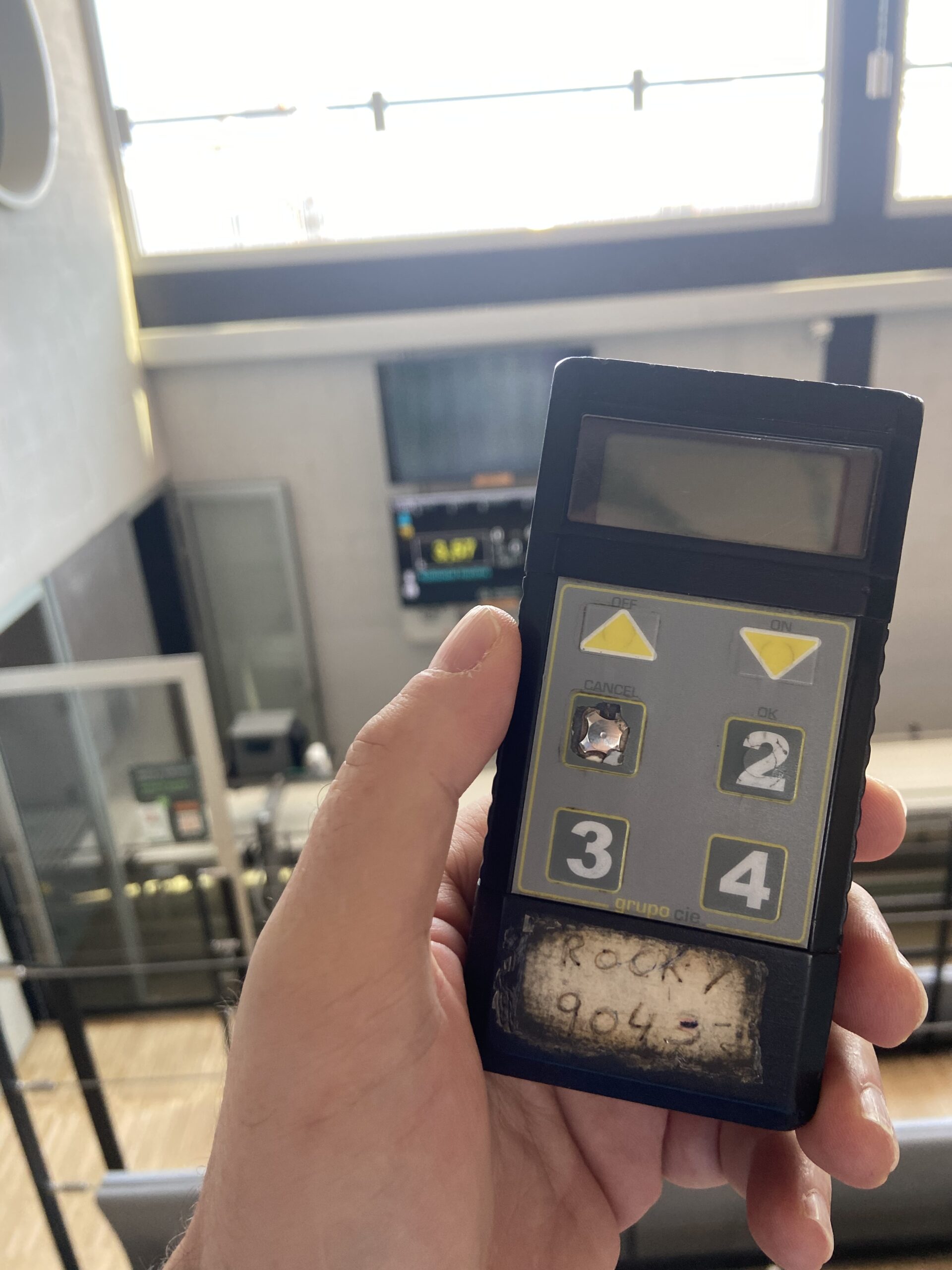
-In the room, buyers stand at the podium watching the product, its characteristics, and the starting price on screen and in person. After the initial 7 meters of travel, the conveyor belt stops and the auction begins. Interested buyers will stop the purchase price with their remote control.
-A label is then created with all the above information, adding the buyer’s name.
-At the end of the tape, the porters (camàlics) will help separate and load the purchase for the buyer, usually a retailer (fishmonger, restaurant, or large supermarket).
-At the same time, the boat receives a detailed delivery note with everything that has been sold.
Morning auction: light fishing
– start of the fishing day: 10 p.m.
– arrival of boats: 5 to 7 a.m.
– start of auction: 7 a.m.
Process:
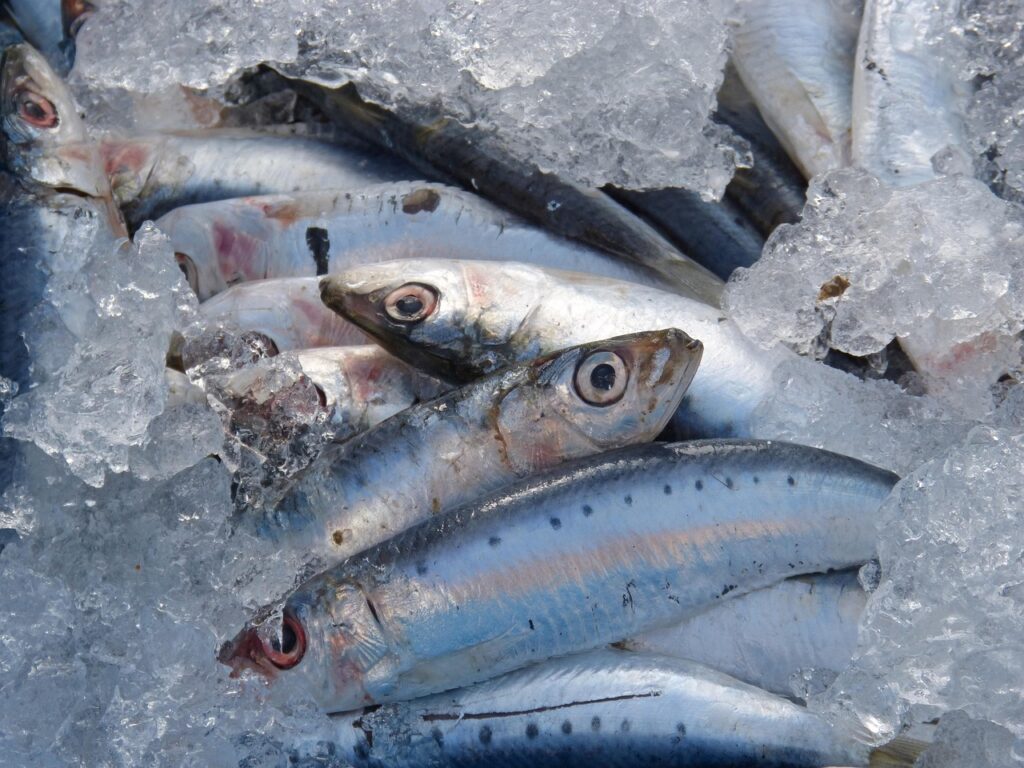
– The disposable wooden boxes are unloaded and placed on pallets. This catch is less varied (in terms of species) and greater in quantity.
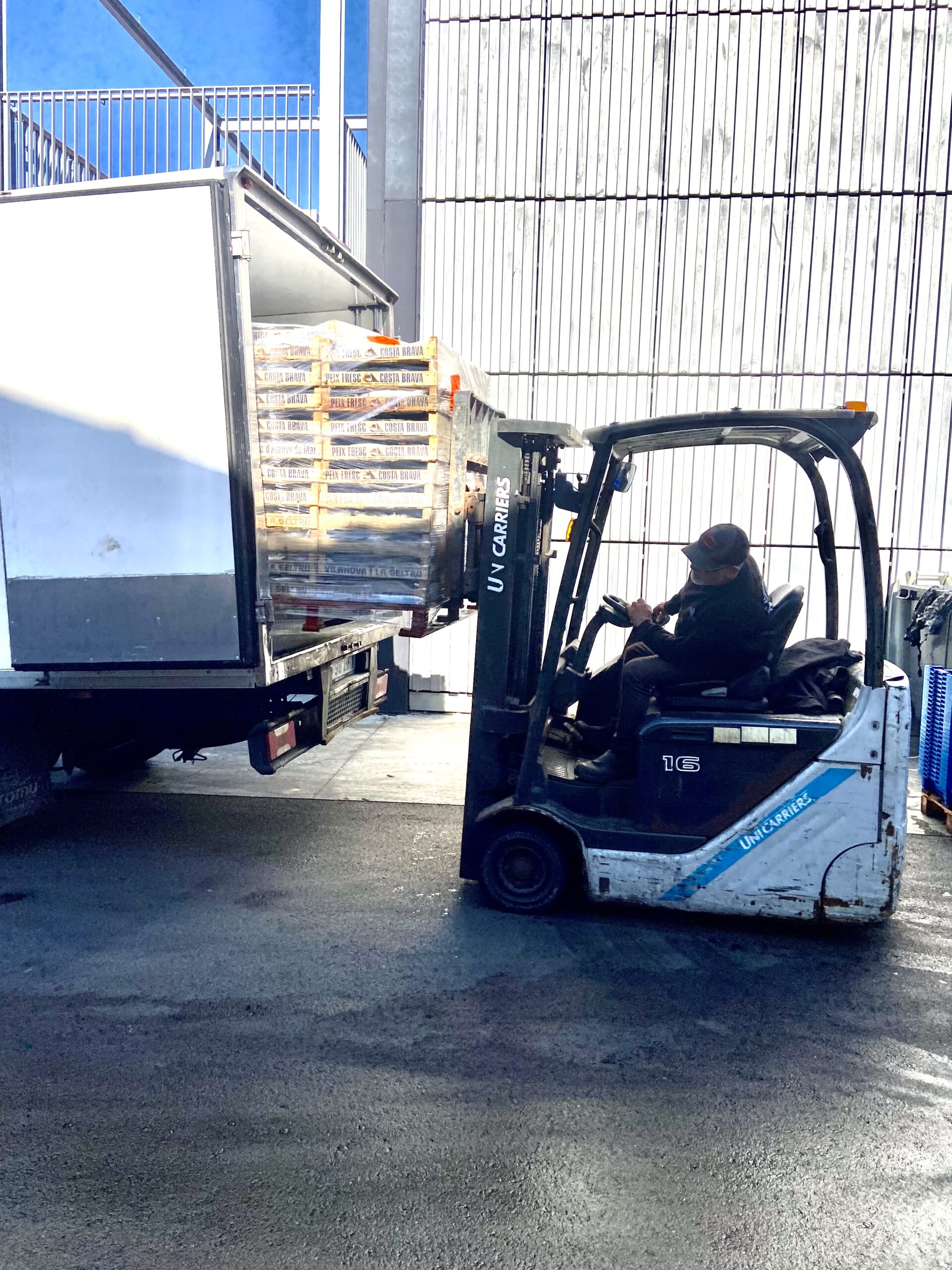
-The pallets are taken to the auction site using forklifts or pallet trucks. Unlike in the case of the trawl auction, there are no stands here and potential buyers stand next to the goods for sale, not in the gallery. Sampling is carried out. As it would be impossible to weigh all the boxes on the pallet, 8 boxes from the first 100 are weighed, and one more for every 100 remaining. The weight of the box is multiplied by the number of boxes on the pallet.
-After labeling each batch with the data, as in the case of trawl auctions, the auction begins, also with a descending price.
-The buyer who stops the auction when they consider the price per box to be correct has 5 minutes to decide how many boxes they want. They know how many they need or have been asked for (if they are an intermediary) or they can even negotiate with their customers during these 5 minutes.
-They do not have to take the entire pallet. If, for example, the pallet contains 100 boxes and they take 30, the auction starts again for the remaining 70 boxes.
-At the end of the auction, the assistants separate and load the customers’ goods. In this case, most are wholesalers or exporters.
-While trawlers return from fishing on the same day to the port to which they belong, light vessels can unload at other ports because their fishing, being “tracking,” can take them to other destinations.
The label, a guarantee of traceability
The fish label is automatically created during the auction process and goes to the tray, containing the mandatory information in order to guarantee traceability and consumer safety, in accordance with European Union and Spanish regulations. Information: Fishing zone, fishing association of origin and port of landing, name of the vessel, name of the product, weight, method of extraction, presentation, date of capture, batch and box number, storage instructions and, among other things, name of the buyer.