Today, supermarkets have accustomed us to fiction: that of perpetual availability. We want sea bass in July and sardines in January, which is achieved by bringing the fish from the other side of the world or raising them in industrial facilities. And we pay a high price for it.
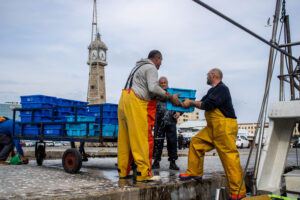
As a city, Barcelona has set itself the goal of decarbonizing. It makes no sense to burn fuel to transport frozen fish from the Indian Ocean while the Guild’s boats lie idle in the harbor. Eating seasonal and locally sourced fish isn’t just a nostalgic longing for fishermen and fisherwomen; it’s the most revolutionary and coherent action we can take against the climate emergency.
And let’s talk about aquaculture. They sell it to us as the “blue revolution,” but it hides a disaster swept under the rug. To feed these farms, it is necessary to catch tons of wild fish. Peru is the clearest example: a world leader in fishmeal, it produces it almost exclusively from its anchota, the close relative of our anchovy, to export it as feed to aquaculture in the Global North.
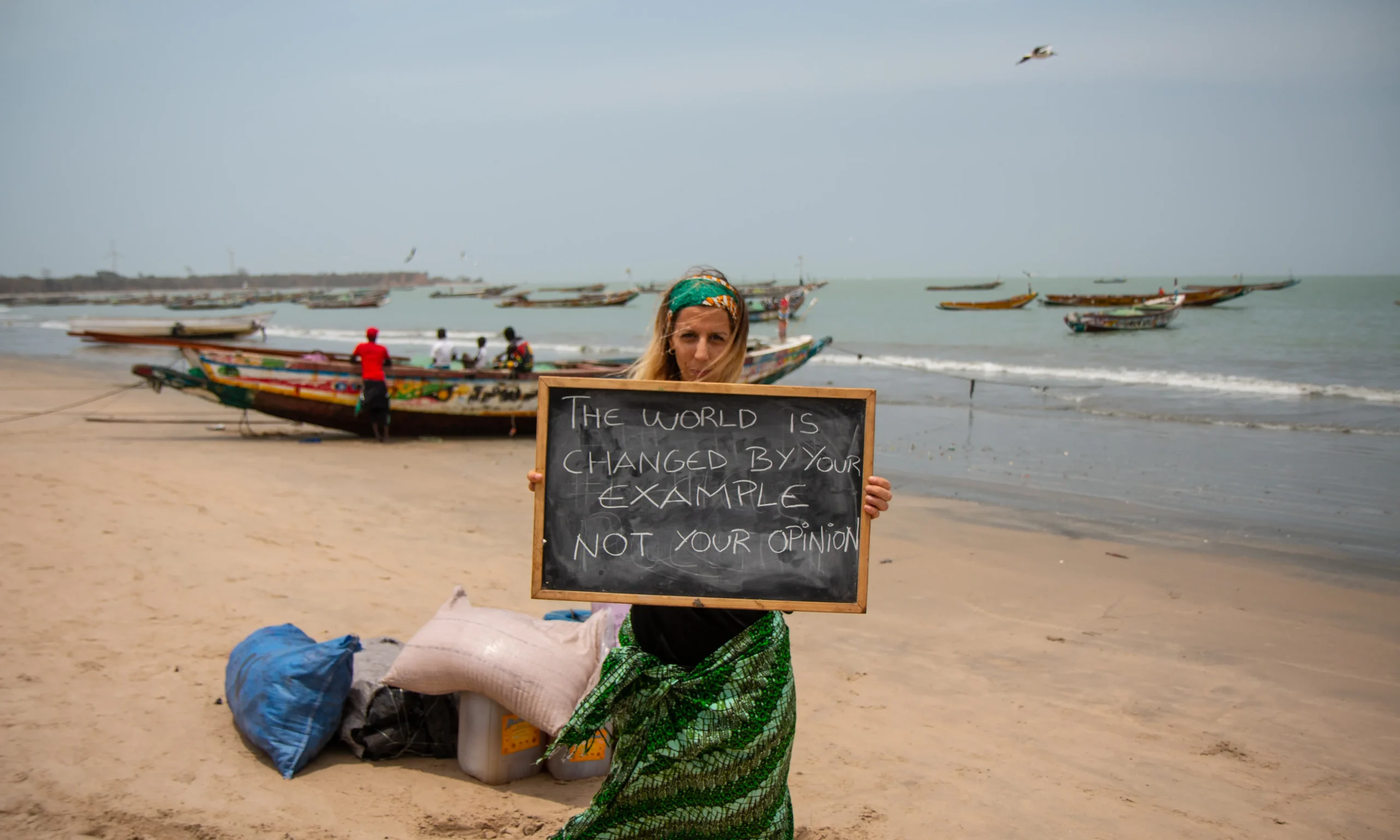
Thus, while we empty the seas of some to fill the plates of others, artisanal fishing communities in Peru, Senegal, and Bangladesh are struggling to survive. In The Gambia, natural reserves are becoming polluted, fishmongers are losing their jobs, and fishermen are competing with one another for fish that are becoming increasingly expensive for the population. The result: food insecurity in a country where fish used to be the main source of protein. All to prop up an industry that markets itself as eco-friendly while lining the pockets of big corporations.
Defending seasonal fish is, therefore, defending the livelihood of local fishermen, fighting against the fraud of low- cost sustainability , and ultimately reconnecting with the natural cycle that gives each product its moment.
Noemí Fuster. / PhD in Biology. Researcher and Science Communicator. President of the NGO Bon dia Mon.