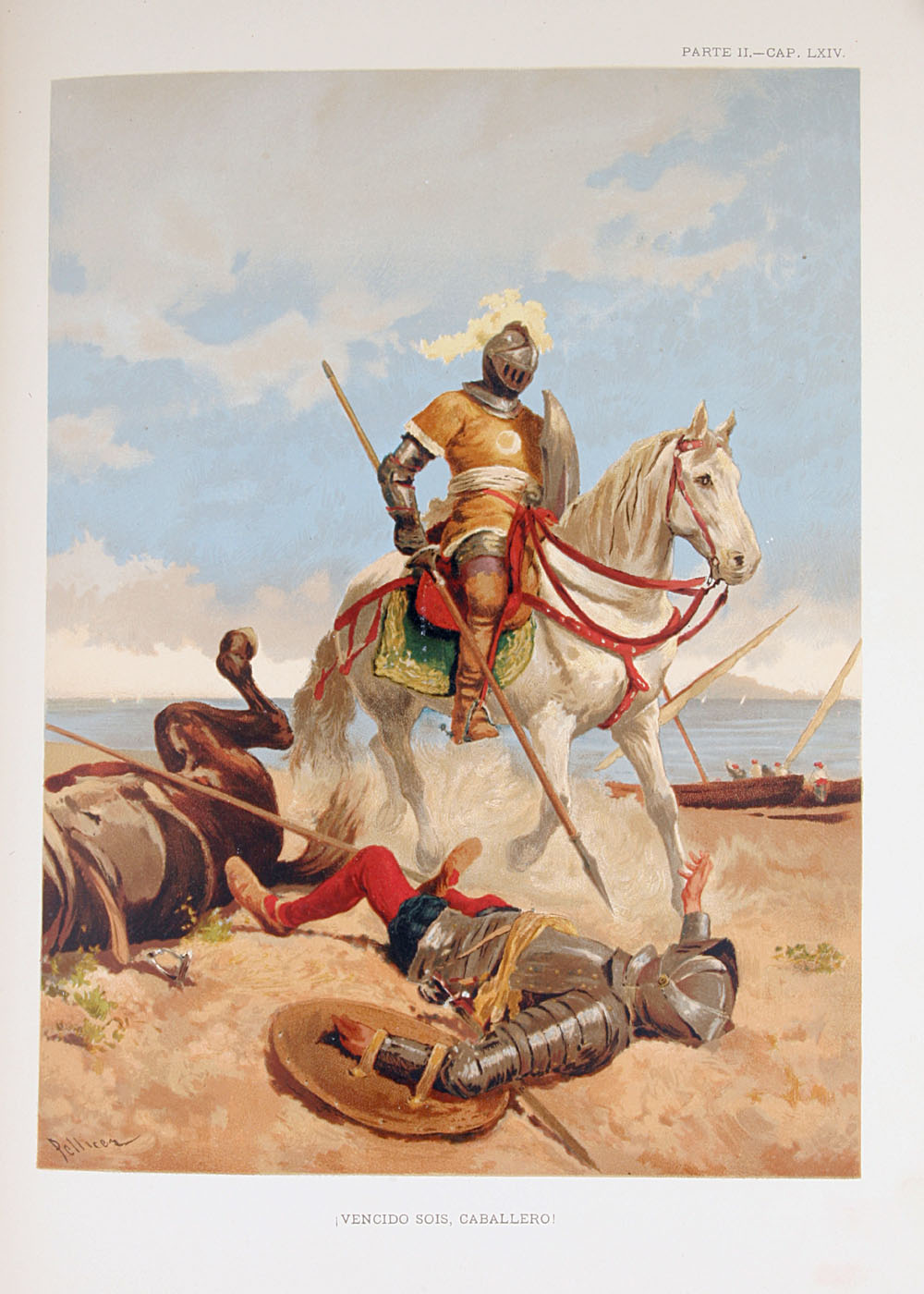
He spoke highly of Barcelona and made it known throughout the world, but the city has forgotten him.
Cervantes visited Barcelona twice, and on both occasions, the beach and the port played a crucial role. The first time, in 1569, he came to travel, but not on vacation, as he was always short on cash. He came here as a fugitive, because a warrant had been issued for his arrest for wounding a master builder in a duel, at a time when duels were prohibited. A sentence was handed down, the punishment being the amputation of one of his hands. So he came to Barcelona to catch a ship to Italy and make his escape. His merits as a valiant soldier—which had left his left hand useless at the Battle of Lepanto—earned him a pardon, but his life was a series of setbacks.
He went from one bad job to another even worse one, with his literary prestige in tatters. The snobbish intellectuals of the time, led by Lope de Vega, underestimated him. The momentum of Don Quixote reached the common people, in the inns where someone who could read would read aloud and the others would listen while they wolfed down their food. He saw little to no money from his books, and had to live off the charity of patrons, to whom he had to dedicate his books with lavish praise just to get a hot meal.
During a difficult period—one of many—he went to ask the Count of Lemos for a position; the count was staying in Barcelona while waiting for a ship to Naples, where he had been appointed viceroy. That is how Cervantes came to our house in June 1610. He liked the city very much. He was fascinated by the festival of San Juan; he was impressed by the fire and the wild revelry that took place on this beach outside the city walls, where the city’s ordinances were swept away by the Garbí wind.
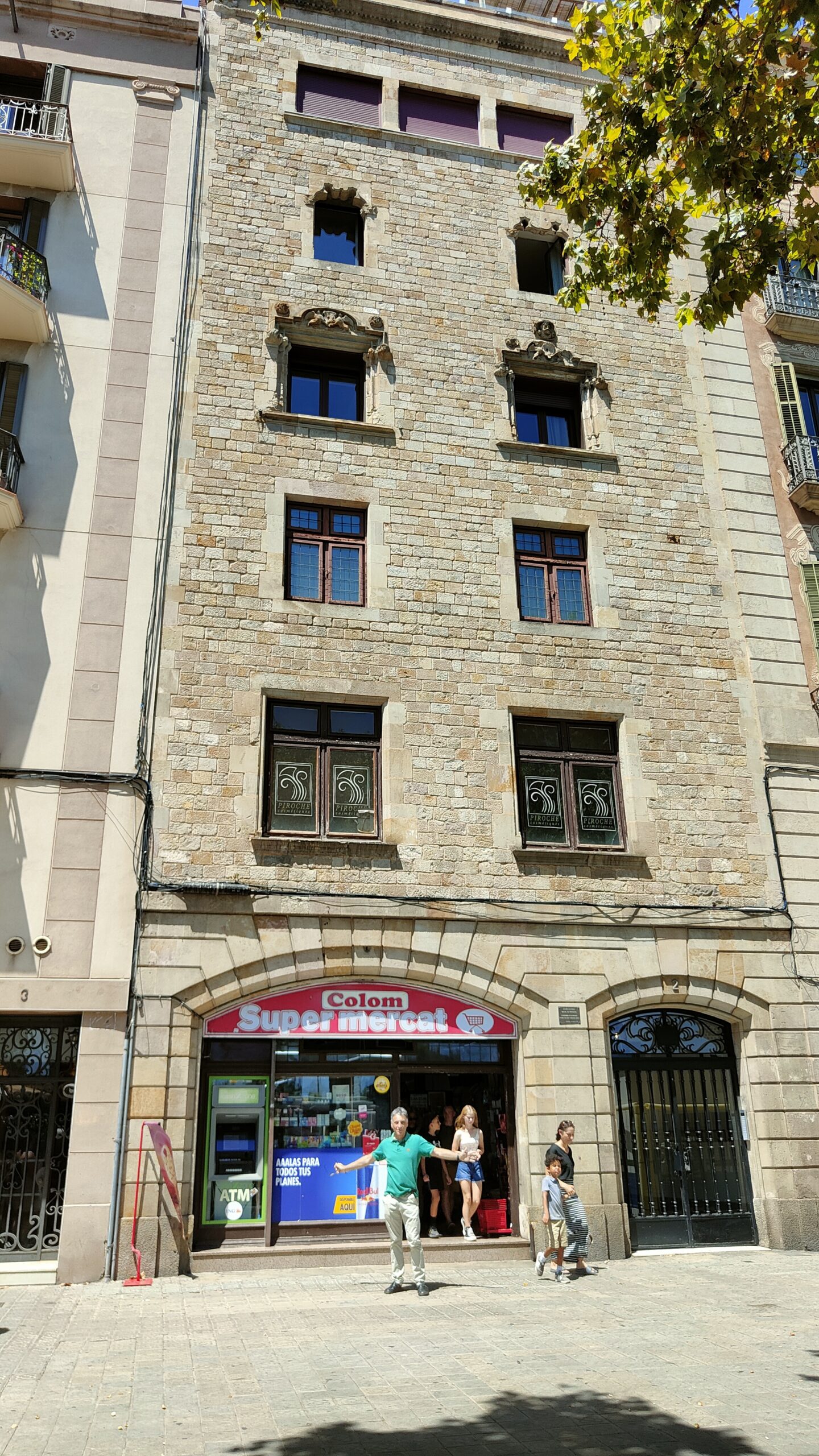
The count didn’t even bother to receive him, and one of his aides brushed him off as if he were a pesky fly. Apparently, during those days he was staying in a building that still stands today, at number 2 on Paseo de Colón, from where he could see the port and the sea. And when, some time later, he sat down to write the ending of his novel, those walks through the shacks of fishermen, artisans, and bon vivants came to mind, and he concluded on this beach the adventures of Don Quixote de la Mancha, light of the wandering knighthood, glory of the ages, refuge of the helpless, a madman among madmen.
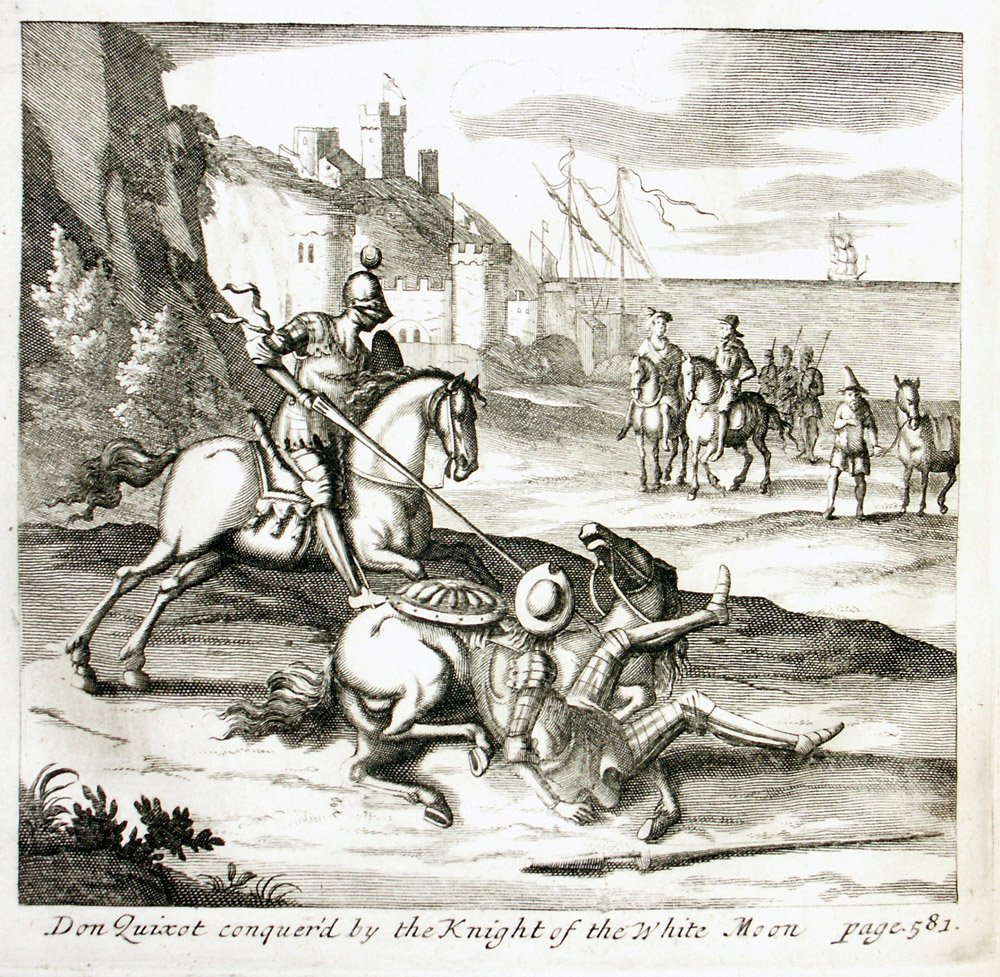
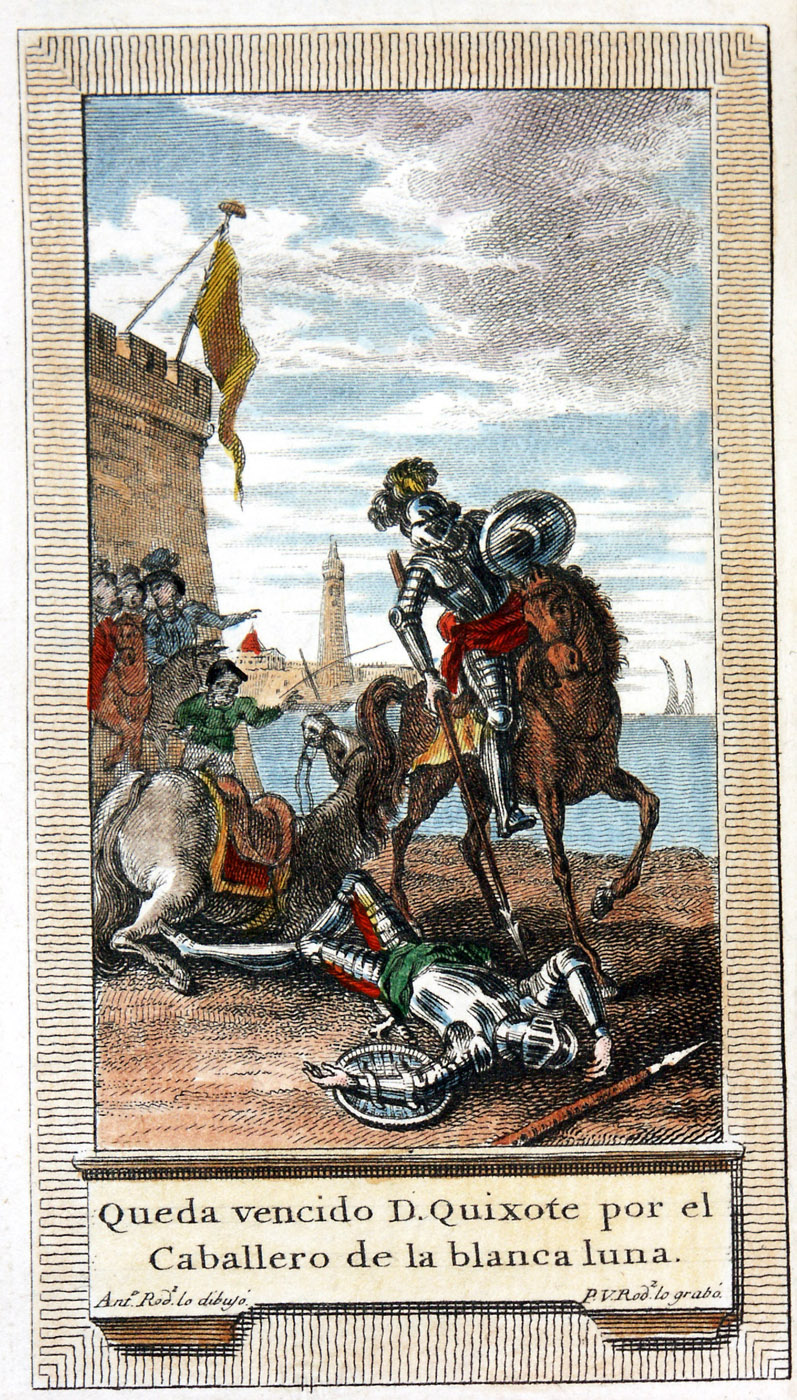
Don Quixote encounters a fellow knight on the beach. The Knight of the White Moon—as he calls himself—challenges him to a duel, which he naturally accepts. But the Knight of the White Moon, stronger and with a more powerful horse, tramples him and knocks him off Rocinante so violently that, if the ground were not sand, he surely would never have risen again until the Last Judgment. The Knight of the White Moon, as the victor of the day, orders him to return home. Don Quixote, with great dignity, obeys and lays down his arms. He will never know that this Knight of the White Moon is none other than his neighbor, the bachelor Sansón Carrasco, who, with this ruse, is trying to bring Mr. Alonso Quijano back home, because his adventures, instead of bringing him glory, only bring him beatings. This beach witnessed Don Quixote’s final battle.
Cervantes speaks of Barcelona in these terms: “a repository of courtesy, a refuge for strangers, a shelter for the poor, a homeland for the brave, a source of vindication for the wronged, and a place of warm friendship; and in terms of location and beauty, it is unique.” But Barcelona is capricious and forgetful, kind only if your wallet is full, and Cervantes, who died in abject poverty, has been forgotten. The city has dedicated a tiny street to him, an alleyway off Avinyó Street, and a garden far from the center, next to the Ronda de Dalt. It comes as no surprise in this Barcelona, which has turned the city into a business, that the 16th-century house located at number 2 on Paseo de Colón, instead of serving as a Cervantes interpretation center, has only a tourist shop with a shabby sign open to the public. A very modest little plaque placed nearby—not by City Hall, but by a citizens’ association—reads quietly, so as not to disturb: “In memory of the author of Don Quixote’s stay in this house.” If Mr. Alonso Quijano were to raise his head, he would tell Sancho that Barcelona’s neglect is the result of some spell cast by sorcerers—the kind who turned giants into windmills.